
EXPERIENCE PIERIA · LITOCHORO · WALKING PIERIA
A Morning Walk Along the Enipeas | A River, a Town and Its Stories
A quiet morning walk from the centre of Litochoro, through Lakko and along the Enipeas.
Sometimes you do not need to go far to feel that you have left the town behind.
On a warm October morning, I left the centre of Litochoro and walked towards
the Enipeas.
The route begins among familiar streets, descends towards Lakko and gradually
follows the river into the trees.
It is a simple walk. But the longer you follow the Enipeas, the more you begin
to notice that this is not simply a river beside Litochoro.
It is part of the story of the place.
At a Glance
- Location: Litochoro, Pieria, Greece
- Walk: Central Litochoro → Lakko → Enipeas → metal pedestrian bridge
- First bridge on the descent: Milia Bridge
- Experience: A quiet morning walk beside the Enipeas
- Landscape: River, woodland, bridges and traces of old Litochoro
- Best for: Slow travel, walking and discovering the story of a place
From the town to the river
I started from the central square of Litochoro and walked towards Lakko.
It was still early. The cafés and businesses along the way had not really
started their day yet.
There is something different about a familiar place before it becomes busy.
The same streets are there, but they feel slower.
Then the path begins to descend.
The buildings become fewer, the trees become closer and the Enipeas gradually
takes over the landscape.
The first crossing: Milia Bridge
As I descended towards Lakko, the first bridge I crossed was Milia Bridge.
Today, the modern bridge stands over the Enipeas, while the stone arch of the
older crossing remains beneath the large modern structure.
The original date of the bridge is not known. Local historical sources record
that the older bridge was repaired in 1918 by French troops, who had converted
the nearby Metochi of Skala into a military hospital.
The modern bridge was constructed in 1984.
For a moment, the old and the new occupy almost the same view.
A crossing from another time
A photograph from 1912 shows Greek soldiers at Milia Bridge during the
liberation of Litochoro.
More than a century later, the crossing remains part of the same landscape,
even though the bridge itself has changed.
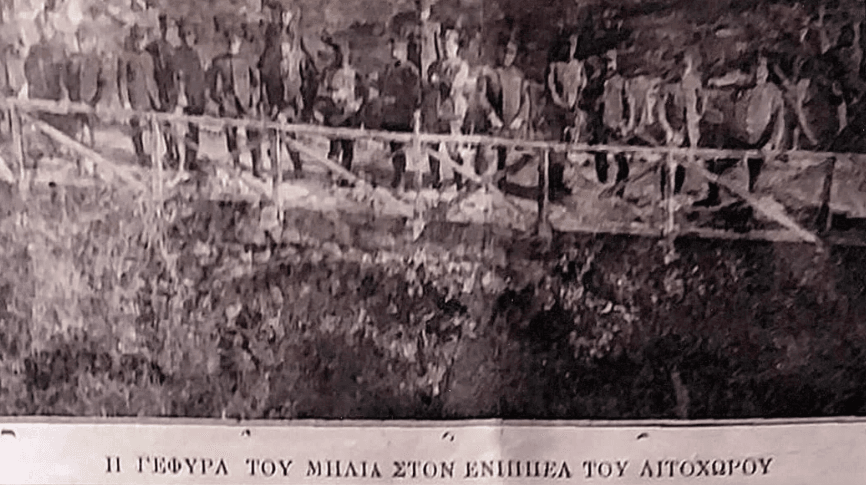
Archive: Sotiris Mastagas / Litochoritikes Istories.
The bridges of the Enipeas
Milia was not the only historic crossing of the Enipeas.
Local historical accounts describe two stone bridges built by the people of
Litochoro: Milia and Mavrotas.
There was also a lower crossing known as the “Roman Passage”, traditionally
associated with the passage of the Roman army in 168 BC.
Around the old watermills, temporary crossings made from logs and planks were
also used, but the force of the Enipeas could destroy them.
The bridges were never simply structures over water. They connected the
different sides of a working landscape.
The Enipeas in October
Further along the route, the character of the river changed.
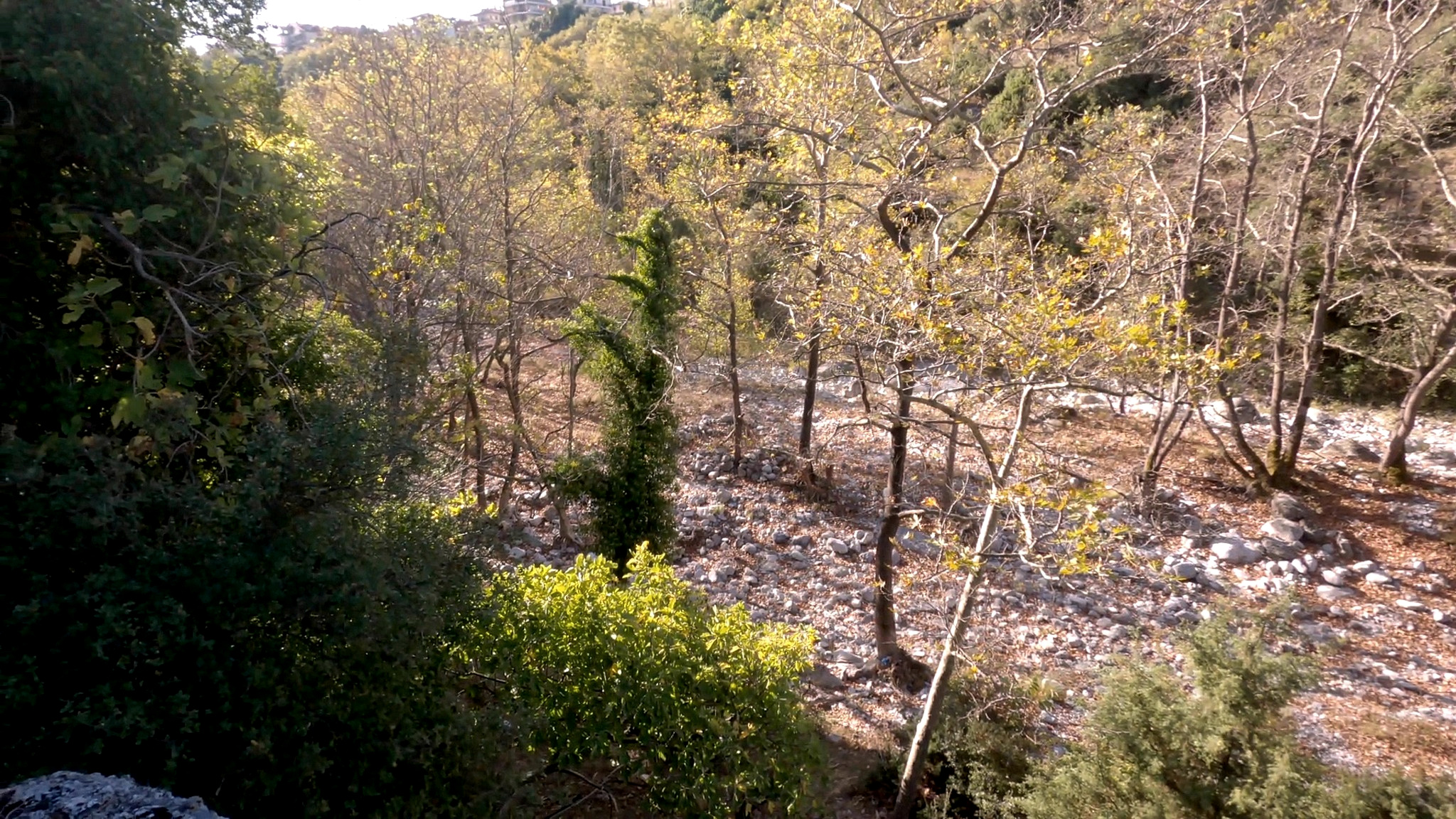
In the lower section where I was walking, there was no water flowing through
the riverbed that morning. The stones were exposed and dry.
Further upstream, the Enipeas was still flowing.
The contrast is a reminder that a river is never quite the same from one
season to another.
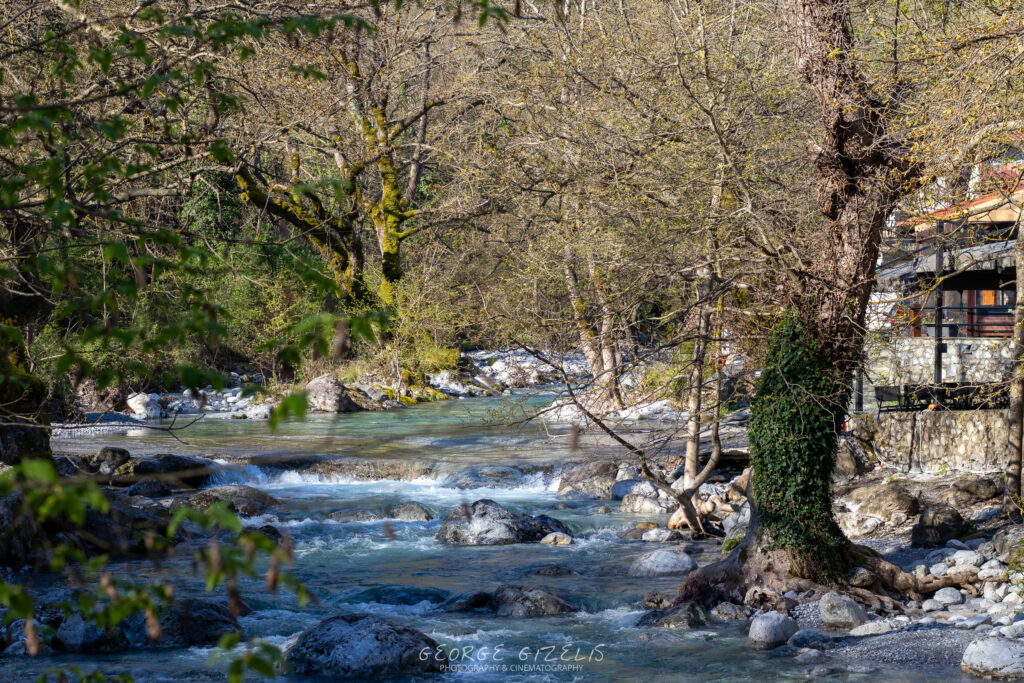
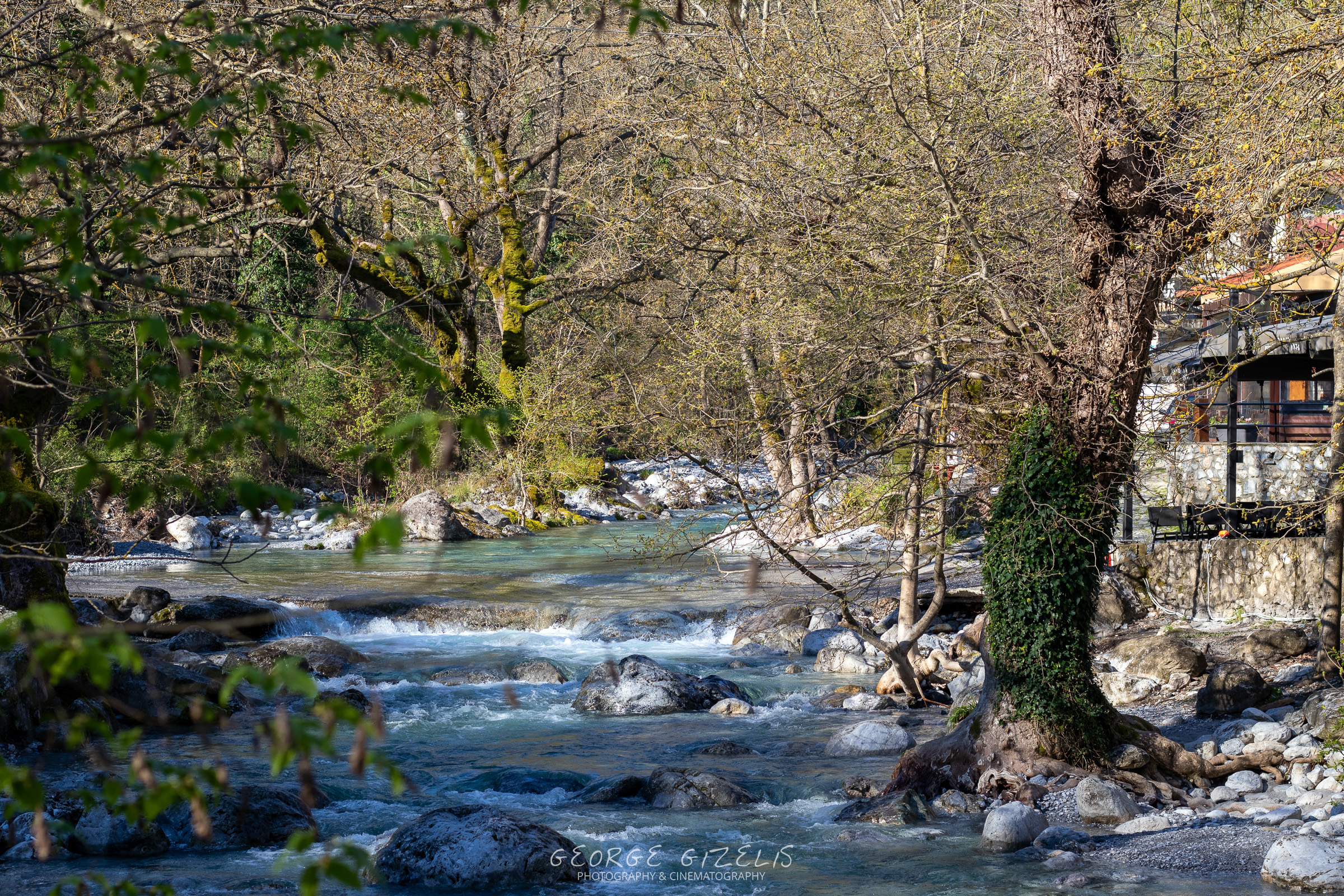
The image at the beginning of this story was taken at another time of year,
when the Enipeas carried much more water.
Just walking
There was very little to distract from the landscape.
Birds in the trees. A rooster somewhere in the distance. The bells of goats
that could be heard but not seen.
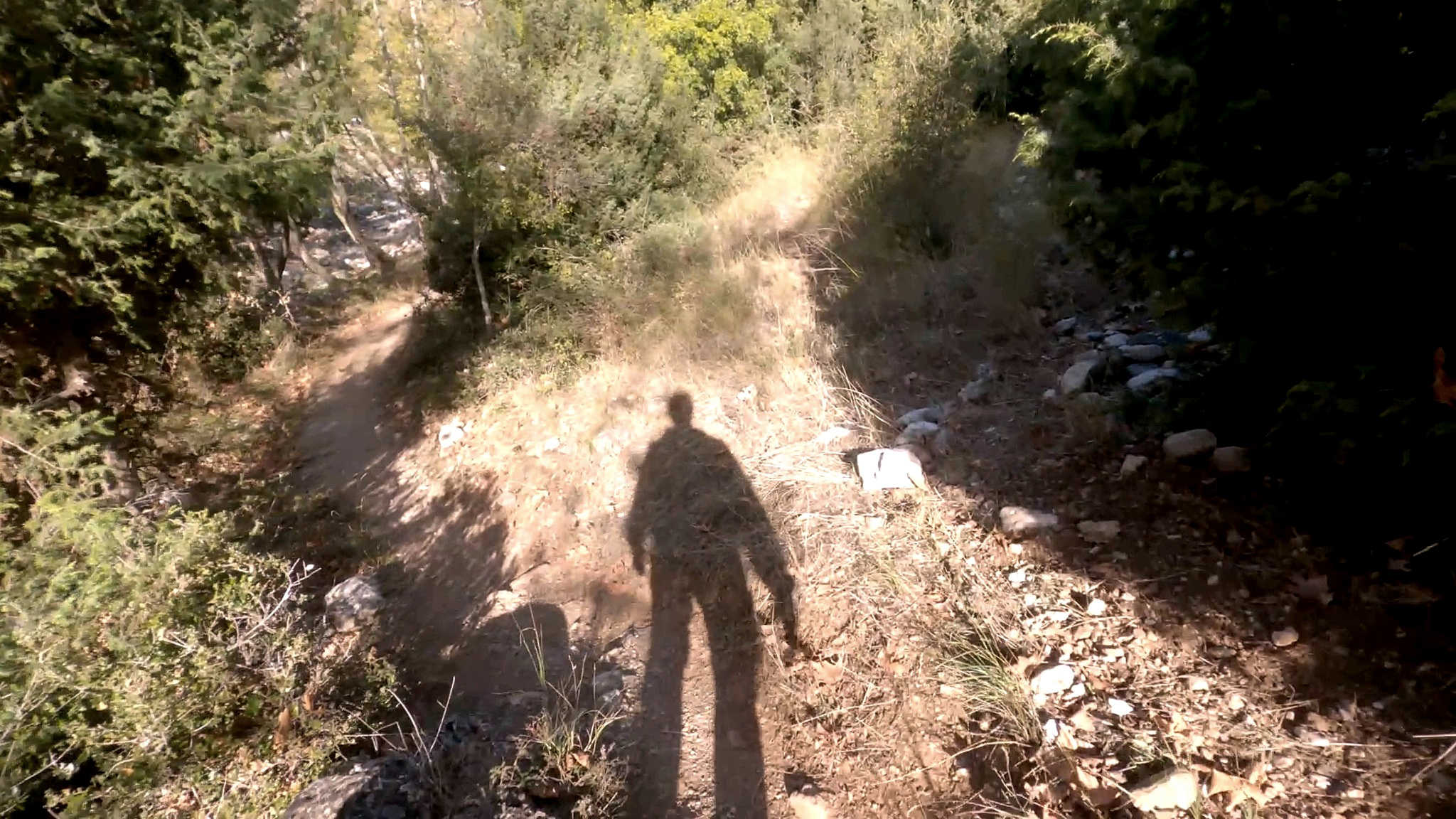
I followed the path beside the Enipeas, with the river and woodland gradually
replacing the town behind me.
It was one of those walks where nothing needs to happen.
You simply keep going.
Following the river
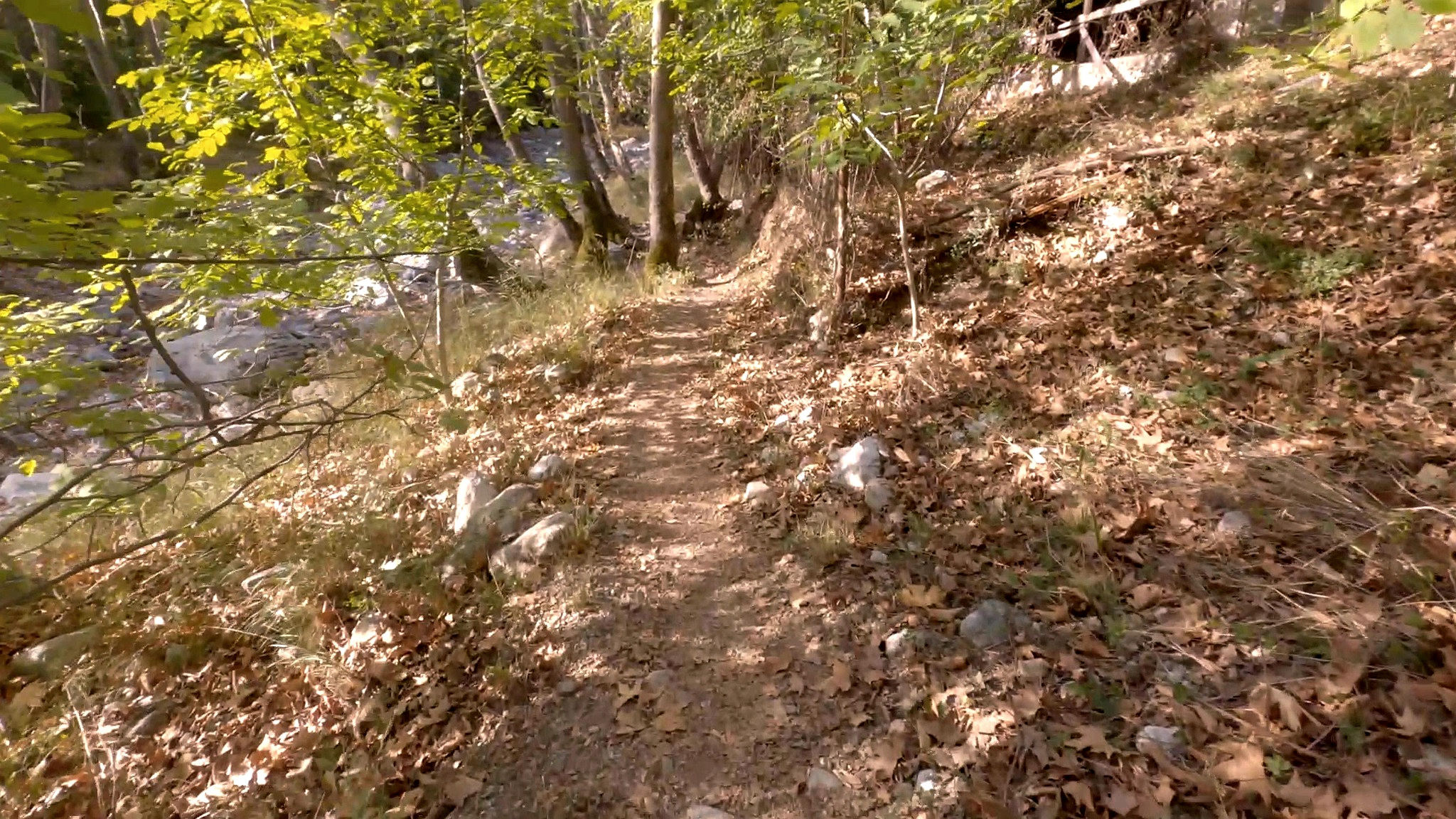
After passing the businesses around Lakko, the path continues behind them,
following the Enipeas through the trees.
The town is still close, but it already feels different.
Eventually, the walk reaches a metal pedestrian bridge across the Enipeas.
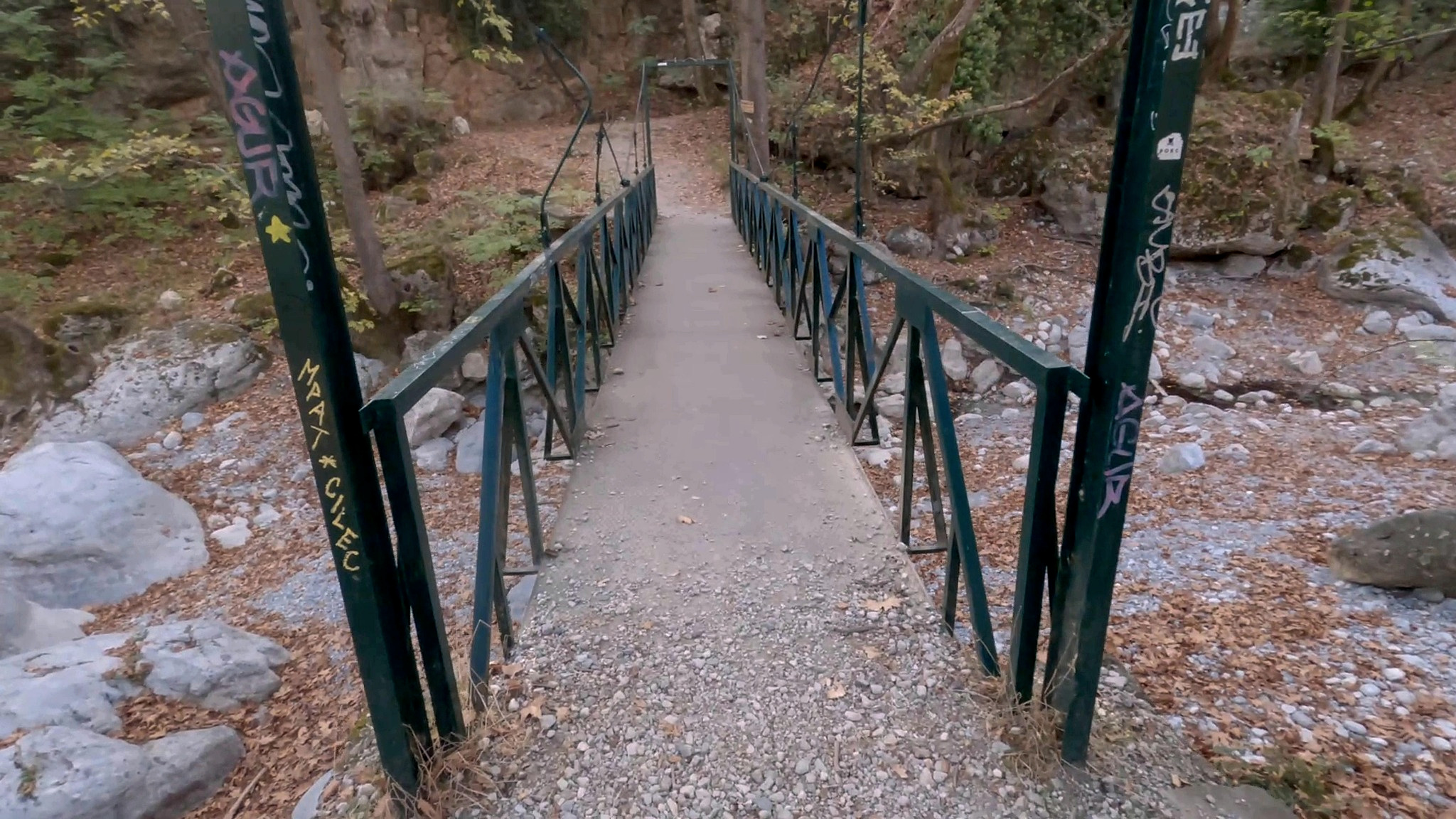
This was the furthest point of this morning walk.
The crossing leads towards Myloi and the wider landscape around the entrance
to the Enipeas gorge.
I turned around there and followed the same route back towards Litochoro.
The metal pedestrian bridge is a familiar crossing on local walking routes,
but I have not found a reliable historical source that establishes the year
in which it was originally built.
A river that once worked
Today, parts of Lakko are associated with cafés, food and time spent beside
the river.
It was not always like this.
The Enipeas once powered much of the working life of Litochoro. Watermills
stood along its course, with channels carrying water from one mill to another.
Because the mills depended on the same water, the river was shared according
to established water rights. Water leaving one mill continued towards the next.
Some of those mills have disappeared. Others remain as traces of a time when
the relationship between Litochoro and the Enipeas was much more practical
than it is today.
When the river brought light
There was another chapter in the relationship between Litochoro and the river.
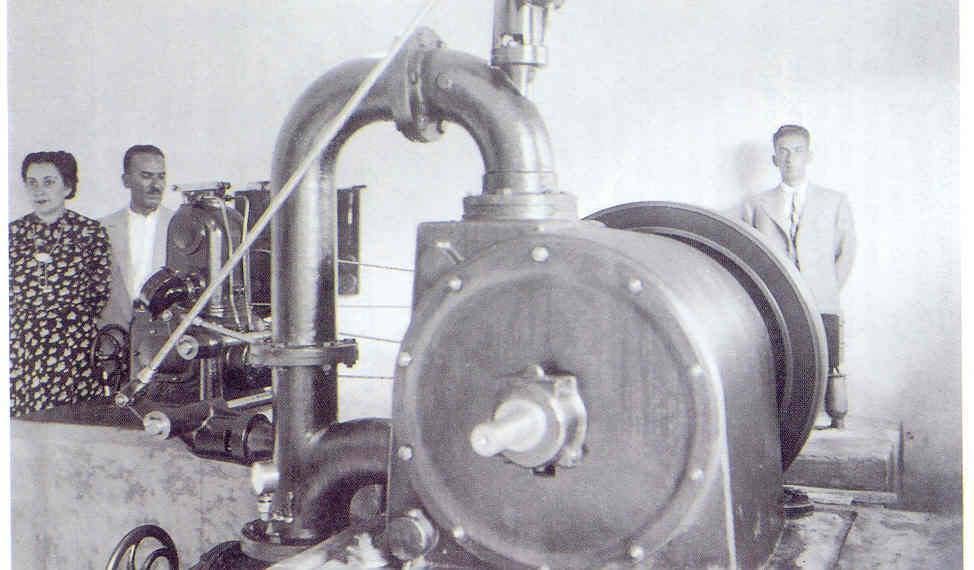
In 1938, a hydroelectric plant using the waters of the Enipeas began supplying
electricity to Litochoro.
For a time, the same river that had powered the mills also helped light the
town.
The plant eventually closed after Litochoro was connected to the national
electricity grid in 1965.
The stories of the river
The Enipeas has carried more than water through the years.
Local tradition tells of Mavrotas, a Sarakatsani man from the Dion area who
became a kleftis — one of the armed Greek mountain groups that
emerged during Ottoman rule.
According to the story, while being pursued by a Turkish detachment, he
reached the gorge of the Enipeas and made a desperate leap to the opposite
bank.
He survived and vowed to build a bridge there, so that others would not have
to struggle to cross the river.
The story belongs to the folklore and oral memory of the area rather than to
independently verified biography.
But that is also part of what makes the landscape interesting. The river is
remembered not only through stones and structures, but through stories passed
from one generation to another.
A place for people
The river was also a place to gather.
On Ascension Day, local families traditionally came to the Enipeas with food
and blankets and spent time beside the water.
One of the old customs involved entering the shallow river and retrieving
small stones without using the hands. According to local tradition, the
stones were kept at home as symbols of strength and good fortune.
The custom returned to Lakko in 2022.
For generations, the Enipeas has been a place of work, celebration,
tradition and everyday life.
Back to the square
I turned back towards Litochoro.
The morning was no longer quite as quiet. A café was beginning to prepare
for the day, and the familiar sounds of the town were slowly returning.
The final steps brought me directly back towards the square and the taxi
stand.
A few minutes later, I was back in the centre.
The walk had been short.
But the river had made the town look slightly different.
The river changes. The place remembers.
The Enipeas is easy to see as part of the landscape of Olympus.
But spend a little time beside it and another Litochoro begins to appear —
a town shaped by water, work, crossings, stories and traditions.
Perhaps that is what makes a simple morning walk worth taking.
Before You Go
The walk described here starts in central Litochoro, descends towards
Lakko, crosses Milia Bridge and continues along the Enipeas to a metal
pedestrian bridge before returning to town.
- Starting point: Central Litochoro
- Direction: Central Litochoro → Lakko → Enipeas → metal pedestrian bridge
- First bridge crossed: Milia Bridge
- Character: Short, relaxed local walk
- Season: River conditions change throughout the year
-
Important: This is not a guide to the full Enipeas gorge
or the complete E4 route
Frequently Asked Questions
Can you walk from central Litochoro to the Enipeas?
Yes. The Enipeas is closely connected with Litochoro, and the walk described
here begins from the centre of town and follows the river towards Lakko.
Which bridge do you cross first when walking towards Lakko?
On this walk, the first bridge crossed on the descent towards Lakko is
Milia Bridge. It is visible in the video.
Where does this walk end?
The walk described here continues beyond Milia Bridge and ends at a metal
pedestrian bridge across the Enipeas, before returning along the same route.
What is the metal pedestrian bridge near Myloi?
It is a pedestrian crossing over the Enipeas on local walking routes below
Litochoro. From there, the route continues towards Myloi and the wider
landscape around the entrance to the Enipeas gorge.
When was Milia Bridge built?
The original date of construction is not known. Local historical sources
record that the older stone bridge was repaired in 1918 by French troops.
The modern bridge was constructed in 1984.
When was the metal pedestrian bridge built?
A reliable construction date has not been established for this article.
The metal pedestrian bridge is an established crossing on local walking
routes, but its original construction date has not been confirmed by the
historical sources used here.
Is this the full Enipeas gorge hike?
No. This is a short local walk from Litochoro towards the Enipeas. It is not
a guide to the full Enipeas gorge or the complete E4 route.
Will there always be water in the Enipeas?
Not necessarily. The amount of water changes with the season and conditions.
During this October walk, the lower riverbed was dry while the river was
still flowing further upstream.
Sources & Further Reading
The history of Milia Bridge is based primarily on local historical material,
including Apostolos Tsakoumis’ Το φαράγγι του Ενιπέα, historical
references by Sotiris Mastagas, and archival material published by
Λιτοχωρίτικες Ιστορίες.
Historical references to the watermills, hydroelectric plant and local
traditions are drawn from available local historical sources.
Stories such as the tradition of Mavrotas and the Ascension Day stones are
presented as local tradition and oral memory rather than as independently
verified biography or historical fact.
