
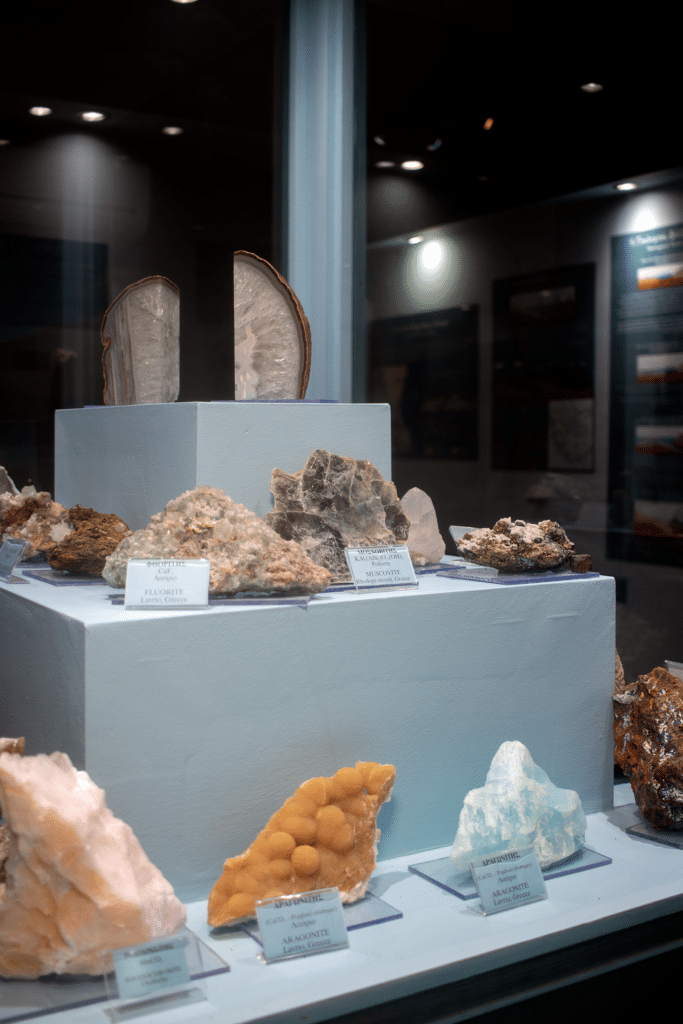
Description
Olympus Geological History Museum is a geological museum in Leptokarya, Pieria, offering a different way to discover Mount Olympus — through its rocks, minerals, fossils and the geological processes that shaped the mountain over millions of years.
Operating in Leptokarya since 2013, the museum is included in the Official Catalogue of Museums of the Greek Ministry of Culture.
The museum connects geology with the natural and cultural history of Olympus, showing how the mountain's landscape was shaped by geological processes and how its rocks, fossils and minerals can help us understand its long history.
Discover the geological history of Mount Olympus
The geological study of the museum was carried out by Prof. Markos Vaxevanopoulos, Lecturer of Geology at the University of Lyon, France, in cooperation with Aggeliki Reizopoulou, MSc in Geology, and Prof. Vasileios Melfos, Lecturer of Geology at the Aristotle University of Thessaloniki.
In the first hall, visitors can explore the geological evolution of Mount Olympus and learn how natural processes shaped the mountain and its landscape through different geological ages.
The museum has an interactive approach to geology. Visitors can see and hold geological specimens, including Jurassic ammonites and seashells from Olympus. Exhibits also explain the role of glaciers in shaping the mountain and how caves were formed.
A collection built through decades of exploration
The museum's collection of minerals, crystals and fossils comes from 35 years of personal expeditions on Mount Olympus and throughout Greece by its founders, George Arzanas and Landa-Anna Lukasevits, who also guide visitors through the museum.
Among the exhibits are minerals mentioned in the ancient text "Lithika of Orpheus", also known as "About Stones", which describes properties that ancient people attributed to minerals and crystals.
The museum also explores the relationship between the geological landscape of Olympus and mythology through the concept of geomythology.
Geology, mythology and Greek heritage
The second hall expands the story beyond Mount Olympus, presenting rocks, stones, minerals and fossils from different parts of Greece.
The museum also includes paintings, woodwork and mosaics connected with Olympus, Orpheus and Alexander the Great, bringing geology together with mythology, history and Greek cultural heritage.
Orpheus is traditionally associated with Leibethra, an ancient archaeological site at the foot of Mount Olympus near modern-day Leptokarya, adding another connection between the geological landscape, mythology and the cultural history of the area.
Look at the night sky
The experience can continue after sunset.
Visitors have the opportunity to observe the Moon and planets such as Venus, Mars, Jupiter and Saturn through the museum's telescope.
The museum recommends allowing at least one hour for a complete visit.
For visitors exploring Leptokarya and the Olympus region, the museum offers a different perspective on the mountain. Instead of experiencing Olympus only through hiking, mythology or ancient history, visitors can explore the geological forces, rocks and fossils that helped create the landscape seen today.
📍 Georgaki Olympiou 32, Leptokarya, Pieria, Greece
🏔️ Mount Olympus Geology
🪨 Rocks & Minerals
🦕 Fossils & Jurassic Ammonites
🐚 Seashells from Olympus
🧊 Glaciers & Caves
🏛️ Geology & Greek Heritage
🔭 Telescope & Night Sky
📍 Leptokarya, Pieria
Practical Information
🎟️ Tickets
Children: €2
Adults: €3
🕐 Opening Hours
10:00–14:00
20:00–23:00
The museum is open every day.
📞 Museum: 23520 31901
📞 George Arzanas: 6958356689
📞 Landa-Anna Lukasevits: 6946381779
Opening hours, ticket prices and arrangements for telescope observations may change. Contact the museum directly before your visit for the latest information.
FAQ
What is the Olympus Geological History Museum?
The Olympus Geological History Museum is a geological museum in Leptokarya, Pieria, dedicated to the geological history of Mount Olympus, its rocks, minerals, fossils and the natural processes that shaped the mountain.
Where is the Olympus Geological History Museum?
The museum is located at Georgaki Olympiou 32 in Leptokarya, Pieria, Greece.
What can you see at the Olympus Geological History Museum?
Visitors can see rocks, minerals, crystals, fossils, Jurassic ammonites and seashells from Olympus. The museum also presents information about glaciers, caves, the geological evolution of Mount Olympus, mythology and Greek cultural heritage.
Does the museum have fossils from Mount Olympus?
Yes. The collection includes fossils and geological specimens from Mount Olympus, including Jurassic ammonites and seashells.
Can you see Jurassic ammonites at the museum?
Yes. Jurassic ammonites are among the geological specimens presented at the museum.
Can visitors touch the geological specimens?
The museum has an interactive approach and allows visitors to see and hold geological specimens, providing a more hands-on way to learn about the geology of Olympus.
What can you learn about Mount Olympus at the museum?
The museum explains how Mount Olympus evolved through geological ages and how processes such as tectonic activity, glaciers and other natural forces contributed to the formation of its present landscape.
Does the museum explain how the caves of Olympus were formed?
Yes. The exhibits explain geological processes connected with the formation of caves on Mount Olympus.
What is geomythology?
Geomythology explores connections between geological features and traditional myths and stories. At the Olympus Geological History Museum, the concept is used to explore the relationship between the geological landscape of Mount Olympus and its mythology.
What is the connection between geology and Greek mythology at the museum?
The museum explores how the landscape and geological features of Mount Olympus can be considered alongside the myths and traditions associated with the mountain, connecting natural history with Greek mythology.
Does the museum have minerals from Greece?
Yes. The collection includes minerals, crystals, rocks and fossils collected during decades of exploration on Mount Olympus and in different parts of Greece.
Who founded the Olympus Geological History Museum?
The museum's collection was built through decades of exploration by George Arzanas and Landa-Anna Lukasevits, who also guide visitors through the museum.
When did the Olympus Geological History Museum open?
The museum has been operating in Leptokarya since 2013.
Is the Olympus Geological History Museum officially recognised?
The museum is included in the Official Catalogue of Museums of the Greek Ministry of Culture.
Does the museum have information about Orpheus?
Yes. The museum explores the connection between geology and mythology and includes material connected with Orpheus. Orpheus is traditionally associated with Leibethra, the ancient archaeological site near Leptokarya at the foot of Mount Olympus.
What is the connection between the museum and Leibethra?
Leibethra is an ancient archaeological site at the foot of Mount Olympus, near modern-day Leptokarya, traditionally associated with Orpheus. The museum's presentation of Olympus, mythology and cultural heritage creates a connection between these aspects of the local landscape.
Does the museum have a telescope?
Yes. The museum has a telescope that can be used for observing the Moon and planets.
Can you see planets at the Olympus Geological History Museum?
The museum offers opportunities for visitors to observe the night sky through its telescope, including planets such as Venus, Mars, Jupiter and Saturn, depending on observing conditions and visibility.
Can you visit the museum at night?
Yes. The museum lists evening opening hours from 20:00 to 23:00, and the evening period can also provide an opportunity for telescope observations.
How long does it take to visit the Olympus Geological History Museum?
The museum recommends allowing at least one hour for a complete visit.
Is the Olympus Geological History Museum suitable for children?
The interactive approach to geology, including the opportunity to see and hold geological specimens, can make the museum particularly interesting for children and families interested in nature, fossils, rocks and Mount Olympus.
Is the museum suitable for people interested in geology?
Yes. Geology is the central subject of the museum, with exhibits covering the geological history of Mount Olympus, rocks, minerals, crystals, fossils, glaciers and caves.
Is the museum suitable for visitors who are not geology experts?
Yes. The museum presents geology together with mythology, history and the landscape of Olympus, making it accessible to visitors who simply want to understand more about the mountain and its natural history.
How much does it cost to visit the Olympus Geological History Museum?
According to the current information provided for the museum, admission is €3 for adults and €2 for children. Prices can change, so visitors should confirm the current admission fee before visiting.
What are the opening hours of the Olympus Geological History Museum?
The listed opening hours are 10:00–14:00 and 20:00–23:00, every day. Opening arrangements can change, particularly for special activities or telescope observations, so visitors should contact the museum before travelling.
Is the Olympus Geological History Museum open every day?
The museum's listed schedule states that it is open every day, with morning and evening opening periods. Visitors should confirm the current schedule before visiting.
What is the address of the Olympus Geological History Museum?
The address is Georgaki Olympiou 32, Leptokarya, Pieria, Greece.
What is near the Olympus Geological History Museum?
The museum is located in Leptokarya, close to the foothills of Mount Olympus and the Pierian coast. It can be combined with exploring Leptokarya, the nearby archaeological site of Leibethra and other Mount Olympus attractions.
Can I combine the museum with a visit to Mount Olympus?
Yes. The museum provides geological context for the mountain and can complement a wider visit to the Olympus region, including hiking, archaeological sites, villages and other natural attractions.
Is the Olympus Geological History Museum worth visiting?
The museum offers a different perspective on Mount Olympus by combining geology, fossils, minerals, mythology and Greek cultural heritage. It is particularly interesting for visitors who want to understand how the mountain's natural landscape was formed.
What makes the Olympus Geological History Museum different?
Instead of focusing only on the mythology and history of Mount Olympus, the museum explains the mountain through its geological history. Rocks, minerals, fossils, glaciers, caves and geological processes become part of the story of Olympus.
Location
-
Georgaki Olympiou 32, Leptokarya, Greece


Add a review