
Skoteina Morna, Pieria | The Abandoned Mountain Village in the Forest
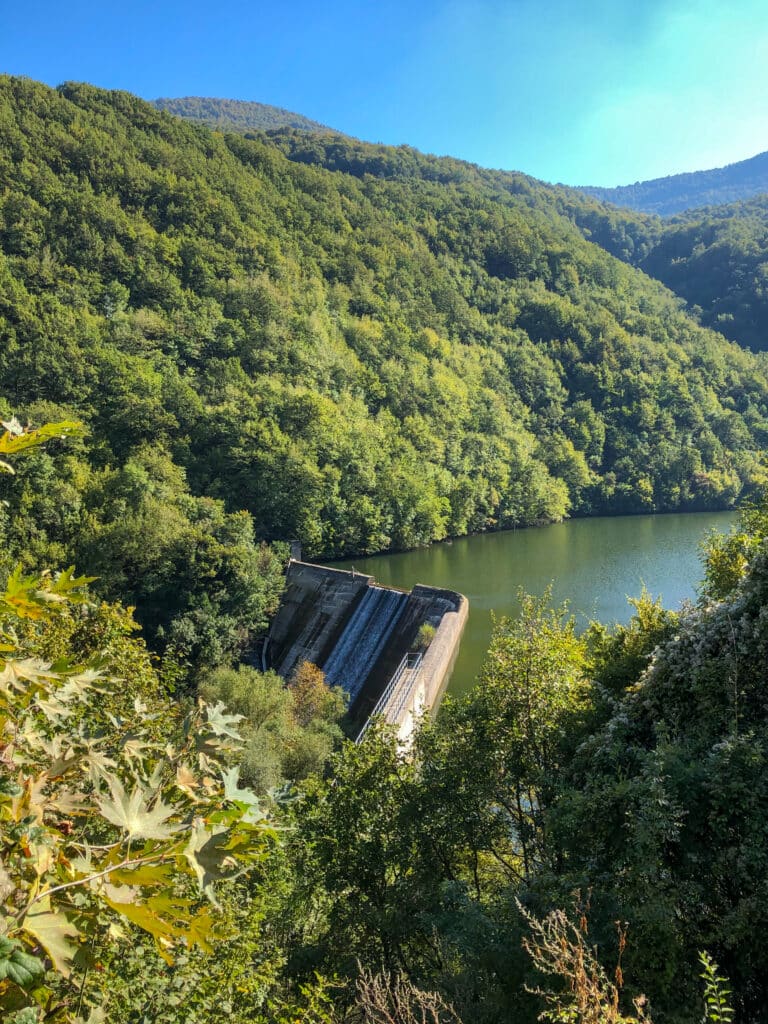
Skoteina Morna, Pieria | The Abandoned Mountain Village in the Forest
Deep in the forests of Pieria lies Skoteina Morna, an abandoned mountain settlement with a history that reaches back more than a century.
Today, old houses, stone pathways, the church of Agios Nikolaos and the remains of the village’s former timber industry slowly disappear into the surrounding vegetation.
It may look mysterious at first glance, and stories about an abandoned or “haunted” village have certainly added to its reputation. But Morna’s story is not really about ghosts. It is about people, forests, work, migration and a mountain settlement that gradually lost its population.
At a Glance
- Location: Pieria, Greece
- Altitude: Approximately 700 metres
- Known as: Morna
- Official name: Skoteina
- Character: Abandoned mountain settlement
- Landscape: Dense forest and mountain terrain
- Highlights: Old houses, Agios Nikolaos church, forest paths and remains of the timber industry
Where Is Skoteina Morna?
Skoteina Morna is located in the mountainous interior of Pieria, surrounded by dense forest at an altitude of approximately 700 metres.
The settlement is now uninhabited, but its buildings and traces of its former life remain scattered through the forest.
Walking through Morna feels very different from visiting a traditional mountain village that is still inhabited. Here, nature has gradually begun to reclaim the spaces that people once used every day.
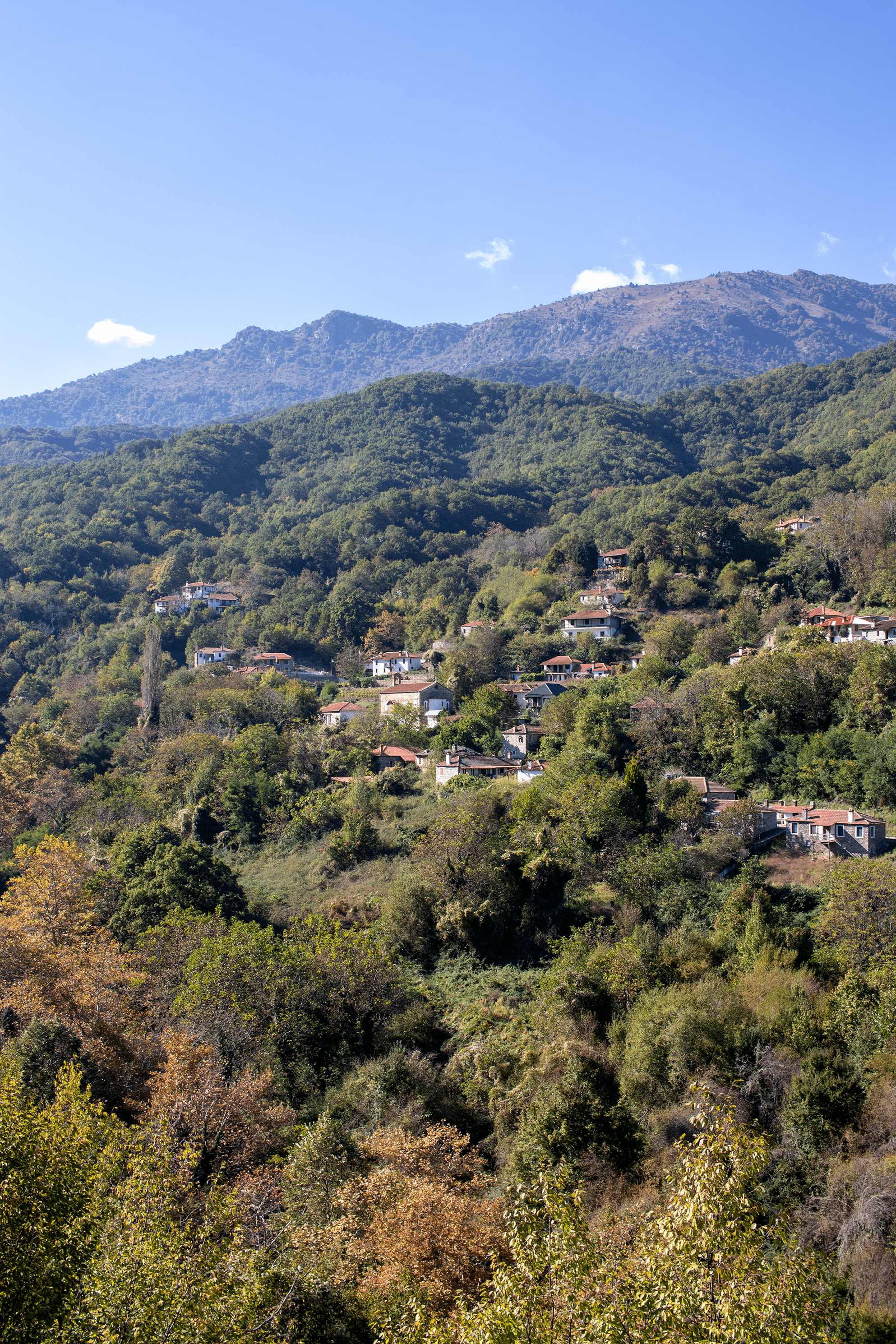
Old buildings slowly surrounded by vegetation in Skoteina Morna, Pieria.
Why Is It Called Morna?
The settlement has long been known locally as Morna.
The original source for this story records the name as being associated with the Turkish word for a “dark place”, referring to the dense vegetation surrounding the settlement. In 1926, the village was given the Greek name Skoteina, while the older name Morna continued to be used locally.
The two names therefore remain part of the identity of the place: Skoteina as its official Greek name and Morna as the older name still remembered by local people.
A Village Connected to the Forest
Morna was not simply an isolated mountain settlement. Its location was closely connected with the surrounding forest and the movement of people and goods through the mountains of Pieria.
The original account describes the village as having played a role in connecting Western Macedonia with Katerini, while the surrounding beech forests provided an important natural resource.
A timber factory once operated in the area, taking advantage of the beech forests around the settlement.
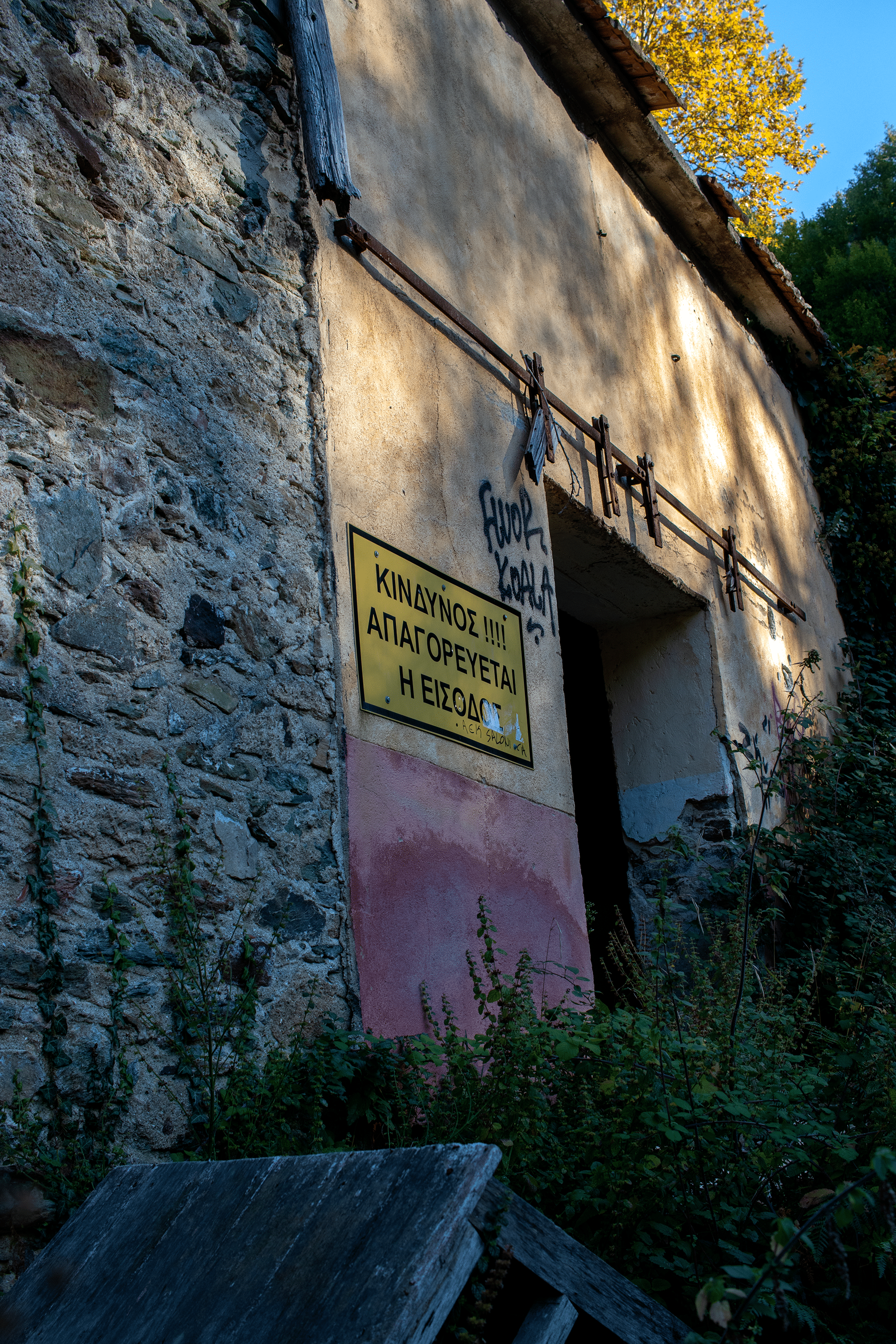
A surviving sign connected with the former timber industry of Morna.
What Happened to the Village?
The decline of Morna was closely connected with the disappearance of the economic activity that had supported the settlement.
According to the original account, the timber factory closed during the 1960s. As the local resources and employment opportunities declined, residents gradually moved away to a newer settlement known as Foteina.
The old settlement was eventually left behind.
That is the real reason Morna became abandoned. The empty buildings and silence that visitors encounter today are the visible result of this gradual movement of people away from the old village.
Is Skoteina Morna a Haunted Village?
This is probably the question that brings many people to the story.
No — there is no reason to describe Morna as a genuinely haunted village.
Its reputation comes largely from its abandoned appearance, its dense forest, the silence and the stories that naturally develop around places that have been left behind.
An empty house surrounded by trees can certainly create an eerie atmosphere. But atmosphere and folklore are not the same thing as evidence of supernatural activity.
The more interesting story is the human one: people once lived here, worked in the forest, raised families and built a community. Then the economic conditions changed and they left.
The Church of Agios Nikolaos
Among the remains of the settlement, the Church of Agios Nikolaos is one of the most recognisable landmarks.
The church provides an important reminder that Morna was once a functioning community rather than simply a collection of abandoned buildings.

The Church of Agios Nikolaos in the abandoned settlement of Morna.
Its presence changes the way you look at the ruins around it. What might initially appear to be an abandoned forest settlement becomes easier to understand as the remains of a real village with its own community and traditions.
Walking Through the Abandoned Village
One of the most distinctive aspects of Morna is the way the forest has gradually taken over the old settlement.
Vegetation grows around buildings, paths disappear beneath leaves and trees and old walls emerge unexpectedly from the landscape.
This combination of architecture and nature gives the village its particular atmosphere.

An old path between abandoned houses and vegetation in Morna.
What Can You Do in Morna?
Morna is best experienced slowly. There is no need to arrive with a checklist of attractions. The settlement itself is the experience.
Explore the Old Settlement
Walk carefully through the old pathways and observe the remaining buildings, stonework and traces of everyday life.
Visit the Church of Agios Nikolaos
The church is one of the most recognisable surviving landmarks of the old village and helps put the abandoned settlement into context.
Walk Through the Forest
The surrounding forest is an important part of the Morna experience. The landscape changes with the seasons, from fresh green growth to autumn colours and winter quiet.
Look for the Remains of the Timber Industry
The surviving signs and structures connected with the former timber activity offer another way to understand why the settlement existed here in the first place.
Bring a Camera
Morna is particularly interesting for photography because of the contrast between old structures and the vegetation gradually surrounding them.

Nature gradually reclaiming an old building in Skoteina Morna.
Morna Is More Than an Abandoned Village
Places like Morna can easily become reduced to a single label: abandoned village, ghost village or forgotten place.
But those descriptions only tell part of the story.
Morna was once a living mountain community. Its relationship with the surrounding forest shaped its economy, its location connected it with wider routes through the region, and its buildings reflected the everyday life of the people who lived there.
Today, the forest is slowly becoming the dominant presence again.
That transformation is perhaps the most interesting thing to observe when walking through the settlement.
When to Visit Skoteina Morna
Morna can be interesting throughout the year, but the experience changes considerably with the seasons.
- Spring: Fresh vegetation and renewed colour in the forest.
- Summer: Dense greenery and a cooler mountain environment compared with the coast.
- Autumn: Beech forests and changing foliage create a particularly atmospheric landscape.
- Winter: A much quieter mountain environment, with weather and road conditions requiring additional attention.
Practical Tips
- Wear proper footwear suitable for uneven mountain terrain.
- Be careful around abandoned buildings, walls and unstable structures.
- Do not enter buildings that appear unsafe.
- Respect the church and any remaining local heritage.
- Take your rubbish with you.
- Bring water, especially during warmer months.
- Check weather and road conditions before travelling in winter.
- If you plan to explore beyond the settlement, use appropriate navigation and avoid entering unfamiliar forest terrain without preparation.
A Different Side of Pieria
Most visitors discover Pieria through Mount Olympus, the beaches of the Aegean, Litochoro, archaeological Dion or its mountain villages.
Skoteina Morna reveals another side of the region: a landscape shaped by people and work, then gradually reclaimed by nature.
It is not a ghost story.
It is a story about what happens when a village loses the reason that once kept people there.
Frequently Asked Questions
Where is Skoteina Morna?
Skoteina Morna is an abandoned mountain settlement in Pieria, Greece, surrounded by dense forest at approximately 700 metres altitude.
Why is Skoteina also called Morna?
Morna is the older name of the settlement and remains in local use. The village was officially given the Greek name Skoteina in 1926.
Why was Morna abandoned?
The decline of the settlement was connected with the loss of its local economic activity. The timber factory closed during the 1960s, after which residents gradually moved to the newer settlement of Foteina.
Is Skoteina Morna really haunted?
There is no evidence presented in the original account that the village is genuinely haunted. Its abandoned buildings, dense forest and silence have contributed to its mysterious reputation and local stories.
What can I see in Morna?
Visitors can see abandoned houses, old pathways, the Church of Agios Nikolaos, remains associated with the former timber industry and the surrounding forest.
Is Morna suitable for hiking?
The surrounding forest offers opportunities for walking and exploration, but conditions can vary. Visitors should use appropriate footwear, navigation and caution around abandoned structures and unfamiliar mountain terrain.
Continue Exploring Pieria
Morna is one of those places that makes more sense when you take your time.
From here, you can continue exploring the mountain landscapes of Pieria, discover traditional villages such as Elatochori, follow forest trails or head towards Mount Olympus and the Aegean coast.
Explore Pieria at your own pace:
Explore Pieria
