
Chestnut Season in Skotina, Pieria | Harvest, Mountain Life & Local Stories
A walk through the chestnut groves of Skotina, where autumn harvest, family memory, mountain paths and the Aegean landscape come together.
Autumn in Skotina does not arrive all at once.
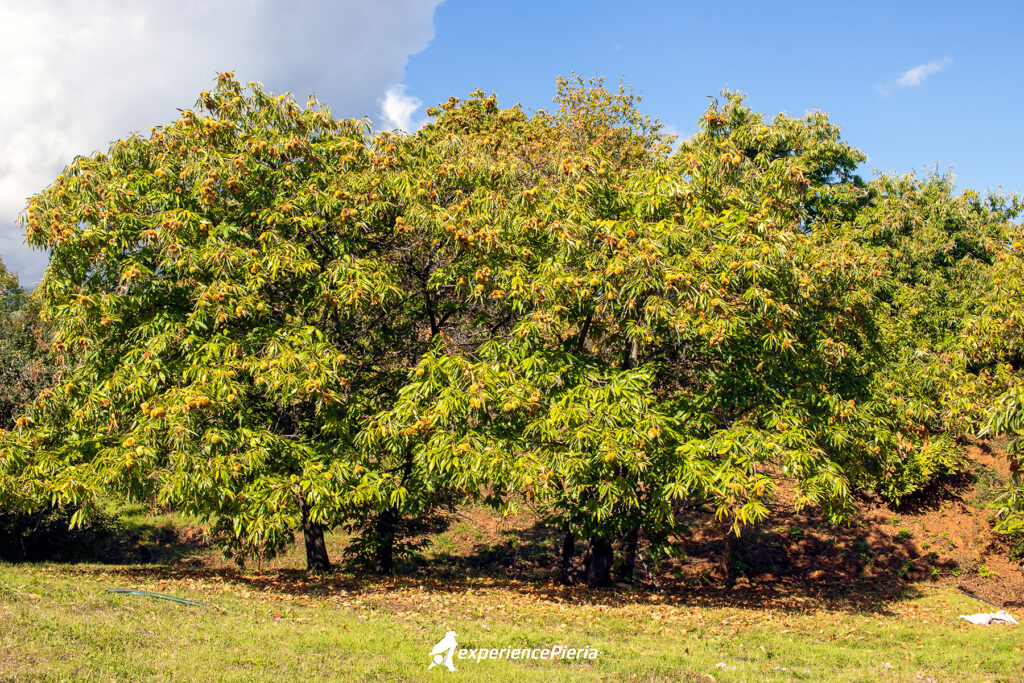
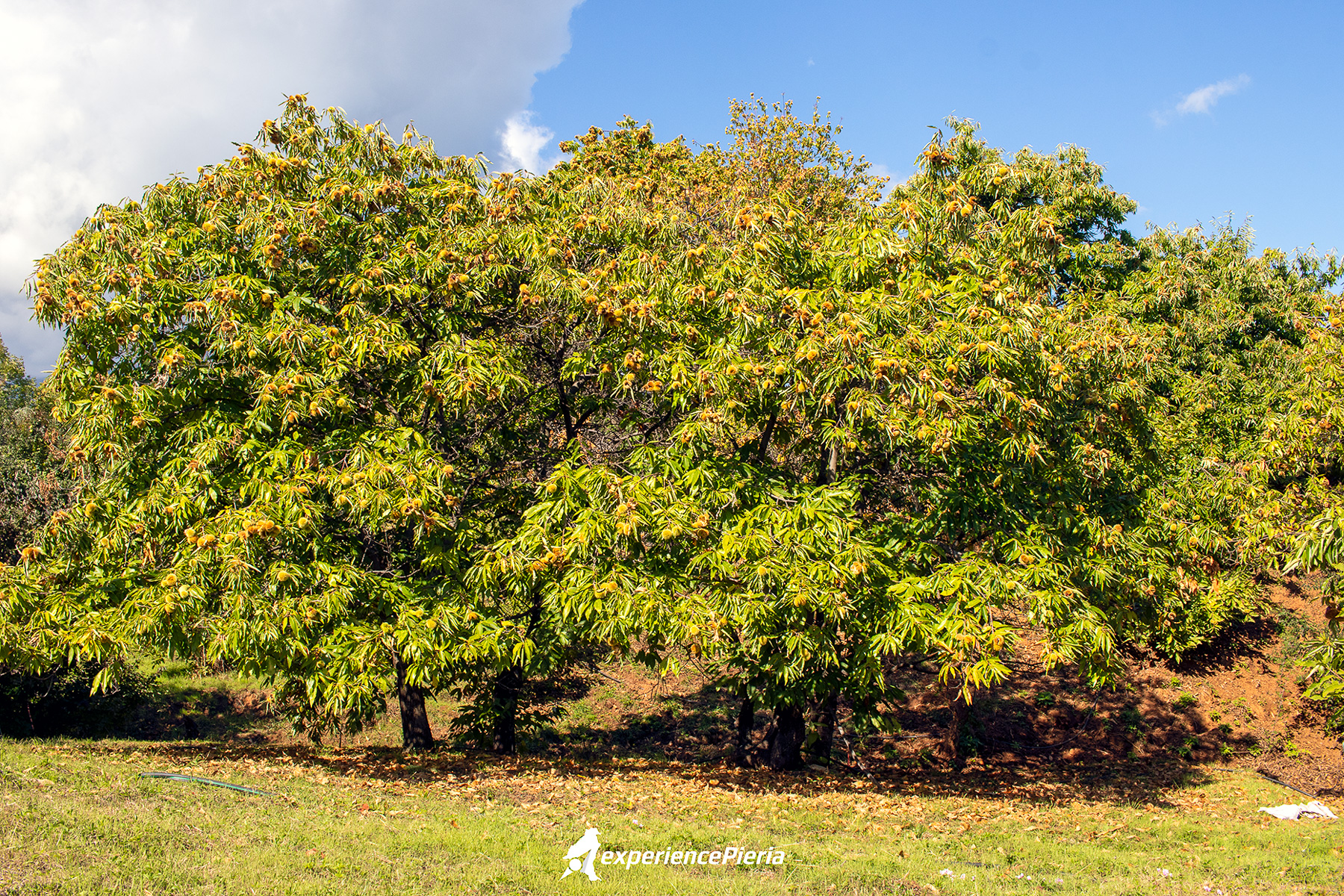
You notice it in the chestnut husks opening on the ground, the cooler air between the trees, the smoke from a wood fire and the sound of boots moving through dry leaves.
For a visitor, it can look like a beautiful autumn landscape.
For the people who have worked these trees for generations, it is something much more practical:
harvest time.
And that is where this story begins.
Chestnut Season in Skotina at a Glance
- Location: Skotina, Pieria, on the eastern slopes of Mount Olympus.
- Season: Autumn, especially around the October harvest period.
- Experience: Chestnut groves, mountain paths, chapels, local stories and autumn landscapes.
- Local connection: Family-owned chestnut land and generations of harvesting knowledge.
- Landscape: Mount Olympus, forests, the Thermaic Gulf and views towards the coast.
- Good for: Slow travel, food lovers, photographers, walkers and travellers interested in rural life.
Why Visit Skotina in Chestnut Season?
Skotina is one of those mountain villages where the landscape is not separated from everyday life.
The forests, orchards, paths and chapels are part of the same living environment as the houses and village square.
In autumn, the chestnut harvest gives the landscape another rhythm.
People return to their groves. The trees become the centre of attention. And the mountain produces one of the ingredients that has been part of local food culture for generations.
A Chestnut Grove with Generations Behind It
I met Theoharis Stylos in Skotina and followed him into his family’s chestnut land.
The property has been in his family since 1820.
That number changes the way you look at the trees.
They are no longer simply old trees in a beautiful landscape. They are part of a family history that has continued across generations.

Theoharis also remembered a time when chestnut flour was used to make bread.
The chestnut tree was more than a source of fruit. It was part of the food supply and the seasonal calendar.
Today, much has changed. But the connection between the tree and the harvest remains.
How Do You Know When a Chestnut Is Ready?
The chestnut itself is protected by a spiny green-brown capsule known locally as the tzoúna.
The harvest follows the tree’s natural rhythm. When the capsule falls and opens, the chestnut is ready to be collected.

During our walk, Theoharis made an interesting observation: the biggest chestnut is not necessarily the most interesting one.
According to his experience, smaller fruits can have particularly good sweetness.
That kind of knowledge is difficult to find on a label. It comes from years spent around the trees.
The Sound of the Harvest
There is a particular sound to a chestnut grove in October.
Chestnuts falling onto dry leaves.
Wooden crates moving.
Footsteps between the trees.
The occasional bell in the distance.
Nothing dramatic.
And that is precisely what makes it memorable.
The harvest is physical work, but it is also a conversation with the landscape.
Walking Skotina: Trails, Trees & Chapels
One of the most interesting things about experiencing Skotina is that you do not have to separate village life from nature.
Footpaths connect groves, old settlements and small chapels. Walking them gives you a different understanding of the village than simply arriving by car and looking around the main square.

Along the way, we entered a small historic chapel where the atmosphere changed completely.
Outside there was autumn, harvest and the sound of the village. Inside, the space was quiet, with old religious paintings and the feeling of a place that had been visited and cared for over many years.
These small chapels are part of what makes walking through Skotina different from simply photographing its landscape.
Faith, Memory & the Mountain Landscape
The Church of Christ the Savior stands on a small plateau northwest of Kato Skotina, at the site of an older settlement known as Kotres.
The church and the surrounding paths form another layer of the village story: faith, settlement history and the natural landscape existing within a relatively small area.
For visitors, it is a reminder that the mountain around Skotina is not simply empty wilderness.
It is a cultural landscape shaped by generations of people.
Skotina Between Mount Olympus and the Aegean
Part of Skotina’s character comes from its geography.
The village and its surrounding slopes look towards the Thermaic Gulf, while Mount Olympus rises behind the landscape.

From some viewpoints, you can see towards Platamonas Castle and the coastline below.
This combination of mountain and sea is one of the defining characteristics of eastern Pieria.
You can spend the morning walking among chestnut trees and later be looking across the Aegean.
Why the Chestnut Matters Beyond the Harvest
Chestnuts are not simply an autumn snack.
They can be roasted, dried and processed into flour, extending their usefulness beyond the harvest season.
For mountain communities, that ability to preserve part of the harvest has historically made the chestnut more than a seasonal treat.
In Skotina, the tree also carries something less measurable:
memory.
A family property.
An old tree.
A harvest repeated year after year.
A recipe remembered from another generation.
The chestnut becomes a way of talking about the village itself.
From Traditional Harvest to Today’s Skotina
The landscape is changing, as every rural landscape does.
Modern irrigation and new agricultural practices coexist with old trees and traditional harvesting knowledge.
Theoharis showed me irrigation pipes bringing water towards the roots — a small example of how modern practical solutions can help maintain an old agricultural landscape.
The important thing is not to freeze Skotina in the past.
Its story is still being written.
Chestnut Season and the Skotina Harvest Festival
October is also when Skotina brings the chestnut harvest into the village through its annual celebration.
The Skotina Chestnut Festival gives visitors another way to encounter the local tradition — not only through the groves, but through food, people, music and the wider community.
If you are planning an autumn visit, check the current festival date and programme before travelling, as event details can change from year to year.
The harvest itself, however, is the deeper story.
The festival lasts a day.
The trees remain.
What Is It Like to Visit Skotina in October?
If you visit during chestnut season, expect a mountain village rather than a staged attraction.
You may find people working in the groves, autumn produce, quiet paths and changing weather.
The best way to experience the area is to slow down.
- Walk rather than only drive through the village.
- Ask before entering private land or chestnut groves.
- Talk to local producers when the opportunity arises.
- Taste local products when offered.
- Wear shoes suitable for uneven forest paths.
- Allow time for the landscape, not only the destination.
Practical Information
- Best season: Autumn, especially around the October harvest period.
- What to wear: Comfortable walking shoes and layers suitable for changing mountain weather.
- For photography: Early morning and late afternoon can offer softer autumn light.
- Walking: Some paths are gentle, while others can be steeper or uneven. Ask locally about current conditions.
- Private land: Many chestnut groves are privately owned. Always ask before entering or collecting anything.
- Nearby: Platamonas Castle and the eastern Pieria coastline can be combined with a visit to Skotina.
A Chestnut Story Is Also a Story About People
What stayed with me after leaving the grove was not simply the chestnuts.
It was the way Theoharis talked about the trees.
Not as an attraction.
Not as a product.
As something that had been there before him and, hopefully, would remain after him.
That is what makes local food stories interesting when you meet the people behind them.
You discover that an ingredient can carry a landscape with it.
And sometimes, if you listen long enough, an autumn harvest becomes a story about belonging.
Watch the Chestnut Season in Skotina
I recorded the walk through the chestnut groves in a slow, documentary style — with conversation, footsteps and the natural sounds of the mountain.
A walk through Skotina’s chestnut season, filmed in autumn.
Frequently Asked Questions
When is chestnut season in Skotina?
Chestnut harvest takes place in autumn, with October being an important period for the season in Skotina.
What can I do in Skotina besides seeing the chestnut trees?
You can walk through mountain paths, visit historic chapels, explore the village, enjoy autumn landscapes and combine the visit with other places in eastern Pieria.
Can visitors enter the chestnut groves?
Some groves are privately owned. Visitors should always ask permission before entering private land or collecting chestnuts.
Is Skotina close to Mount Olympus?
Yes. Skotina lies in the eastern Pieria landscape associated with the foothills of Mount Olympus and offers a combination of mountain scenery and views towards the Aegean coast.
Can I combine Skotina with the coast?
Yes. One of the advantages of eastern Pieria is the short geographical transition between mountain villages and the coast. Platamonas, the castle and the beaches further south can be combined with a mountain visit depending on your itinerary.
Continue Exploring Pieria
Chestnut season is only one way to experience Skotina.
From here, you can continue towards the forests and villages of Mount Olympus, explore traditional food and local producers, visit Platamonas Castle or head down to the Aegean coast.
Explore Pieria at your own pace:
Explore Pieria
