
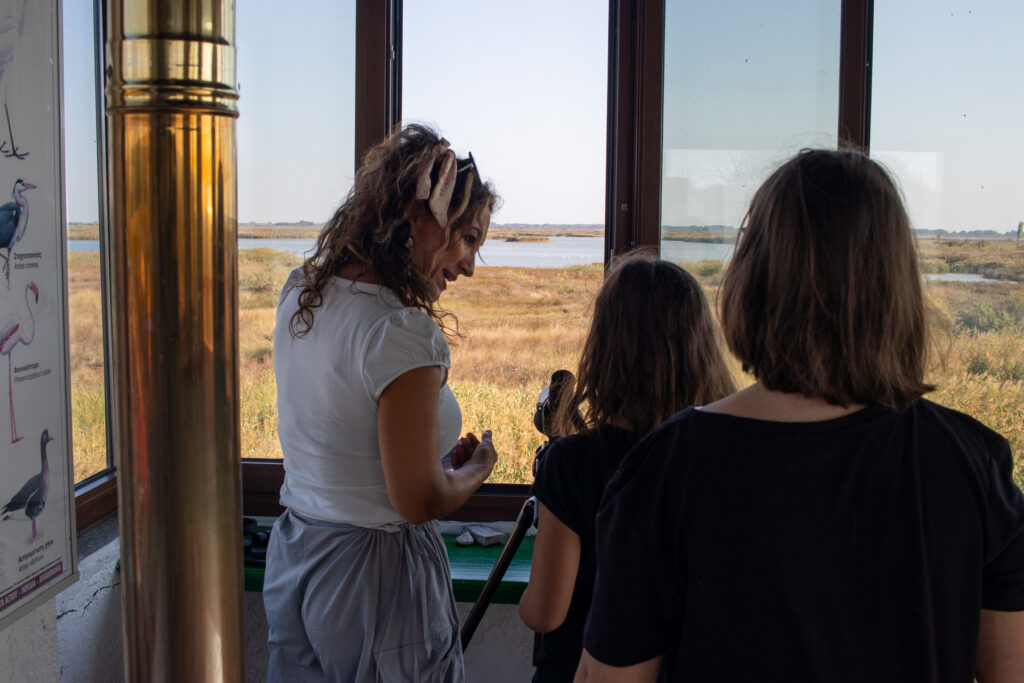
EuroBirdwatch 2025 in Nea Agathoupoli | Birdwatching in Pieria
October 5, 2025 — Nea Agathoupoli, Pieria, Greece
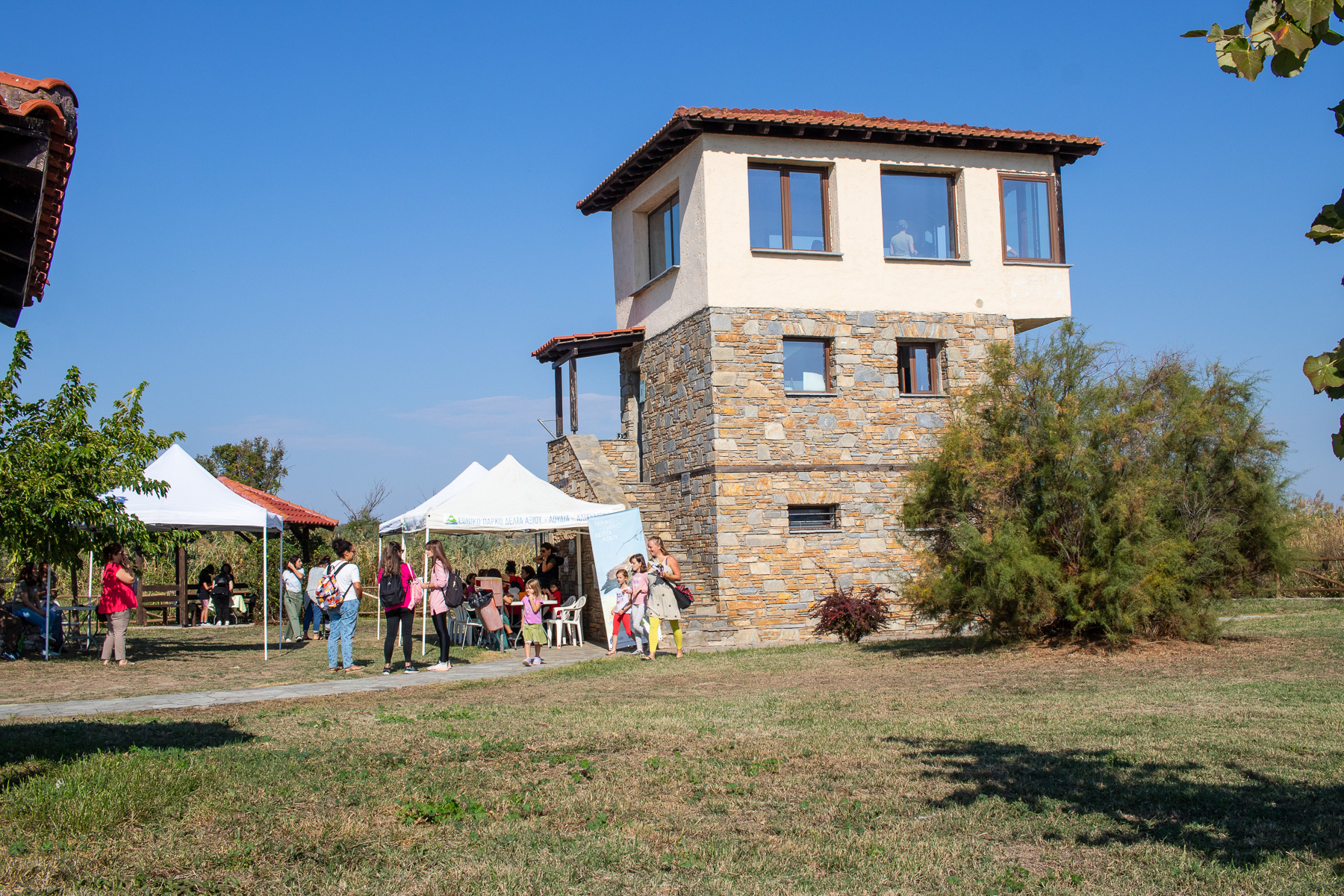
The birdwatching tower at Nea Agathoupoli, overlooking the wetlands of northern Pieria.
Every autumn, the skies above Europe become part of a much larger journey.
Birds move between breeding and wintering grounds, crossing countries, landscapes and seas along routes that existed long before any human border was drawn.
In Pieria, one of the places where this migration becomes visible is Nea Agathoupoli, on the wetlands of the Axios–Loudias–Aliakmon Delta.
On October 5, 2025, birdwatchers, families, photographers and nature lovers gathered here as part of EuroBirdwatch — an annual European bird migration event that invites people to stop, look up and pay attention to the natural world around them.
EuroBirdwatch at a Glance
- Location: Nea Agathoupoli, Pieria, Greece
- When: October 5, 2025
- Setting: Wetlands of the Axios–Loudias–Aliakmon Delta
- What: Birdwatching, guided activities, environmental education and family activities
- Good for: Birdwatchers, photographers, families, nature lovers and slow travel
- Bring: Binoculars or a camera, comfortable shoes and patience
Where Is Nea Agathoupoli?
Nea Agathoupoli lies in northern Pieria, close to the Thermaic Gulf and the extensive wetland landscapes of the Axios–Loudias–Aliakmon Delta.
This is a very different side of Pieria from the beaches of Paralia, the villages of Mount Olympus or the archaeological sites further south.
Here, the landscape is defined by water, reeds, open skies, mudflats and low coastal horizons. It is a place to slow down rather than pass through quickly.
The local birdwatching observatory provides a particularly useful viewpoint for visitors who want to experience this landscape through wildlife.
When Migration Becomes Visible
Autumn is one of the most interesting periods for birdwatching because many migratory birds are moving south towards their wintering grounds.
The wetlands provide places where birds can feed, rest and continue their journeys.
From a birdwatching tower, the experience can initially seem almost uneventful. You look across the water. You wait. You listen.
Then something moves.
A bird crosses the field of view. Another appears in the reeds. A group rises from the water. Suddenly the landscape that looked still becomes full of movement.
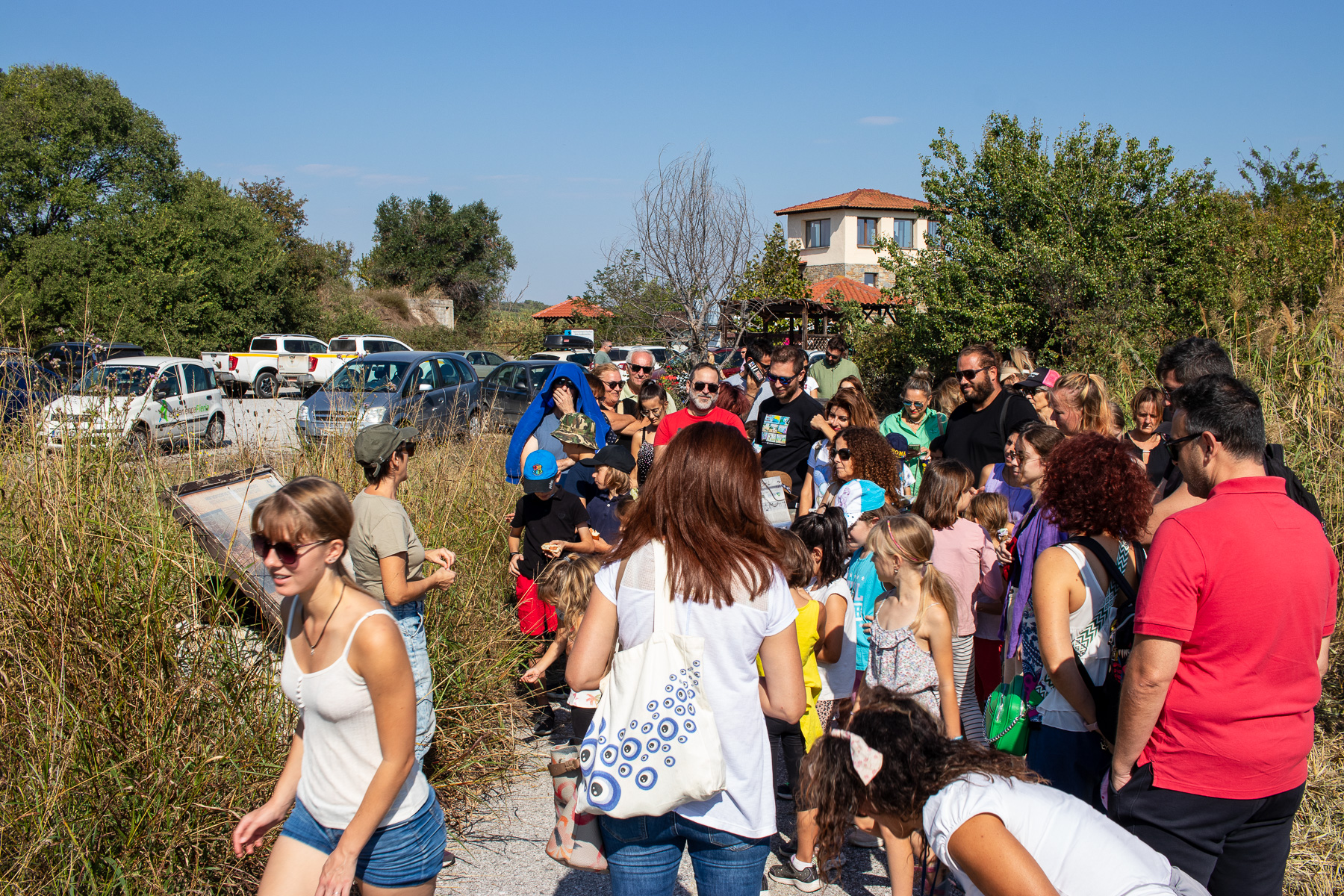
Visitors gathering around the birdwatching observatory during EuroBirdwatch.
EuroBirdwatch 2025 in Nea Agathoupoli
The October 2025 event brought together people with very different levels of experience.
Some came with binoculars and knowledge of bird species. Others arrived simply because they wanted to spend a morning outdoors with their families.
The programme included guided birdwatching, environmental activities, creative workshops and activities for children, creating an accessible introduction to the wetland environment.
The event was part of the wider EuroBirdwatch tradition coordinated in Greece by the Hellenic Ornithological Society, partner of BirdLife International.
For visitors, the important part was not simply identifying as many species as possible. It was learning how to look at the wetland as a living system.
Birdwatching Is Mostly About Waiting
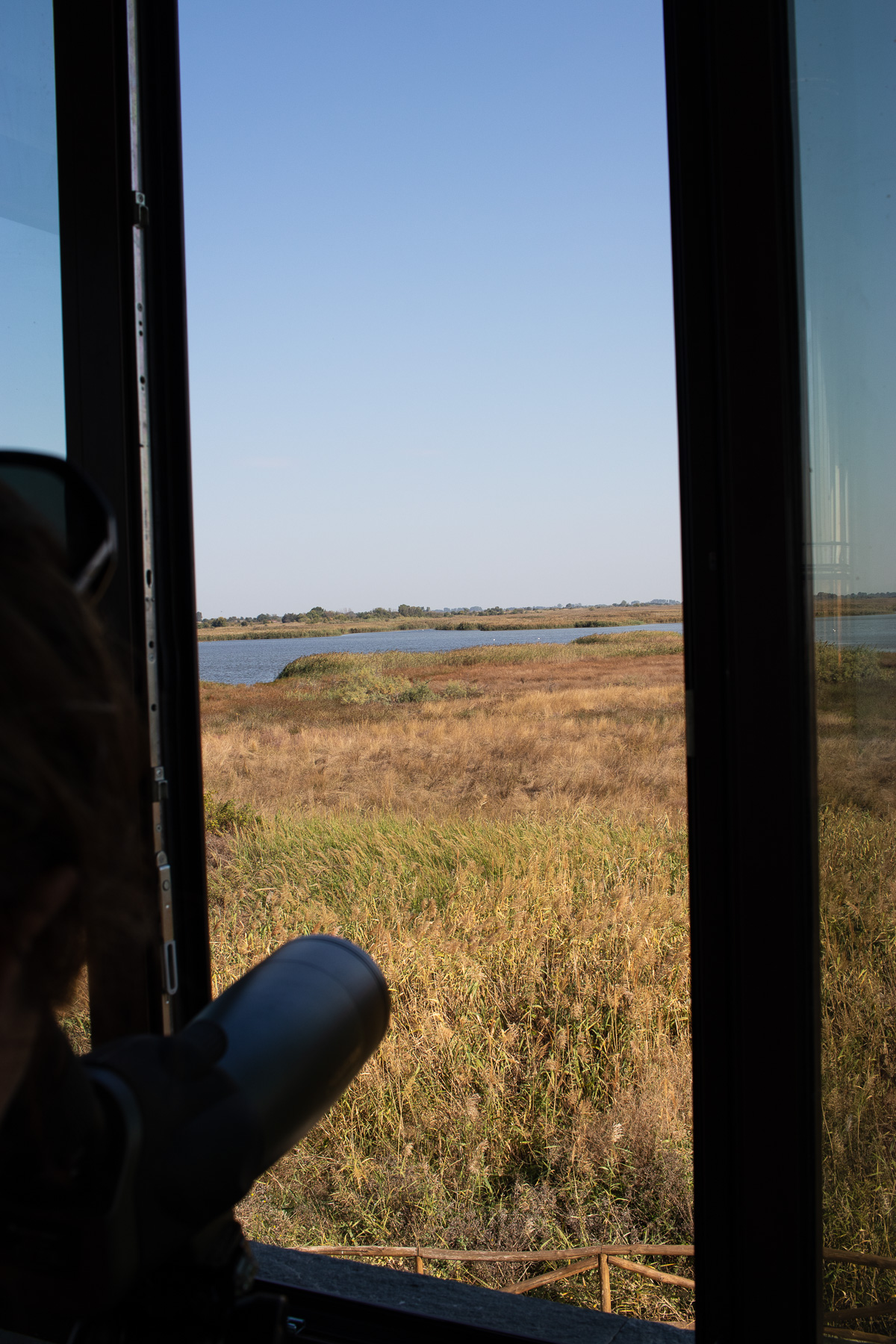
A telescope becomes a window into the wetland.
Birdwatching asks for something that modern travel often forgets: patience.
You cannot make a bird appear because you are ready with your camera.
You wait.
You watch the water. You listen to calls. You learn to distinguish movement in the reeds from movement in the sky.
And slowly, the landscape begins to reveal itself.
This is part of what makes birdwatching such a natural fit for slow travel. The goal is not to rush through a checklist, but to spend enough time in one place to notice what is happening there.
Why These Wetlands Matter
Migration is not an easy journey.
Birds travelling between distant regions depend on a chain of suitable habitats where they can feed and rest. Wetlands are therefore important not only because they are beautiful places to visit, but because they support wildlife during these movements.
At the same time, wetlands are sensitive environments. Changes in water availability, habitat loss, disturbance and broader environmental pressures can affect the species that depend on them.
That is why an event such as EuroBirdwatch has a purpose beyond a day of birdwatching. It helps people understand that the landscape they are looking at is part of a much larger ecological network.
A Wetland Without Borders
A migrating bird does not know where Greece ends and another country begins.
Its journey may connect northern Europe, the Mediterranean and Africa. The wetlands of Pieria become one small part of that much larger route.
Standing at Nea Agathoupoli, this becomes surprisingly easy to understand.
The horizon looks local.
The journey is not.
That contrast is perhaps one of the most powerful things about experiencing migration in person.
A Place for Families and First-Time Birdwatchers
You do not need to be an experienced birdwatcher to visit Nea Agathoupoli.
For families, the combination of open landscape, observation and simple educational activities can turn a short visit into a different kind of outdoor experience.
Children can learn to look for movement, listen for calls and understand why birds gather around wetlands.
Photographers, meanwhile, will find changing light, reflections, silhouettes and wide horizons — especially around sunrise and sunset.
Watch Our EuroBirdwatch Film
We filmed an earlier EuroBirdwatch experience at Nea Agathoupoli in 2023. It offers a glimpse of the atmosphere that makes a birdwatching day here so different from a conventional sightseeing trip.
A previous Experience Pieria film from EuroBirdwatch at Nea Agathoupoli.
Practical Tips for Visiting Nea Agathoupoli
- Bring binoculars: Even an inexpensive pair can make a major difference.
- Bring a camera: A telephoto lens is useful, but the landscape itself is worth photographing.
- Wear comfortable shoes: Wetland paths and observation areas may have uneven or muddy sections depending on conditions.
- Dress for the weather: The open landscape can feel cooler and windier than sheltered areas.
- Move quietly: Avoid unnecessary noise around observation points.
- Give wildlife space: Do not approach, feed or disturb birds.
- Be patient: The best sightings are not always immediate.
When to Go Birdwatching in Pieria
EuroBirdwatch takes place in autumn, making the first part of October a natural time to experience migration.
But the wider wetland environment is not only about one annual event. Birdwatching opportunities can vary with the season, weather, water conditions and the species passing through the area.
If you are planning a dedicated birdwatching visit, it is worth checking current local information before travelling and respecting any access or conservation guidelines in place.
Nea Agathoupoli as a Different Pieria Experience
When people think of Pieria, they often picture Mount Olympus, beaches, villages and archaeological sites.
All of those belong to the region.
But so do wetlands.
Nea Agathoupoli offers a slower, quieter experience of Pieria — one shaped by water, birds, open space and seasonal movement rather than by monuments or busy streets.
It is a reminder that discovering a destination sometimes means looking away from its most famous attractions.
Why Birdwatching Belongs in a Pieria Itinerary
A visit to Nea Agathoupoli can work particularly well for travellers who want to experience another side of the region.
You can combine the wetlands with time on the Pieria coast, explore nearby towns, or continue south towards the landscapes of Mount Olympus.
For more outdoor experiences across the region, explore our Outdoor Activities in Pieria.
You can also discover more of the region through our Explore Pieria guide.
The Sky Is Part of the Landscape
At Nea Agathoupoli, there is very little between you and the horizon.
The wetland stretches out. The Thermaic Gulf opens into the distance. Birds appear and disappear. The wind changes the surface of the water.
And for a while, you stop looking at the clock.
That is perhaps the simplest lesson of birdwatching.
You arrive expecting to watch birds.
You leave having learned to watch the landscape.
Continue Exploring Pieria
The wetlands are only one part of the story.
From here, you can continue along the coast, discover the towns and villages of Pieria, explore Mount Olympus, follow forest trails and waterfalls, or simply find another quiet place where the landscape asks you to slow down.
Explore Pieria at your own pace:
Explore Pieria
