
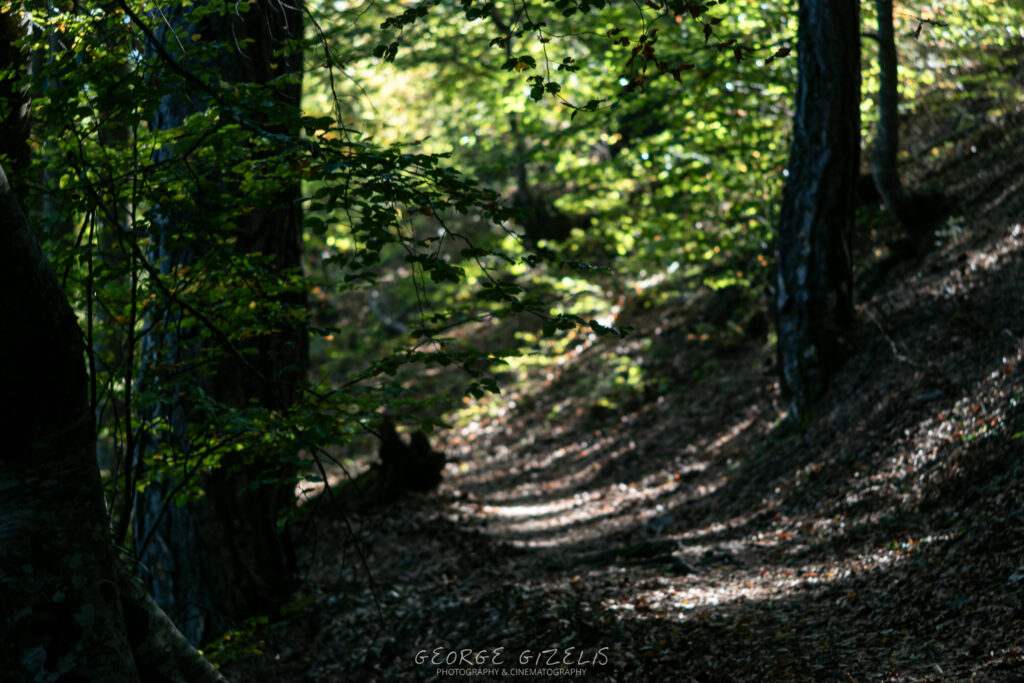
A Forest Walk on Mount Olympus: Stavros–Mana Trail
Mount Olympus · Forest Hiking · Flora & Fauna · Slow Travel
Mount Olympus is often associated with its high peaks, rocky landscapes and demanding ascents. But there is another side to the mountain: quiet forest trails, birds calling among the trees and small details that become visible when you slow down.
On Saturday, 10 October 2026, my friend Christos and I headed up from Litochoro for a walk along the Stavros–Mana trail. Our plan was simple: spend some time in the forest, follow the path towards Mana spring and enjoy the mountain without rushing.
I recorded our walk to Mana with a GoPro. There is no spoken narration, allowing the sounds recorded along the trail, including birds and woodpeckers, to remain part of the experience. I did not film the return journey; instead, I took photographs along the way.
Quick Facts
Location: Mount Olympus, near Litochoro, Pieria, Greece
Route covered: Stavros Refuge to Mana spring
Starting point: Stavros Refuge, also known as Dimitris Bountolas Refuge
Starting elevation: Approximately 940 metres
Destination: Mana spring, approximately 1,020 metres
Walking time: Approximately 45 minutes to Mana at our normal pace
Experience: A forest walk with opportunities to observe trees, seasonal vegetation and birdlife
Good to know: Check the weather and trail conditions before setting out.
Above the Clouds on the Way to Stavros
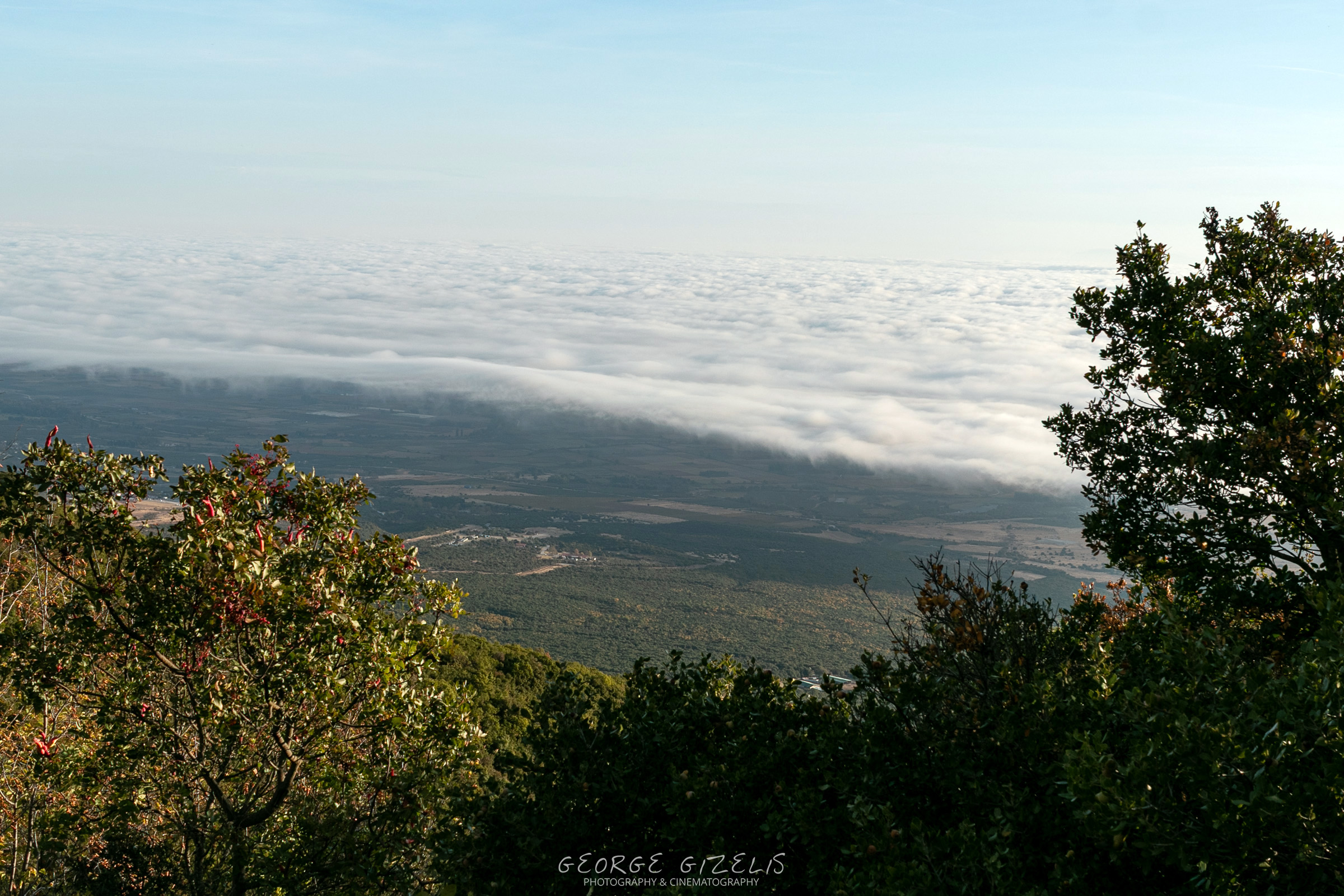
The day was sunny, although clouds had gathered over the plain below. As we climbed towards Stavros, the landscape changed with the elevation, offering a different perspective on the mountain and the lowlands around it.
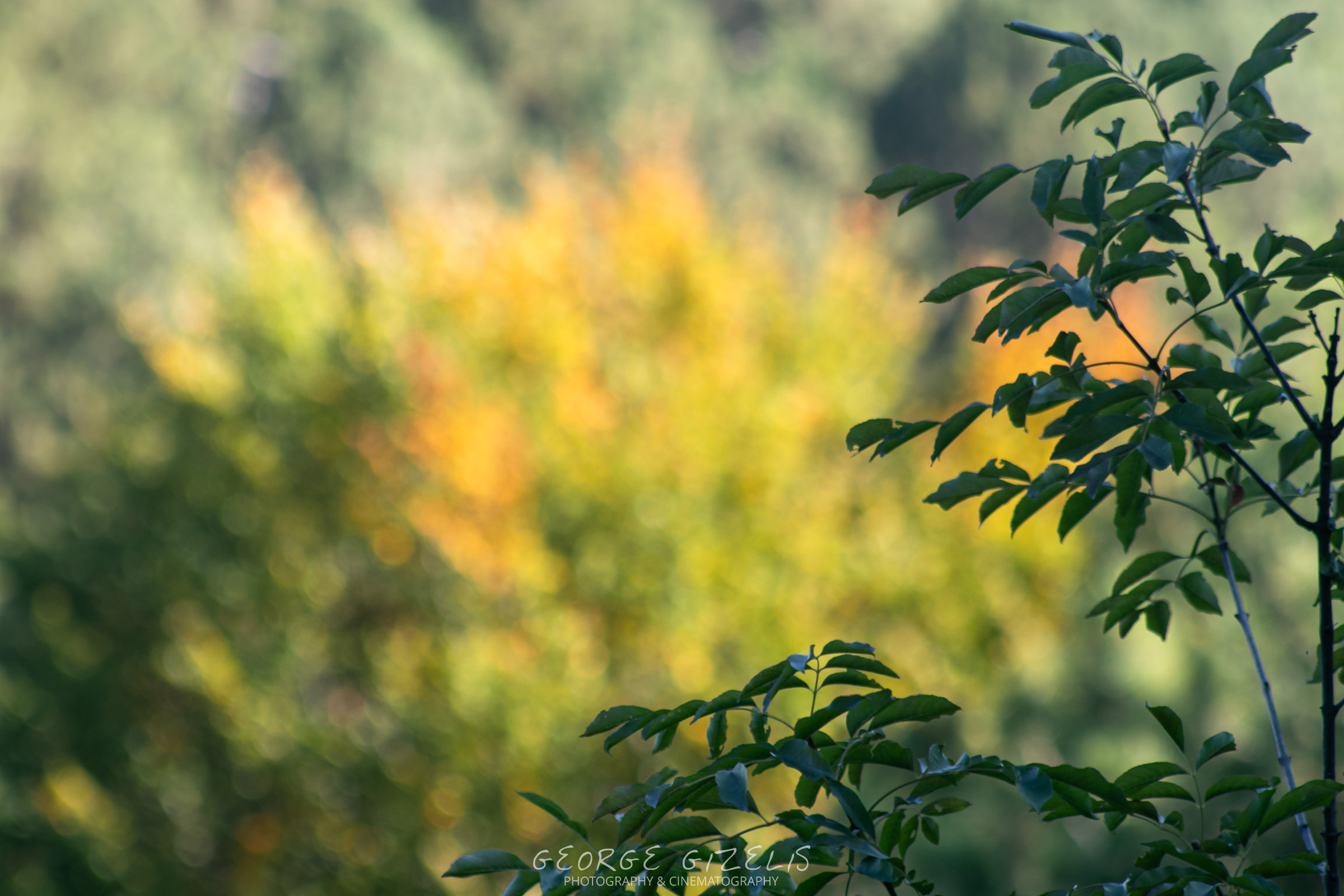
The forest offered another view of the day: warm sunlight filtering through the foliage, golden tones among the greens and the changing light of an October afternoon. It is often these smaller details, rather than a distant view alone, that make time in the mountains memorable.
At the refuge, the walk took us into a quieter environment. The forest became the focus, with its changing light, uneven ground and the sounds of birds hidden among the trees.
Starting the Walk at Stavros Refuge
Stavros Refuge, also known as Dimitris Bountolas Refuge, stands at approximately 940 metres above sea level. From here, the section of trail towards Mana begins with a relatively gentle ascent through the forest.
The pace of this walk leaves room to notice details that might otherwise go unseen: the texture of the ground, the light filtering through the canopy and the differences between shaded and more open parts of the path.
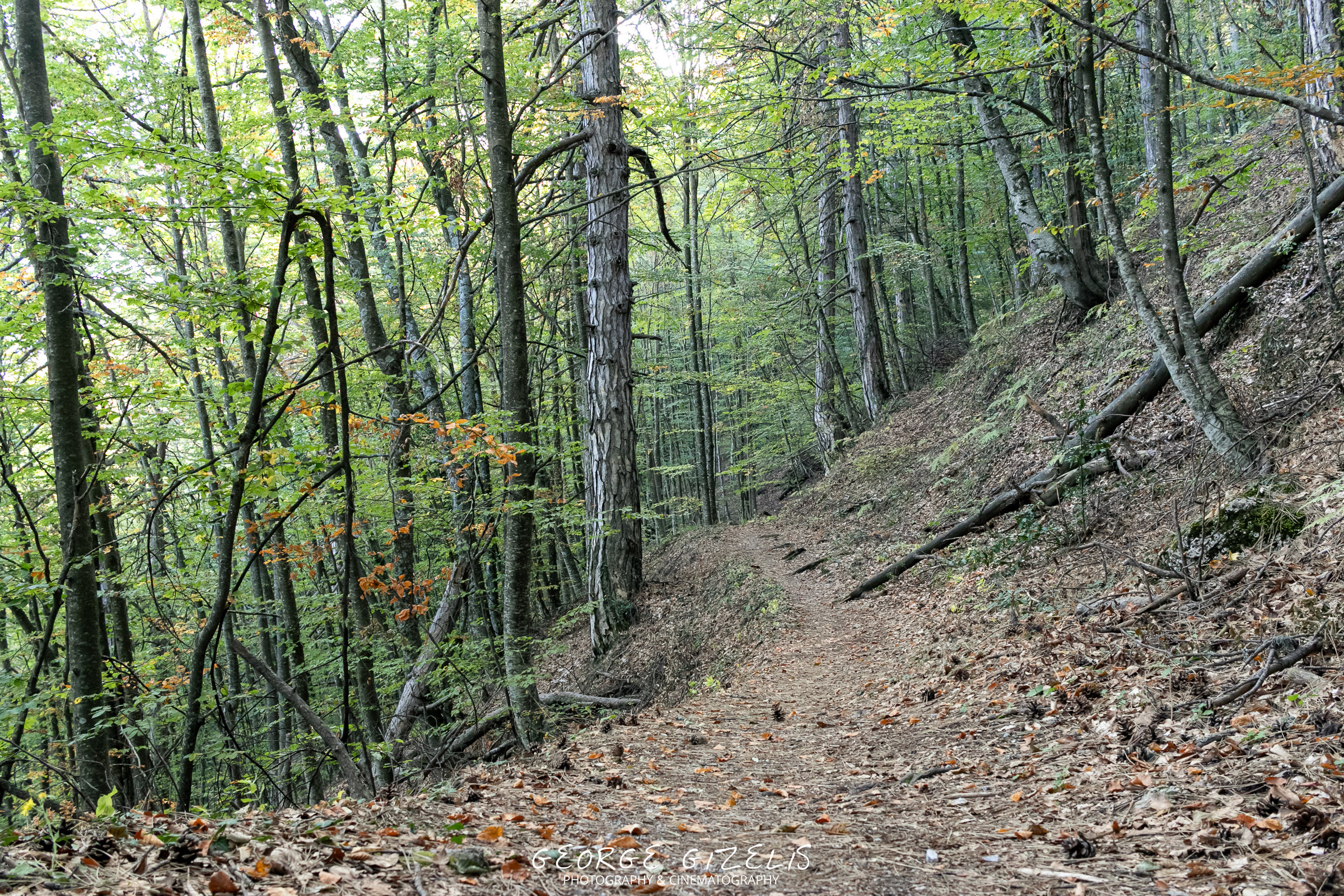
For visitors staying in Litochoro, the area around Stavros offers an opportunity to experience the forested slopes of Mount Olympus without immediately committing to a high-mountain ascent. The actual difficulty depends on conditions, so choose a walk that suits your experience, footwear and the weather.
A Trail Shaped by Water
Our destination was Mana, a natural spring at approximately 1,020 metres. The area is associated with the historic water supply from Mount Olympus to Litochoro, linking the mountain’s natural resources with the life of the town below.
Springs and damp forest areas support vegetation that may differ from the plants growing on drier ground. As you walk, look for changes in the surrounding vegetation and the conditions of the forest floor.
Mana was our destination for this outing, rather than the end of a longer mountain trek. We reached it in approximately 45 minutes at our normal walking pace.
Trees and Vegetation Along the Trail
The forested slopes of eastern Mount Olympus support a varied mix of trees and smaller plants. Beech trees (Fagus sylvatica) are prominent in parts of the middle forest zone, while black pine (Pinus nigra) and other tree species occur across the wider mountain landscape.
In ravines and wetter areas, the vegetation can include plane trees, willows, chestnuts, elms and maples. Ferns and mosses may also grow in damp, shaded places where the forest floor retains moisture.
Seasonal wildflowers add another layer of detail. Depending on the time of year and local conditions, cyclamens and violets may be found among the leaves and undergrowth. They are easy to overlook if you concentrate only on reaching your destination.
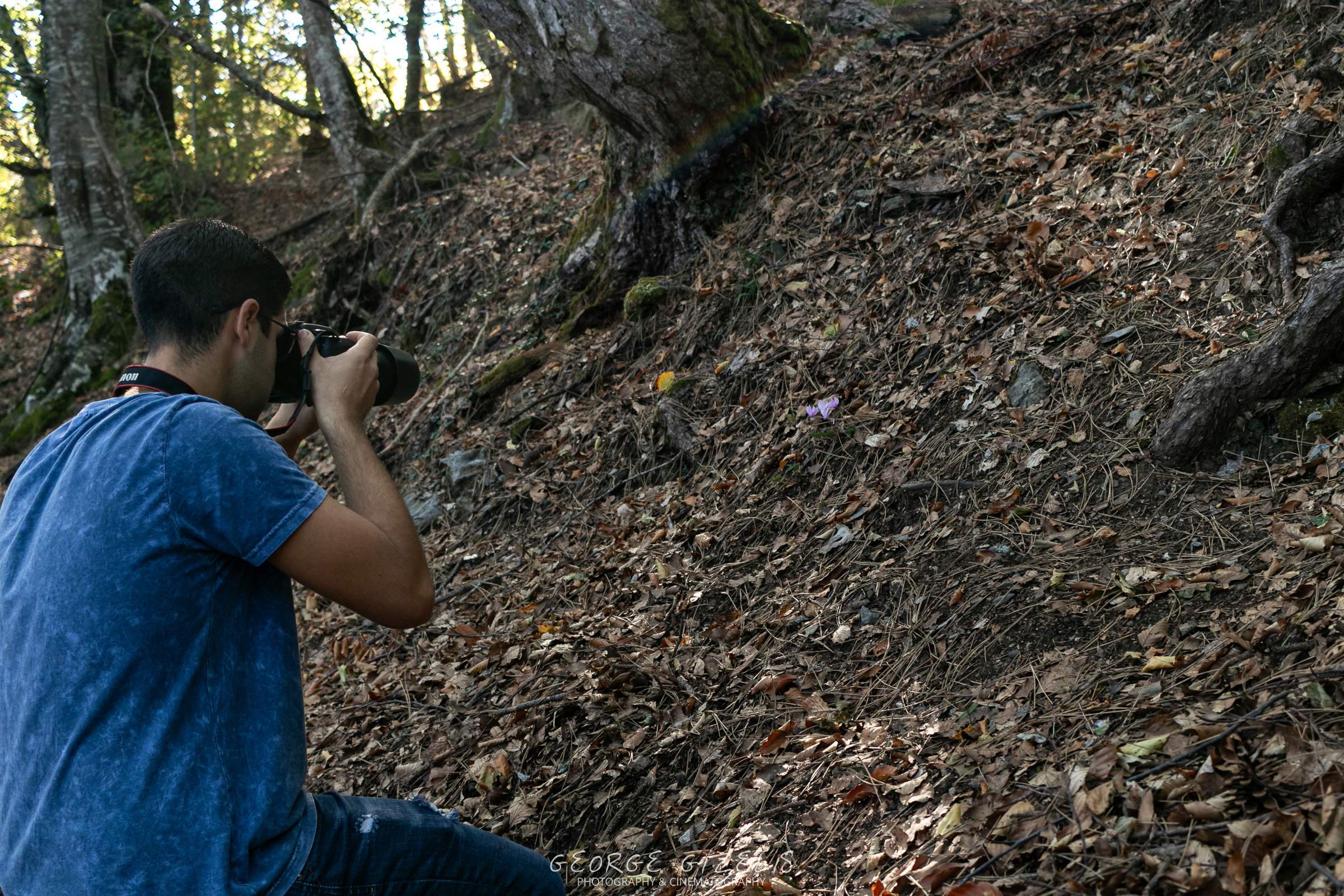
Christos stopped to photograph a cyclamen during our walk. It was a small moment, but one that captured the spirit of the outing. There was no need to hurry or to look only towards the end of the trail. Sometimes the most memorable part of a walk is a detail growing quietly beside the path.
When photographing wildflowers, take care not to trample surrounding plants or disturb the forest floor. Leave flowers where they grow so that others can discover them too.
Birdsong and the Sound of the Forest
One of the things I wanted to preserve in the GoPro footage was the sound of the walk itself. We did not speak to the camera. Instead, the recording captures the natural atmosphere along the trail, including birds and woodpeckers.
Woodpeckers are distinctive forest birds. Their calls and drumming can carry through the trees, even when the birds themselves remain difficult to spot. Other woodland birds, including blackbirds, finches and jays, are associated with the wider Mount Olympus landscape.
Listening can be as rewarding as looking. Pause for a moment and allow your ears to adjust; sounds that were easy to miss while walking may become more noticeable when you stand still.
Watch the Walk: Stavros to Mana
The video follows our walk from Stavros Refuge towards Mana. It records the route and the forest atmosphere on that October day, without spoken narration.
The footage covers the walk to Mana, not the return journey. On the way back, I put the camera away and focused on taking photographs and observing the surroundings.
Wildlife on Mount Olympus
Mount Olympus supports a rich range of wildlife across its different habitats and elevations. In the wider forest zone, mammals include foxes, squirrels, martens, badgers, wild boar and roe deer. Higher up, in rocky mountain terrain, the Balkan chamois (Rupicapra rupicapra) is one of the characteristic species of the mountain.
The broader area also supports birds of prey and owls, as well as amphibians and reptiles associated with suitable habitats near water. Butterflies and other invertebrates contribute to the mountain’s biodiversity.
These species belong to the wider Mount Olympus landscape; this is not a checklist of animals you should expect to see on the Stavros–Mana trail. Sightings depend on the season, weather, habitat and how quietly you move through the forest.
The best approach is to observe without disturbing. Keep your distance from wildlife, avoid leaving food behind and take all rubbish back with you.
Walking at Your Own Pace
We reached Mana in approximately 45 minutes, walking at our normal pace. The relatively gentle initial ascent gave us time to notice the forest rather than treating the destination as the only reason for the walk.
I have walked this trail barefoot on a previous occasion. That experience gave me a different awareness of the ground and its textures, but it is not a recommendation for everyone. Uneven terrain, roots, stones and changing conditions make suitable footwear the safer choice for most visitors.
This time, filming the walk to Mana and photographing the return gave me two different ways of experiencing the same landscape. Not every moment needs to be recorded. Sometimes it is enough to walk, listen and pay attention.
Practical Tips for Walking the Stavros–Mana Trail
Wear suitable footwear
Even a relatively gentle forest path can have uneven ground, roots, loose leaves and slippery sections. Choose footwear with appropriate grip and support.
Check the weather
Conditions on Mount Olympus can differ from those in Litochoro and change with elevation. Check the forecast before setting out and be prepared for cooler temperatures, wind or reduced visibility.
Bring water and a light layer
Carry drinking water and clothing appropriate for the conditions. Do not assume that water from a natural spring is safe to drink unless its safety has been confirmed.
Allow time to observe
Look beyond the destination. Notice the trees, listen for birds and take time to appreciate seasonal flowers without disturbing them.
Respect the forest
Stay on the established path where possible, avoid picking wildflowers, take your rubbish with you and keep noise to a minimum so that wildlife and other walkers are not disturbed.
Frequently Asked Questions
Where does the Stavros–Mana trail start?
The walk described here starts at Stavros Refuge, also known as Dimitris Bountolas Refuge, on Mount Olympus above Litochoro in Pieria, Greece.
How long does it take to walk from Stavros to Mana?
We reached Mana in approximately 45 minutes at our normal walking pace. Your time may vary depending on your pace, stops and trail conditions.
Is the Stavros–Mana trail suitable for beginners?
The initial section we walked was relatively gentle, but suitability depends on fitness, footwear, weather and trail conditions. Check local information before setting out and do not rely on walking time alone to judge difficulty.
Can you see cyclamens on Mount Olympus?
Cyclamens and other seasonal wildflowers occur in parts of the mountain’s forest environment. Whether you find them depends on the season and local conditions. Observe them without picking or damaging the plants.
What wildlife can be found on Mount Olympus?
The wider mountain landscape supports a range of mammals, birds, reptiles, amphibians and invertebrates. Seeing a particular species on the Stavros–Mana trail is never guaranteed, so walk quietly and observe from a respectful distance.
Does the video show the complete walk?
No. The GoPro footage records the walk from Stavros towards Mana. The return journey was not filmed; I took photographs instead.
Further Reading
For more information about Mount Olympus, its trails and its natural environment, explore these resources:
For more ideas and practical information, visit our Mount Olympus guide and explore more places and experiences across Pieria.
A Different Way to Experience Mount Olympus
You do not always need to reach a summit to appreciate Mount Olympus. A forest path, a bird calling from somewhere among the trees or a cyclamen growing beside the trail can be enough to make a walk memorable.
For us, the walk from Stavros to Mana was a chance to spend time outdoors, record the sounds of the forest and notice the details that make this mountain more than its famous peaks.
Discover Pieria Differently
Explore forest trails, coastal villages, local food and quieter corners of the region through authentic stories and practical guides from Experience Pieria.
