
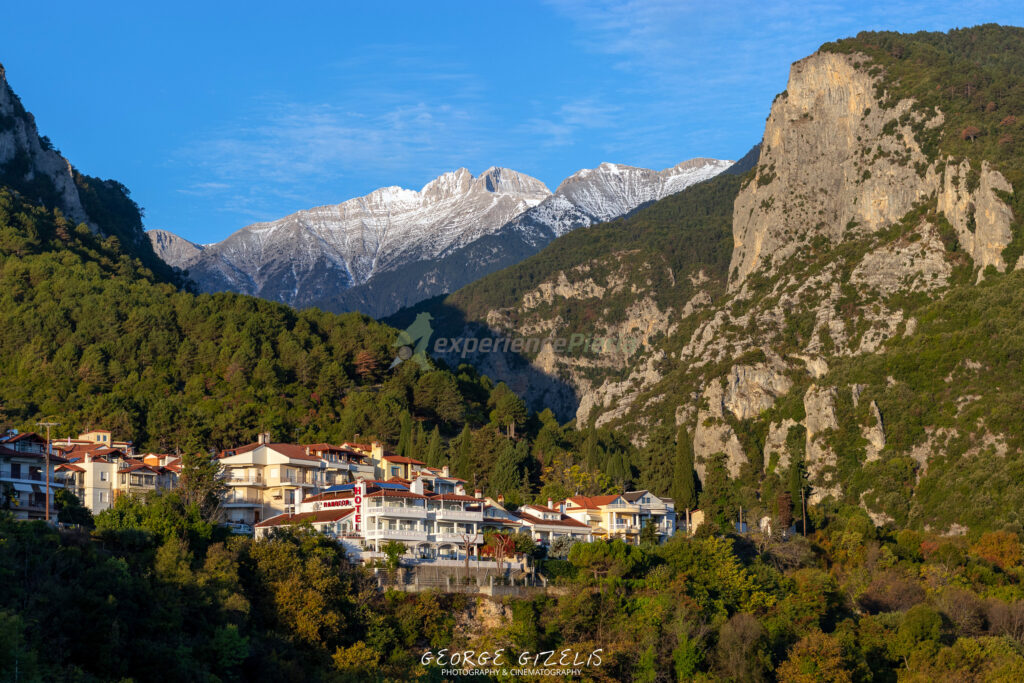
EXPERIENCE PIERIA · MOUNT OLYMPUS · PIERIA · GREECE
Mount Olympus, Greece | Where Myth, Nature & History Meet
Mount Olympus is more than Greece’s highest mountain. It is a landscape where mythology,
geology, biodiversity, archaeology and human imagination have been connected for thousands of years.
There are places that go beyond geography.
Places that are not defined only by a point on a map, but become part of the collective
memory of humanity.
Mount Olympus is one of them.
For thousands of years, this mountain has existed somewhere between the physical and the
mythical — a real landscape of forests, gorges, rocks and snow-covered peaks that became,
in the imagination of the ancient Greeks, the home of the gods.
Today, people arrive at Olympus for very different reasons.
Some come to hike. Some come to photograph. Some come to study its geology and biodiversity.
Others come for the ancient city of Dion, the forests around Litochoro, the waterfalls,
the views towards the Aegean or simply to spend a little time in the landscape.
And perhaps that is what makes Olympus so unusual.
The mountain has never belonged to just one story.
Watch: Mount Olympus — A Mountain Beyond Geography
The following film looks at Olympus through its mythology, geological history,
biodiversity, archaeological heritage and continuing cultural importance.
The narration is in Greek, while the story is designed to speak to a wider international
audience through its imagery and English-language context.
A visual journey through the natural and cultural heritage of Mount Olympus.
A Mountain That Became a Myth
Mount Olympus rises between Macedonia and Thessaly, reaching 2,918 metres at Mytikas,
the highest summit in Greece.
But its importance has never been measured only in metres.
For ancient Greeks, Olympus was imagined as the home of the Twelve Olympian Gods,
with Zeus as their ruler. The mountain appears in ancient Greek literature and became
one of the most enduring landscapes in European cultural imagination.
The clouds, cliffs, inaccessible peaks, sudden storms and deep valleys helped create
a landscape that was both real and mysterious.
The mountain did not need to be invented.
It only needed a story.
That story travelled far beyond Greece — through literature, philosophy, painting,
theatre, cinema and modern popular culture.
© Giorgos Gizelis / Experience Pieria
At the Foot of Olympus: Ancient Dion
The connection between Olympus and human history becomes particularly visible at
Dion Archaeological Park
.
At the foot of the mountain, ancient Dion developed as an important religious and
cultural centre of ancient Macedonia.
Sanctuaries, theatres, public buildings, water systems and other remains reveal a city
closely connected with the religious world of Olympus.
The Sanctuary of Zeus Olympios is particularly important to this relationship.
The mountain that dominated the horizon was also the mountain associated with the gods
worshipped in the ancient city below.
According to historical tradition, Alexander the Great also visited Dion and made
offerings to Zeus before his campaign in Asia.
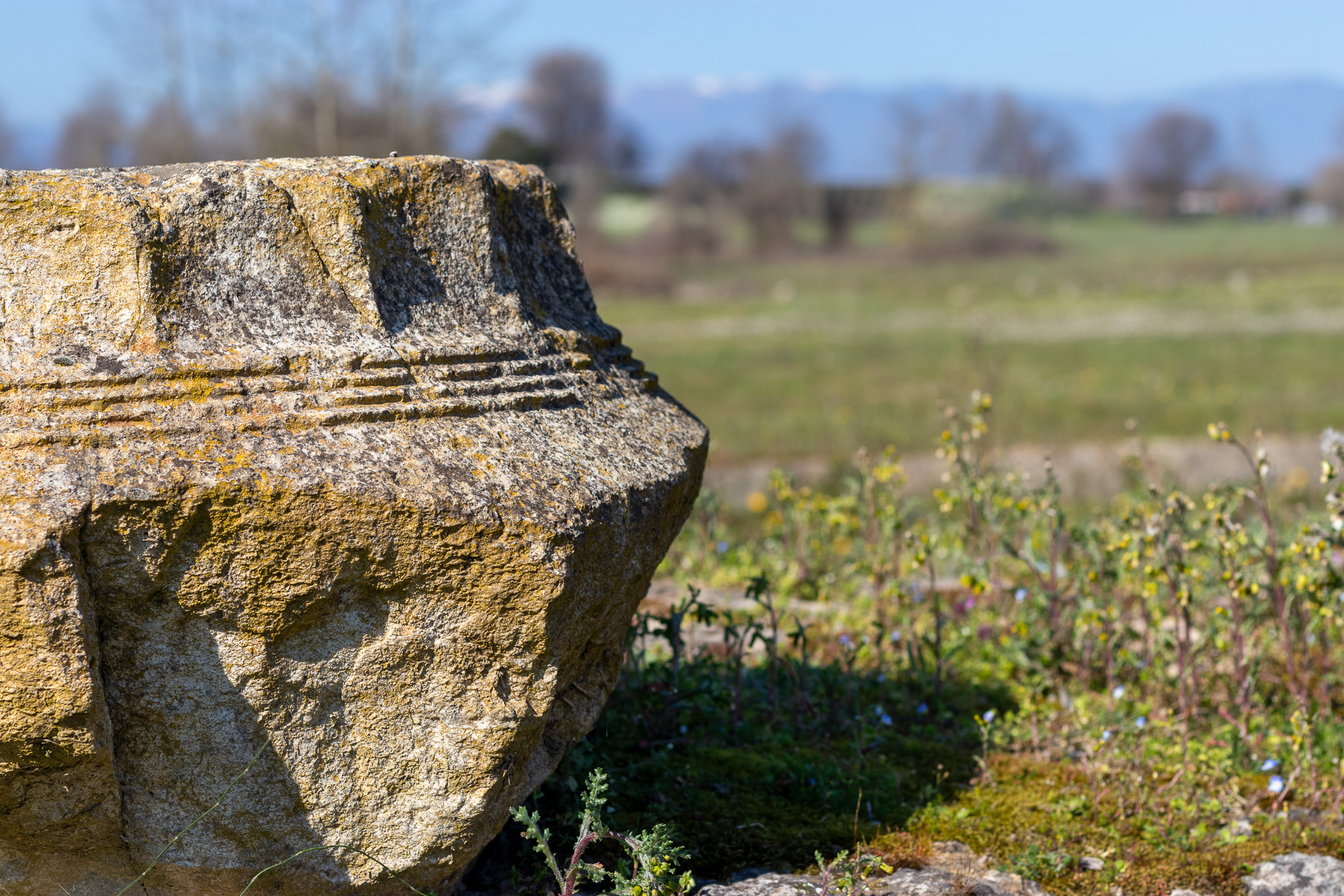
Today, walking through Dion offers something unusual:
ancient stones, living vegetation and Mount Olympus can still occupy the same view.
© Giorgos Gizelis / Experience Pieria
Before the Gods, There Was the Mountain
Long before humans gave Olympus a mythology, geological processes were shaping it.
The rocks, cliffs, valleys and deep gorges record a geological history that reaches back
hundreds of millions of years.
Water continues to carve the landscape. Weather changes it. Erosion exposes new surfaces.
Snow, rain, temperature and gravity all contribute to a landscape that is never completely still.
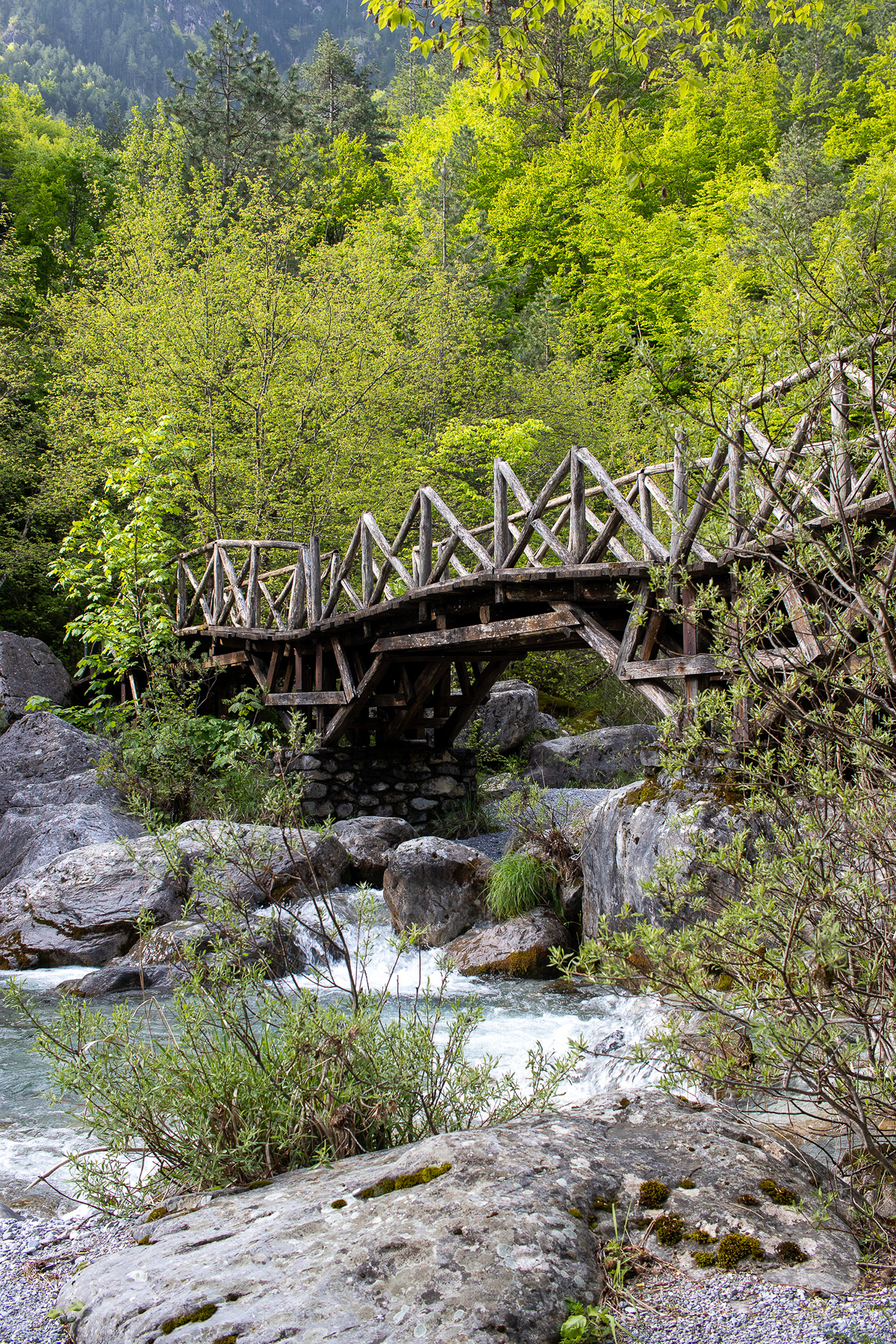
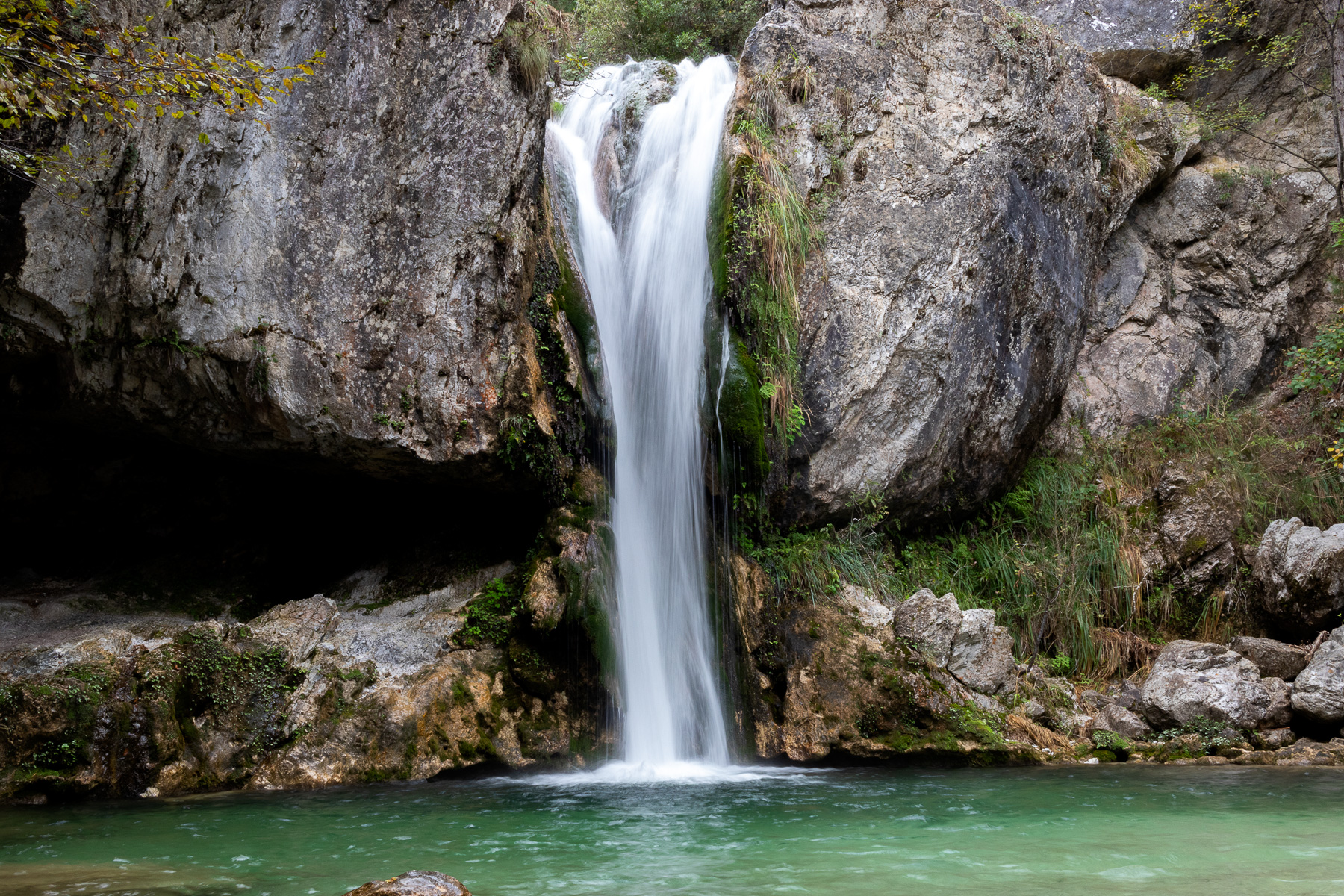
When you walk through the Enipeas Gorge, cross a wooden bridge or stand beneath one of
Olympus’s waterfalls, you are not simply looking at scenery.
You are looking at the result of geological processes that have been unfolding for an
almost unimaginable length of time.
In a way, the ancient myths and modern geology ask different questions about the same place.
One asks:
Who lives up there?
The other asks:
How did this landscape become what it is?
© Giorgos Gizelis / Experience Pieria
One of Greece’s Great Biodiversity Landscapes
Olympus is also much more than its famous peaks.
Its steep change in altitude, proximity to the Aegean Sea, geological diversity and
different microclimates create an unusually rich natural environment.
The wider UNESCO property contains around 1,983 vascular plant taxa, including
27 strict local endemics found only on Mount Olympus.
Forests, alpine habitats, streams and rocky environments support birds, mammals,
reptiles, amphibians, insects and many other forms of life.
The mountain is also associated with characteristic species of the Balkan highlands,
including the Balkan chamois.
This biological richness is one of the reasons the mountain needs to be experienced
with care.
A visitor may see only a path, a rock or a tree.
The ecosystem sees something much larger.
The Forest Is Part of the Experience
Olympus does not have to be experienced only by climbing towards its highest peaks.
Around Litochoro and the lower mountain, forests, rivers and gorges offer a much slower
way of experiencing the landscape.
Read our story about
Forest Bathing in Olympus
to explore another way of spending time beneath the mountain.
We Are Visitors Here
There is something easy to forget when a landscape becomes a tourist destination:
the landscape existed before us.
Olympus was not created for hiking routes, photographs, social media or tourism.
People are visitors in a much older system.
That does not mean we should not explore it.
It means that exploration should come with attention.
Stay on appropriate paths.
Respect wildlife.
Do not remove plants or natural features.
Carry your waste out.
Check weather conditions before heading higher into the mountain.
The more important the landscape becomes internationally, the more important
responsible behaviour becomes locally.
Olympus Is Not Only About Reaching the Summit
For some people, Olympus means Mytikas.
For others, it may be a forest path above Litochoro, the sound of the Enipeas River,
a waterfall after rain, a view towards the Aegean or an early morning in the mountain
before the trails become busy.
There is no single correct way to experience the mountain.
The
Mount Olympus National Park Guide
explores the mountain in a more practical way — from Litochoro and Enipeas Gorge
to hiking routes, seasons, trail etiquette and the relationship between the mountain
and the Aegean.
The important thing is to understand what kind of experience you are choosing.
A short forest walk is not the same thing as a high-altitude ascent.
A visit to Dion is not a hike.
A viewpoint is not the summit.
Olympus has room for all of these experiences.

© Giorgos Gizelis / Experience Pieria
A Landscape of Global Importance
Mount Olympus has been protected for decades.
It was declared a National Park in 1938 and later became part of a wider framework
of national and European environmental protection, including Natura 2000.
The mountain is also recognised as a UNESCO Biosphere Reserve.
In 2026, the wider area of Mount Olympus was inscribed on the
UNESCO World Heritage List as a mixed cultural and natural heritage property.
This distinction matters.
Olympus is not being recognised simply because it is beautiful.
Its importance comes from the combination of its cultural and symbolic role,
its archaeological heritage and its exceptional natural and biological value.
The UNESCO property includes the wider mountain landscape across Pieria and Larissa,
together with the archaeological landscape of Dion.
In other words, the recognition reflects something people have understood about
Olympus for thousands of years:
the mountain and the culture around it cannot really be separated.
UNESCO Is Not the End of the Story
Global recognition is valuable.
But it is also a responsibility.
A World Heritage designation should not mean simply bringing more people to a place.
The real challenge is allowing people to discover Olympus while protecting the qualities
that made the mountain worthy of recognition in the first place.
For travellers, that can begin with surprisingly simple things:
walking responsibly, respecting the landscape, learning before visiting,
supporting local communities and understanding that nature is not a backdrop.
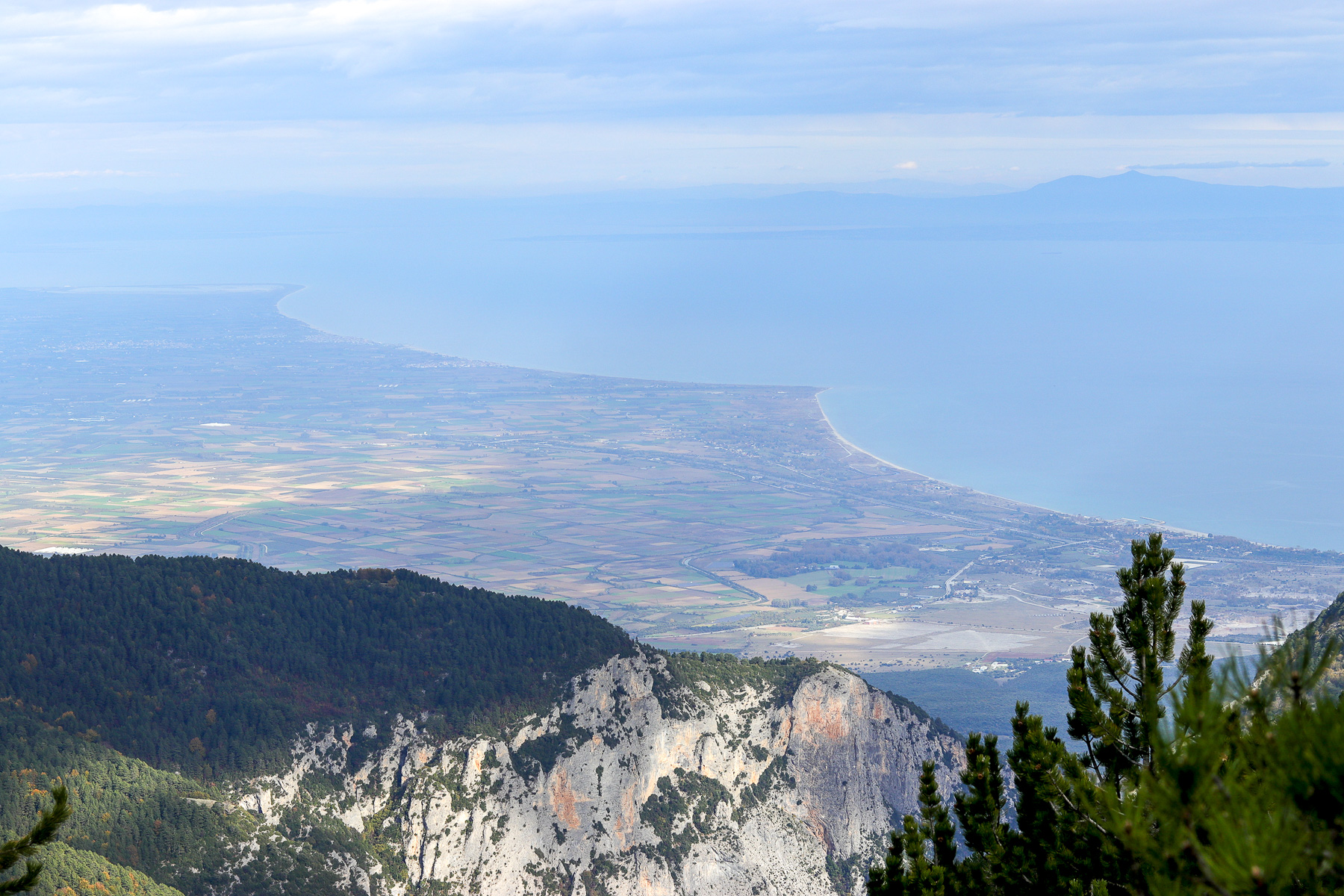
Where the Mountain Meets the Sea
One of the most distinctive things about Olympus is not found at the summit.
It is the relationship between mountain and sea.
Olympus rises dramatically from the landscape while the Aegean opens below it.
The distance between the high mountain and the coast is surprisingly small.
This is one of the reasons Pieria can feel so different from many conventional
mountain or beach destinations.
You can spend a morning in the forests of Olympus, walk through Litochoro,
explore ancient Dion and later find yourself beside the Aegean.
Our
guide to the beaches of Pieria
explores this other side of the landscape — from Mount Olympus towards the coast.
© Giorgos Gizelis / Experience Pieria
The Mountain Still Inspires New Stories
The ancient myths of Olympus continue to influence modern imagination,
but the mountain is also part of contemporary creative life.
Photographers, filmmakers, artists, researchers and travellers continue to use
its forests, waterfalls, cliffs, villages and changing light as a source of inspiration.
The
OLYMPUS TFP FESTIVAL
is one recent example of how the landscape itself can become part of a creative production.
The idea is simple:
Olympus is not only something to photograph.
It can become part of the story being created.
Olympus Is Still Here
The ancient Greeks imagined gods among these peaks.
Poets wrote about them.
Historians recorded the people who lived beneath them.
Scientists read the history of the Earth in the rocks.
Botanists study plants found nowhere else.
Hikers follow the trails.
Photographers wait for the right light.
Travellers arrive from around the world.
And the people who live around Olympus continue to see the mountain every day.
Perhaps that is the most remarkable thing about it.
Olympus has been a myth, a landscape, a sanctuary, a scientific subject,
a destination and a source of inspiration.
Yet beneath all those meanings, it remains what it has always been:
a mountain.
Real.
Wild.
Still changing.
Still here.
Discover Pieria Differently.
Questions About Mount Olympus
What is Mount Olympus famous for?
Mount Olympus is famous as the highest mountain in Greece and, above all,
as the mythical home of the Twelve Olympian Gods in ancient Greek tradition.
It is also important for its biodiversity, geological landscape, archaeological
heritage and hiking routes.
Where is Mount Olympus?
Mount Olympus lies in northern Greece between Macedonia and Thessaly.
From the Pieria side, Litochoro is the main gateway to the mountain and its
lower trails and landscapes.
How high is Mount Olympus?
Mytikas is the highest summit of Mount Olympus and reaches 2,918 metres above sea level.
Can I experience Mount Olympus without climbing to the summit?
Yes. The lower mountain around Litochoro offers forests, streams, waterfalls,
gorges and walking routes that can be experienced without attempting a summit ascent.
The Enipeas Gorge is one of the most accessible ways to experience the natural
landscape of Olympus.
Is Mount Olympus a UNESCO World Heritage Site?
Yes. In 2026, the wider area of Mount Olympus was inscribed on the UNESCO World
Heritage List as a mixed cultural and natural heritage property, recognising both
its cultural significance and exceptional biodiversity.
What is Dion’s connection with Mount Olympus?
Ancient Dion developed at the foot of Mount Olympus as an important religious
and cultural centre of ancient Macedonia. Its sanctuaries, especially the
Sanctuary of Zeus Olympios, are closely connected with the religious traditions
associated with Olympus.
Can I combine Mount Olympus with the sea?
Yes. One of Pieria’s distinctive advantages is the short distance between the
mountain and the Aegean coast. A visitor can spend the morning around Litochoro
or Mount Olympus and continue towards the sea later the same day.
What makes Mount Olympus important for biodiversity?
Its dramatic elevation range, different habitats, geological diversity and
proximity to the Aegean create a rich natural environment. The wider UNESCO
property contains approximately 1,983 vascular plant taxa, including 27 strict
local endemics found only on Mount Olympus.
