
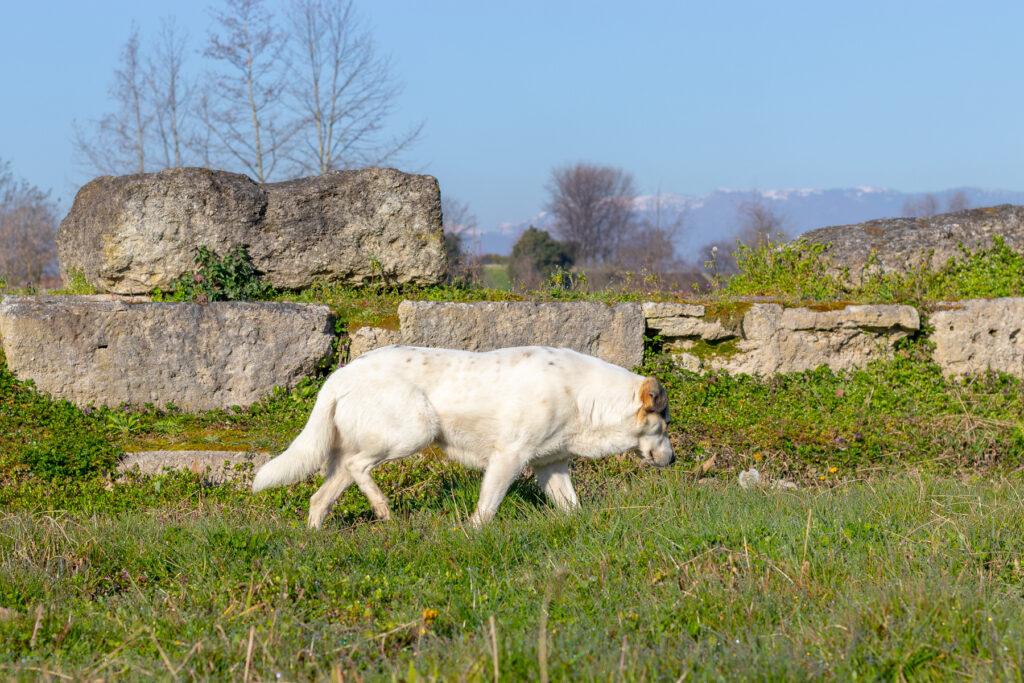
Dion Archaeological Park, Greece | Ancient Dion at the Foot of Mount Olympus
A March Morning, a Quiet Archaeological Site & an Unexpected Stray Muse
March 1, 2026 — Dion, Pieria
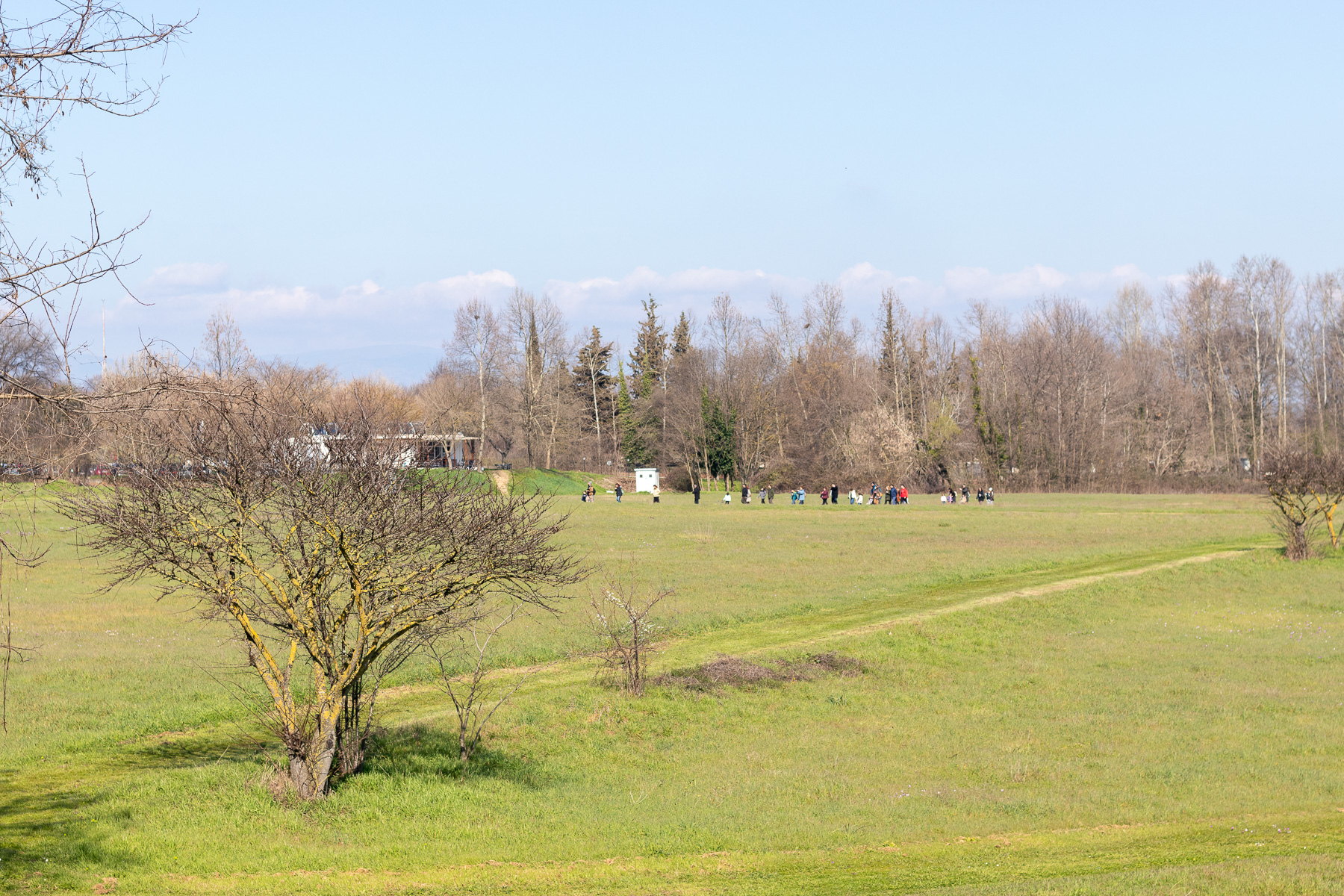
What Is the Archaeological Park of Dion?
The Archaeological Park of Dion is one of the most important archaeological sites in Pieria, Greece, located at the foot of Mount Olympus.
Ancient Dion was an important religious and cultural centre of ancient Macedonia. Today, its sanctuaries, theatres, public buildings, water systems and other archaeological remains are spread across a large open landscape where history and nature exist side by side.
The setting is part of what makes Dion special. You are not simply walking between isolated ruins. You are moving through an archaeological landscape of trees, streams, open spaces and ancient remains, with Mount Olympus rising beyond it.
For travellers exploring Pieria, Dion offers a chance to experience the region through its ancient history as well as its natural landscape.
Why Visit Dion?
Dion is a good place to visit if you want to combine archaeology, ancient Greek history, mythology, nature and photography during your time in Pieria.
The archaeological park is extensive enough to feel like a walk through a landscape rather than a quick sequence of monuments. Water moves through parts of the site, paths connect different archaeological areas, and Olympus provides a constant geographical reference.
It also makes a natural cultural stop when exploring the wider Mount Olympus area, particularly if you are visiting Mount Olympus, Litochoro or other parts of Pieria.
What Can You See at the Archaeological Park of Dion?
The archaeological park contains several important areas, allowing visitors to explore different aspects of ancient Dion.
- Sanctuary of Zeus Olympios — an important sacred area associated with the worship of Zeus and the religious identity of ancient Dion.
- Sanctuary of Asclepius — connected with the ancient cult of healing.
- Hellenistic Theatre — one of the site’s important cultural spaces.
- Roman Theatre — evidence of Dion’s continuing importance during the Roman period.
- Ancient water systems and baths — showing the important role of water within the ancient settlement.
- The surrounding landscape — streams, vegetation and open spaces that remain part of the experience today.
Why Visit Dion in March?
March offers a quieter and very different atmosphere from the warmer months.
When I visited on March 1, the morning was cold, the grass still carried traces of frost, and many of the trees had not yet developed their spring foliage.
The higher peaks of Olympus were still covered with snow, while the first signs of spring were beginning to appear at lower elevations.
For travellers interested in slow travel, photography, archaeology and nature, early spring can be an atmospheric time to explore the site.
There is also a practical reason to consider a winter or early-spring visit. The first Sunday of each month from November through March is among the free-admission dates for archaeological sites and museums in Greece.
Other annual free-admission dates include March 6, April 18, May 18, the final weekend of September during the European Heritage Days, and October 28.
Opening hours, admission arrangements and access conditions can change, so check the current information before your visit.
A Quiet Morning Beneath Mount Olympus
I arrived with a simple intention: to record some natural sound and images around the lake near the entrance to the park.
Birds were calling from the trees. Water was moving gently through the landscape. Small streams crossed the archaeological site, creating a natural soundtrack beneath the ancient remains.
Standing there, it was easy to imagine how different this landscape might have felt more than two thousand years ago.
But Dion is not an archaeological stage frozen in antiquity.
A nearby church was holding its Sunday service, and Byzantine chanting travelled through the trees.
For a moment, different layers of history seemed to occupy the same landscape.
Ancient Macedonia. Byzantine tradition. Modern Greece.
The silence was not perfect.
Somehow, that made the place feel more real.
Then She Appeared
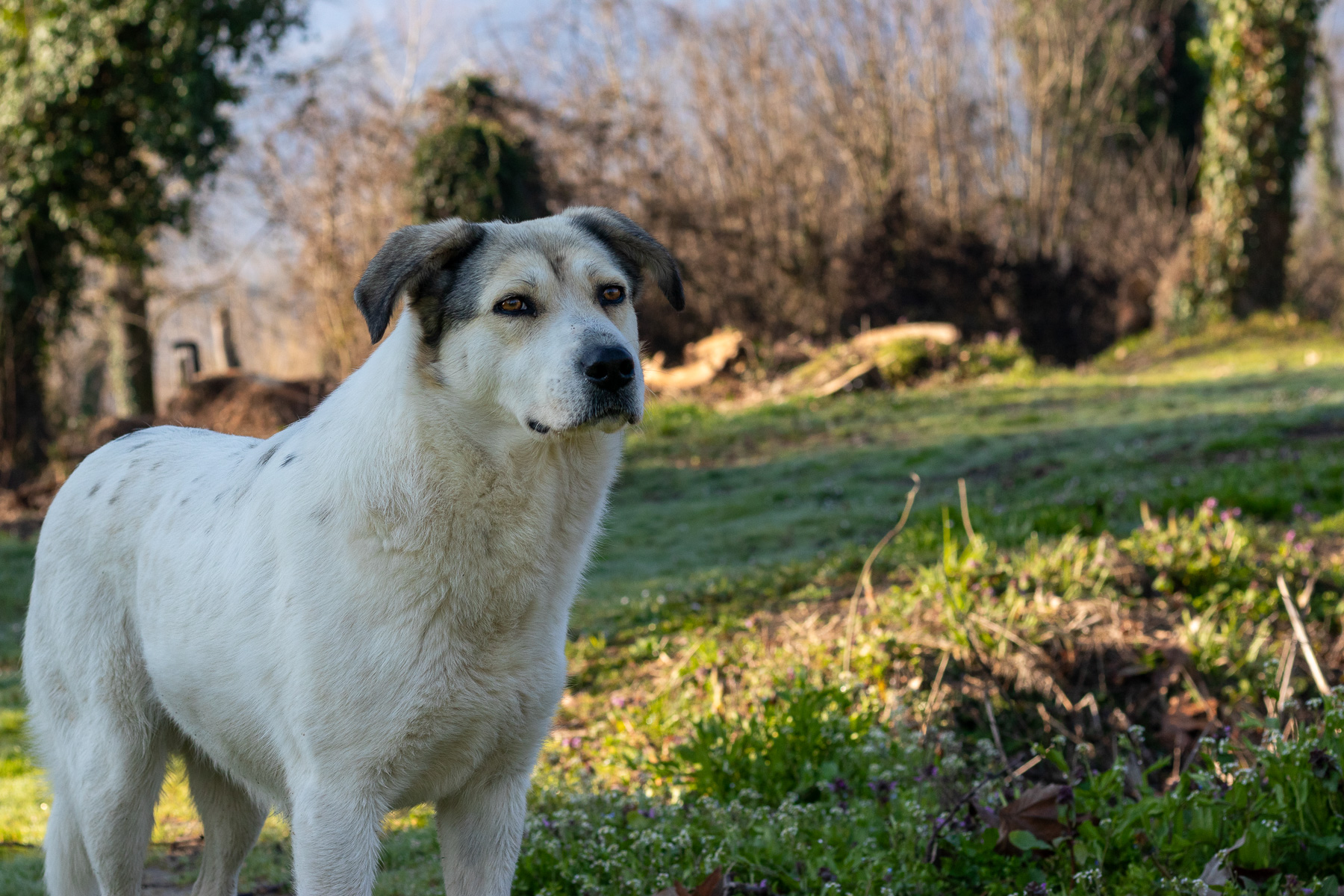
And then, she appeared.
A female stray dog. Calm, confident and completely uninterested in my plans.
She looked at me as if she already knew the place better than I did.
I greeted her.
She accepted.
Then she started walking.
I followed.
No itinerary. No map. No particular destination.
Just a small decision to see where she would take me.
The Sanctuary of Asclepius
Our walk brought us toward the Sanctuary of Asclepius, one of the important sacred areas of ancient Dion.
We stopped near a small pond.
Water moved quietly beside the ancient remains while sunlight filtered through the bare March branches.
Asclepius was associated with healing in the ancient Greek world. Here, surrounded by water, trees and archaeological remains, that connection felt particularly appropriate.
Perhaps this is one of the pleasures of slow travel: sometimes you understand a place not by seeing everything, but by allowing yourself to stay for a while.
The Roman Theatre of Dion
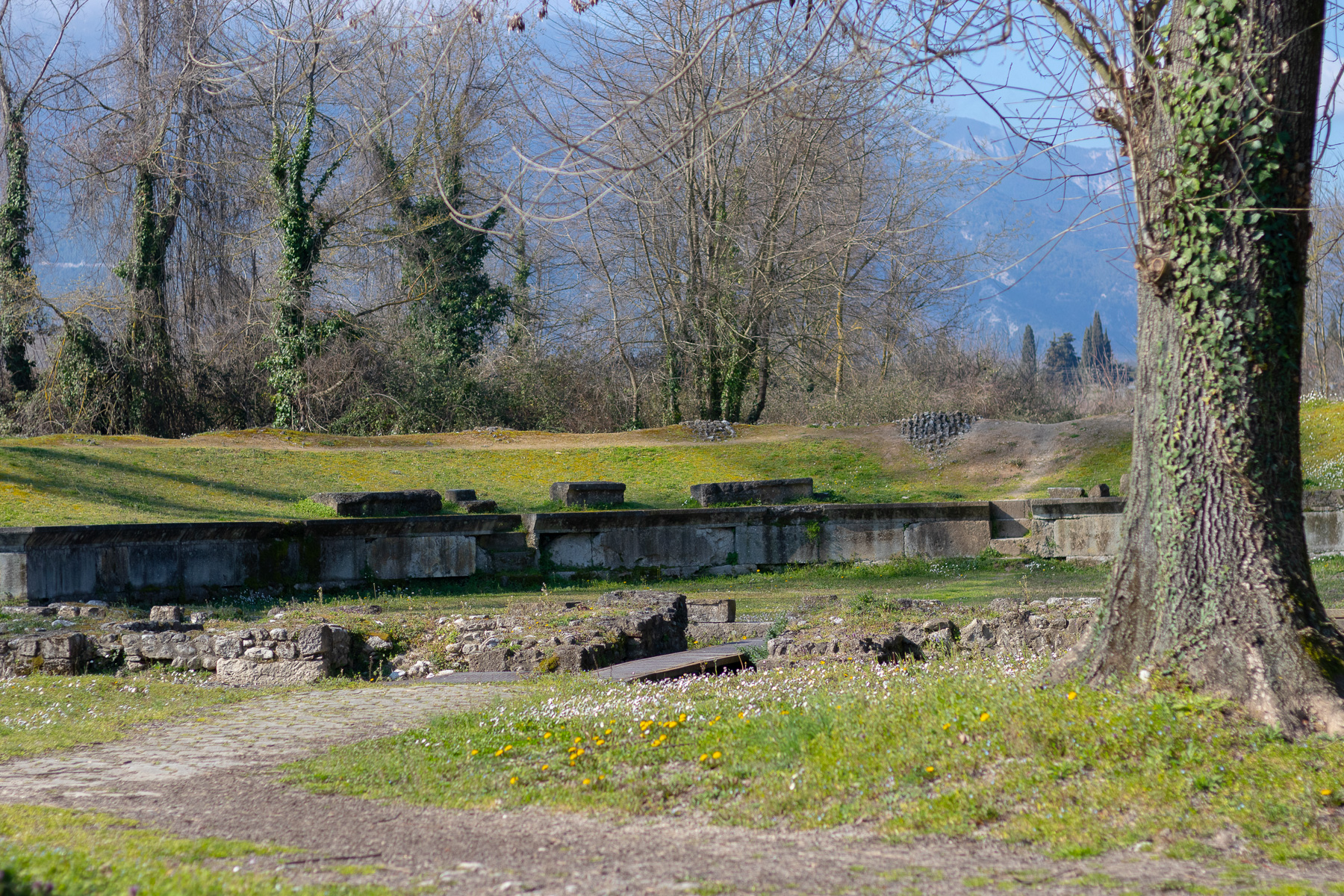
The Roman Theatre appeared almost quietly among the landscape.
The seats were empty. There was no performance and no audience that morning.
Only the landscape remained, along with the traces of the people who once gathered here.
Walking through the site like this makes it easier to notice the relationship between the archaeological remains and the landscape around them.
The Sanctuary of Zeus Olympios
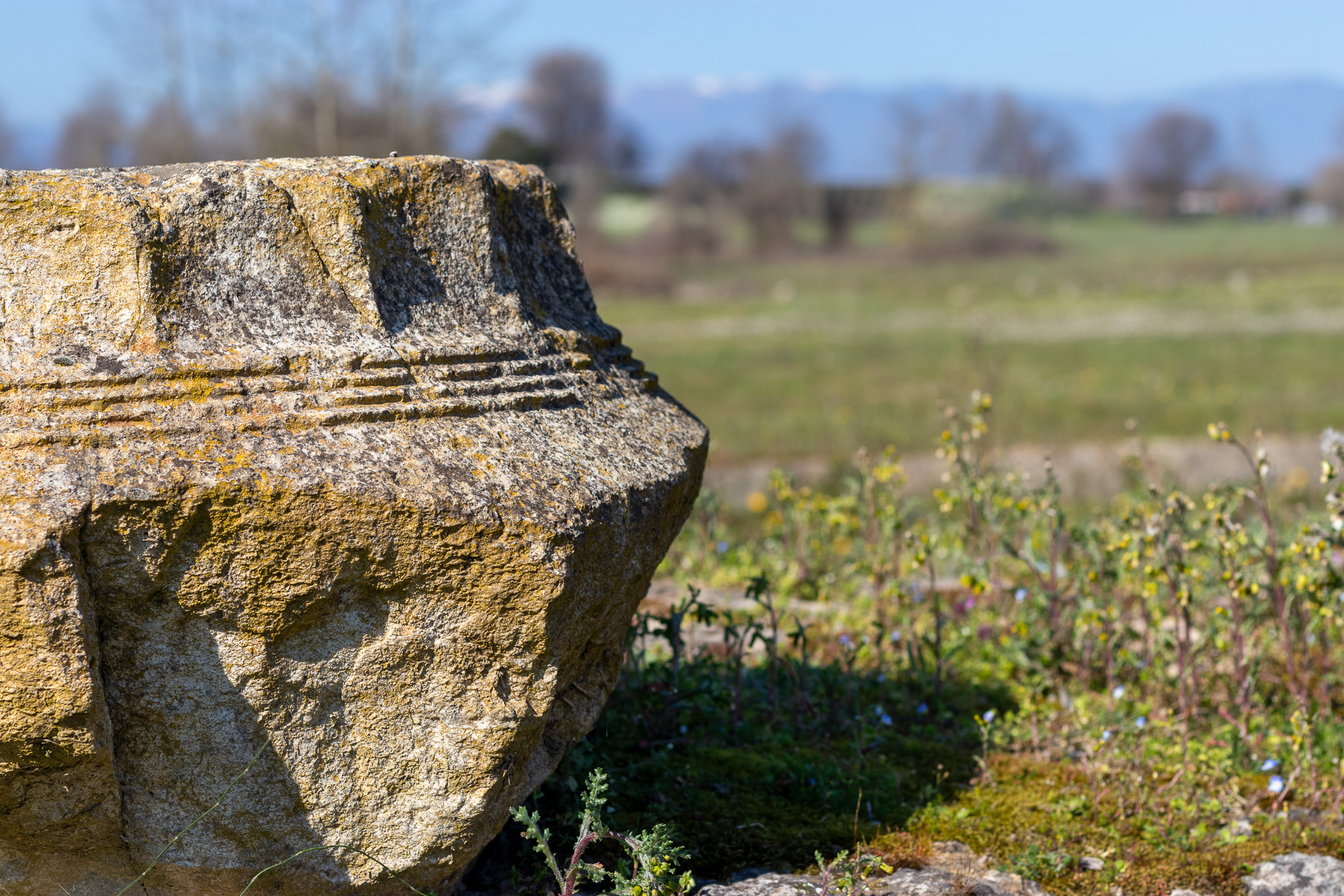
We continued toward the Sanctuary of Zeus Olympios.
We sat on a stone facing the eastern light.
Behind the archaeological remains stood Olympus, its higher peaks still carrying snow.
This is what makes Dion so distinctive.
The mountain associated with the gods of ancient Greek mythology is not somewhere far away.
It is right there.
You can stand among ancient sanctuaries and look directly towards the mountain that has shaped the cultural identity of this landscape for thousands of years.
When the Park Became Quiet Again
Eventually, the church service ended.
The voices disappeared.
For a few minutes, Dion became almost completely quiet.
No speakers.
No conversations.
Just water, wind, ancient stones — and the dog.
She lay down on an ancient stone.
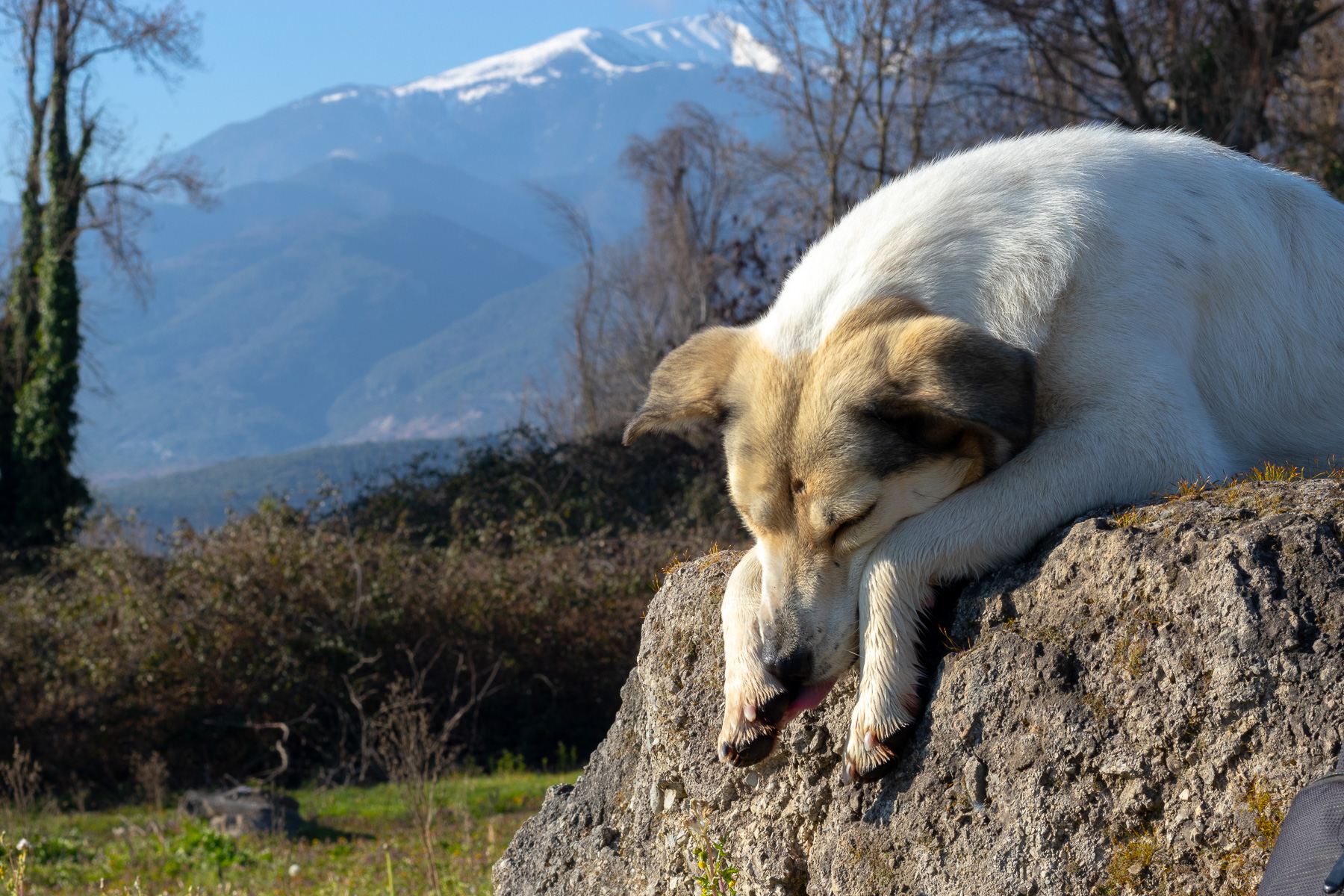
She closed her eyes as if she had done this a thousand times before.
Maybe she understood something I had been trying too hard to find.
Dion and Mount Olympus
Dion makes particular sense as part of a wider Mount Olympus journey.
The archaeological site sits at the foot of the mountain, connecting the cultural landscape of ancient Macedonia with the natural landscape of Olympus.
You can visit Dion before or after exploring Litochoro, the Enipeas Gorge and the lower mountain trails.
For travellers interested in both culture and nature, it is an easy way to experience a very different side of the Olympus landscape.
Should You Visit the Archaeological Museum of Dion Too?
If you have time, combining the archaeological park with the nearby Archaeological Museum of Dion gives you a fuller picture of ancient Dion.
The archaeological park gives you the landscape and the remains in their original setting.
The museum adds another layer through archaeological finds, sculptures and objects connected with the ancient city and its sanctuaries.
Together, they make it easier to understand Dion as both an archaeological site and a living landscape.
Planning Your Visit to Dion
Where Is Dion?
Dion is in Pieria, Central Macedonia, Greece, at the foot of Mount Olympus. Its location makes it easy to combine with Litochoro, Mount Olympus and other destinations in Pieria.
How Much Time Should You Allow?
Give yourself enough time to walk through the archaeological areas rather than treating Dion as a quick photo stop. If you also plan to visit the Archaeological Museum, allow additional time for the museum.
What Should You Wear?
Comfortable walking shoes are a good idea because the archaeological park is an outdoor site with paths and uneven surfaces. In warmer months, bring water and sun protection.
When Is a Good Time to Visit?
Each season offers a different experience.
Spring brings fresh vegetation and changing mountain conditions. Summer offers long days but can be warmer. Autumn brings softer light and changing colours across the wider landscape. Winter offers a quieter atmosphere and the possibility of snow on Mount Olympus.
For photography and a more atmospheric experience, early morning and the shoulder seasons can be particularly rewarding.
What Can You Combine with Dion?
Dion works particularly well as part of a wider Pieria itinerary.
- Litochoro — explore the town at the foot of Mount Olympus.
- Mount Olympus — continue into the mountain landscape and its hiking routes.
- Enipeas Gorge — combine archaeology with a forest and water experience.
- Mountain villages — discover traditional settlements, local food and rural landscapes.
- The Pieria coast — continue from the mountain landscape towards the Aegean Sea.
Walking with a Stray Muse
I recorded part of that March morning as a short slow-travel and ASMR video.
There is no conventional narration.
Just birds, water, wind, footsteps, the archaeological landscape — and my unexpected companion.
A slow morning at the Archaeological Park of Dion — March 1, 2026.
Dion Does Not Need Filters
Dion does not need filters.
It needs time.
Time to walk between ancient stones.
Time to listen to the water.
Time to look towards Olympus.
And sometimes, time to follow a dog who seems to know exactly where she is going.
That morning, I came to Dion looking for sounds from the past.
Instead, I found something much simpler.
A quiet landscape.
A mountain covered in snow.
And a stray muse who decided, for a little while, to show me the way.
Explore More of Pieria
Dion is one part of a much larger landscape. Continue exploring Pieria through our selected places, activities and experiences.
Follow Experience Pieria:
•
