

Description
The Archaeological Park of Dion is one of the most important archaeological sites in Pieria, located at the foothills of Mount Olympus and only a few kilometres from the Pierian coast.
The archaeological park preserves the remains of the ancient city of Dion, together with sanctuaries, public buildings, theatres, houses and other structures that reveal the importance of Dion as a religious and cultural centre of ancient Macedonia.
Dion was closely connected with the religious life of the ancient Macedonians. The archaeological site includes important sanctuaries dedicated to several gods and deities, allowing visitors to explore different aspects of ancient religious life within the landscape beneath Mount Olympus.
Among the most important monuments are the Sanctuary of Zeus, the Sanctuary of Demeter, which was used from the Archaic through the Roman period, and the Sanctuary of Asclepius, dating from the 4th century BC.
The archaeological park also includes the Sanctuary of Isis and other Egyptian deities, ancient city walls, residential areas and impressive remains of ancient houses. The Villa of Dionysus is particularly notable for its elaborate mosaic floors, offering a glimpse into the wealth, architecture and everyday life of the ancient city.
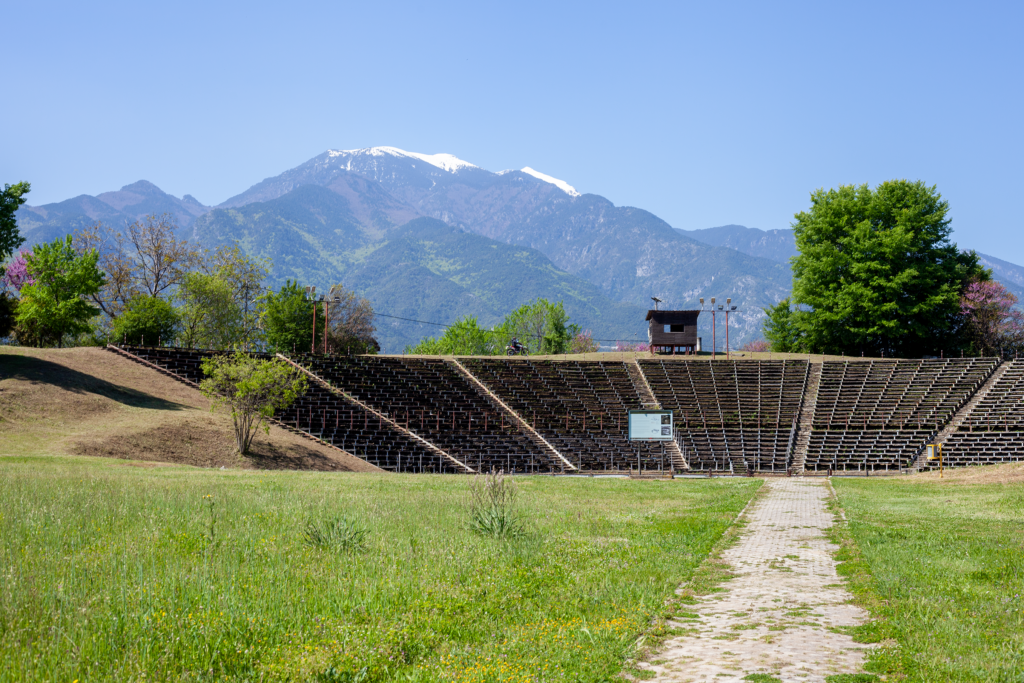
Two ancient theatres form another important part of the archaeological site. The Hellenistic theatre reflects the earlier history of Dion, while the later Roman theatre illustrates the continued importance of the city during the Roman period.
Walking through the archaeological park gives visitors a sense of the scale and complexity of ancient Dion. Instead of seeing isolated monuments, you can move between sanctuaries, streets, houses, theatres and mosaics while the landscape of Mount Olympus remains present in the background.
The connection between Dion and Mount Olympus is especially significant. In ancient times, the area was associated with the worship of Zeus and the gods of Olympus. Today, the same mountain provides the natural backdrop for exploring the archaeological remains.
Archaeological research has gradually revealed the ancient city and its monuments, helping visitors understand how Dion developed and how religious, civic and everyday life were connected within the city.
The Archaeological Park of Dion is located near the modern village of Dion and can easily be combined with a visit to the Archaeological Museum of Dion, where many of the finds discovered in the archaeological area are displayed. The museum is approximately 500 metres from the open-air archaeological site.
For visitors exploring Pieria, Dion offers a combination of ancient history, archaeology, mythology and landscape in one place. It is particularly interesting for travellers who want to experience Ancient Macedonia while also seeing the Mount Olympus landscape that shaped the identity of the ancient sanctuary.
📍 Dion, Pieria, Greece
🏛️ Ancient City of Dion
🏺 Ancient Macedonian Archaeology
⛰️ Mount Olympus
🌿 Archaeological Park
🏛️ Ancient Sanctuaries
🎭 Ancient Theatres
🧩 Ancient Mosaics
🏠 Villa of Dionysus
Opening hours, admission fees and visitor arrangements can change according to the season. We recommend confirming current opening hours and ticket information before your visit.
FAQ
What is the Archaeological Park of Dion?
The Archaeological Park of Dion is an extensive open-air archaeological site in Pieria, at the foothills of Mount Olympus. It preserves remains of the ancient city of Dion, including sanctuaries, theatres, houses, public buildings, city walls and mosaics.
Where is the Archaeological Park of Dion?
The archaeological park is located near the modern village of Dion in Pieria, Greece, at the foot of Mount Olympus. It is also relatively close to the coast, making it easy to combine with other destinations in Pieria.
Why is Dion important in ancient Greek history?
Dion was an important religious and cultural centre of ancient Macedonia. Its sanctuaries were closely connected with the worship of the gods, particularly Zeus and the Olympian tradition, while the city itself developed as an important urban centre.
What can you see at the Archaeological Park of Dion?
Visitors can see ancient sanctuaries, city walls, houses, mosaics, theatres, public buildings and other remains of the ancient city. Important highlights include the Sanctuary of Zeus, Sanctuary of Demeter, Sanctuary of Asclepius, Sanctuary of Isis and the Villa of Dionysus.
Is Dion connected to Mount Olympus?
Yes. Dion was closely associated with the religious world of Mount Olympus and the worship of Zeus and the Olympian gods. The archaeological site is located directly beneath Mount Olympus, making the mountain an important part of the landscape and historical context of Dion.
What temples are at the Archaeological Park of Dion?
The archaeological park includes several important sanctuaries, including the Sanctuary of Zeus, the Sanctuary of Demeter, the Sanctuary of Asclepius and the Sanctuary of Isis and other Egyptian deities.
Who was worshipped at Dion?
Dion was a centre of worship for several gods and deities. Zeus had a particularly important sanctuary, while Demeter, Asclepius, Isis and other deities were also worshipped at different sanctuaries within the ancient city.
Can you see the Sanctuary of Zeus at Dion?
Yes. The Sanctuary of Zeus is one of the principal archaeological monuments within the park and an important part of understanding the religious role of ancient Dion.
What is the Villa of Dionysus at Dion?
The Villa of Dionysus is an ancient private residence within the archaeological site, known particularly for its elaborate mosaic floors. It provides an insight into domestic architecture and the lifestyle of wealthy inhabitants of ancient Dion.
Does Dion have ancient theatres?
Yes. The archaeological park contains two ancient theatres, representing different periods in the history of Dion. The Hellenistic theatre belongs to the earlier phase of the city, while the Roman theatre reflects the later Roman period.
How old is the Archaeological Park of Dion?
The archaeological remains at Dion represent several different periods of history rather than one single date. The sanctuaries and city developed and changed over centuries, from the ancient Macedonian period through the Roman era.
Is Dion an ancient Macedonian city?
Yes. Ancient Dion was an important city associated with the ancient Macedonian kingdom and its religious traditions. Its archaeological remains provide important evidence for the history and culture of ancient Macedonia.
Is the Archaeological Park of Dion outdoors?
Yes. The archaeological site is an open-air archaeological park where visitors walk between the remains of ancient buildings, sanctuaries, theatres, streets and residential areas.
How long does it take to visit the Archaeological Park of Dion?
The time needed depends on how deeply you want to explore the site. Allowing at least 1–2 hours gives you time to walk through the main areas, while visitors interested in archaeology and history may want considerably longer.
Is the Archaeological Park of Dion suitable for children?
It can be an interesting visit for families, especially for children interested in Ancient Greece, mythology, ruins and archaeology. Because the site is extensive and outdoors, comfortable shoes, water and protection from the sun are useful during warmer months.
Can you walk around the Archaeological Park of Dion?
Yes. Walking is the main way to experience the archaeological site. Visitors move between the ancient sanctuaries, theatres, houses, mosaics and other remains while exploring the landscape.
Is the Archaeological Park of Dion suitable for people interested in Greek mythology?
Yes. Dion is particularly relevant to visitors interested in Greek mythology because of its connection with Zeus, the Olympian gods and the religious traditions associated with Mount Olympus.
Is Dion related to Alexander the Great?
Dion was an important Macedonian religious centre during the period of the Macedonian kingdom and was connected with Macedonian rulers and military history. The site therefore forms part of the wider historical landscape of ancient Macedonia associated with figures such as Alexander the Great.
Can I visit the Archaeological Museum of Dion on the same day?
Yes. The Archaeological Museum of Dion is very close to the archaeological park, approximately 500 metres away. Visiting both places together gives a more complete understanding of ancient Dion: the archaeological park shows the ancient city and its monuments in their original landscape, while the museum presents important finds discovered during excavations.
What is the difference between the Archaeological Park of Dion and the Archaeological Museum of Dion?
The Archaeological Park is the open-air archaeological site where you can walk among the remains of ancient Dion, including sanctuaries, theatres, houses and mosaics. The Archaeological Museum houses archaeological finds discovered at Dion and elsewhere in Pieria, including sculptures, inscriptions, coins, mosaics and other artefacts.
Is the Archaeological Park of Dion close to Mount Olympus?
Yes. The park is located at the foothills of Mount Olympus, making it one of the archaeological sites in Greece where ancient history and the natural landscape of Olympus are particularly closely connected.
Is the Archaeological Park of Dion close to the sea?
Yes. Dion is located in Pieria relatively close to the coast. This makes it possible to combine a visit to the archaeological site with destinations along the Pierian coastline.
What should I wear when visiting the Archaeological Park of Dion?
Comfortable walking shoes are recommended because the site is extensive and requires walking outdoors. During summer, a hat, water and sun protection are also useful.
Is the Archaeological Park of Dion open all year?
The archaeological site has seasonal operating arrangements, and opening hours can change. It is recommended to check the current official information before planning your visit.
How much is the entrance fee to the Archaeological Park of Dion?
Admission prices can change, including seasonal and concession arrangements. Check the current official ticket information before your visit.
Can you visit Dion without a guide?
Yes. Visitors can explore the archaeological park independently. However, a guide or detailed interpretation can add useful context to the different sanctuaries, theatres, buildings and historical periods represented at the site.
What is the best time to visit the Archaeological Park of Dion?
Spring and autumn can be particularly comfortable for walking through the open-air archaeological site because temperatures are generally more suitable for outdoor exploration. Early morning or later in the day can also be more comfortable during the warmer summer months.
What other places can you visit near the Archaeological Park of Dion?
The Archaeological Museum of Dion is the most obvious combination, as it is located only about 500 metres from the archaeological park. The modern village of Dion and other attractions around the foothills of Mount Olympus can also be combined with the visit.
Is the Archaeological Park of Dion worth visiting?
Dion offers a combination of ancient Macedonian history, archaeology, mythology and the landscape of Mount Olympus. For visitors interested in Ancient Greece or exploring the cultural heritage of Pieria, it provides an opportunity to experience ancient monuments within their original landscape.
Location
-
5FFR+HH Dion, Greece


Add a review