
Description
The Archaeological Site of Ancient Pydna is one of the most important archaeological sites in northern Pieria, located approximately 2 km south of Makrygialos on the western coast of the Thermaikos Gulf.
Pydna was an important ancient city of Macedonia, strategically positioned near the coast and connected with maritime trade, agriculture and the salt pans of the region. The site was inhabited for centuries, developing from the ancient Macedonian period through the Roman and Byzantine eras.
The history of Pydna is closely connected with the Macedonian kingdom and one of the decisive events of ancient Greek history: the Battle of Pydna in 168 BC.
The Battle of Pydna and the fall of Macedon
In 168 BC, the Roman army under Lucius Aemilius Paullus defeated the Macedonian king Perseus at the Battle of Pydna.
The battle marked the decisive defeat of the Macedonian kingdom and the beginning of the final Roman dominance over Macedonia and Greece.
Pydna therefore occupies a particularly important place in the history of ancient Macedonia. The name of the city is closely associated with the moment when the political power of the Macedonian kingdom passed to Rome.
The city continued through Roman and Byzantine times
Pydna did not disappear after the Roman conquest.
The settlement continued to develop through the Roman period and later became an important Byzantine city. After the 6th century AD, Byzantine Pydna was known as Kitros and became the most important medieval city of Pieria.
Its location near the Thermaikos Gulf helped support its role as a port and commercial centre. Pottery production and the salt pans of the area also contributed to the city's prosperity during the Byzantine period.
The fortress of Pydna
One of the most visible features of the archaeological site today is the fortified area of Byzantine Pydna.
The castle developed over earlier fortifications and was strengthened during the Frankish period. Its surviving remains reveal the strategic importance of the settlement and its position overlooking the surrounding coastal landscape.
The archaeological site includes remains of the castle and its fortification system, including the western gate and other structures associated with the medieval city.
Early Christian basilicas
Inside the fortified area, archaeological excavations have revealed parts of two Early Christian basilicas dating from the 4th and 6th centuries.
The remains provide evidence of the importance of Christianity in the settlement during Late Antiquity and the transition from the ancient city to the Byzantine world.
Excavations have also uncovered other structures, including foundations of buildings, a bath and numerous architectural fragments.
Archaeological discoveries
Excavations at Pydna have revealed a wide range of archaeological material from different historical periods.
Finds include marble architectural elements, sculptures, ceramics and other objects that document the long history of the settlement.
The archaeological evidence shows that Pydna was not simply an ancient city that disappeared after the Macedonian kingdom. Its history continued for centuries, with the settlement changing character as it passed through Roman, Early Christian and Byzantine periods.
A site beside the Thermaikos Gulf
The location of Ancient Pydna is part of the experience.
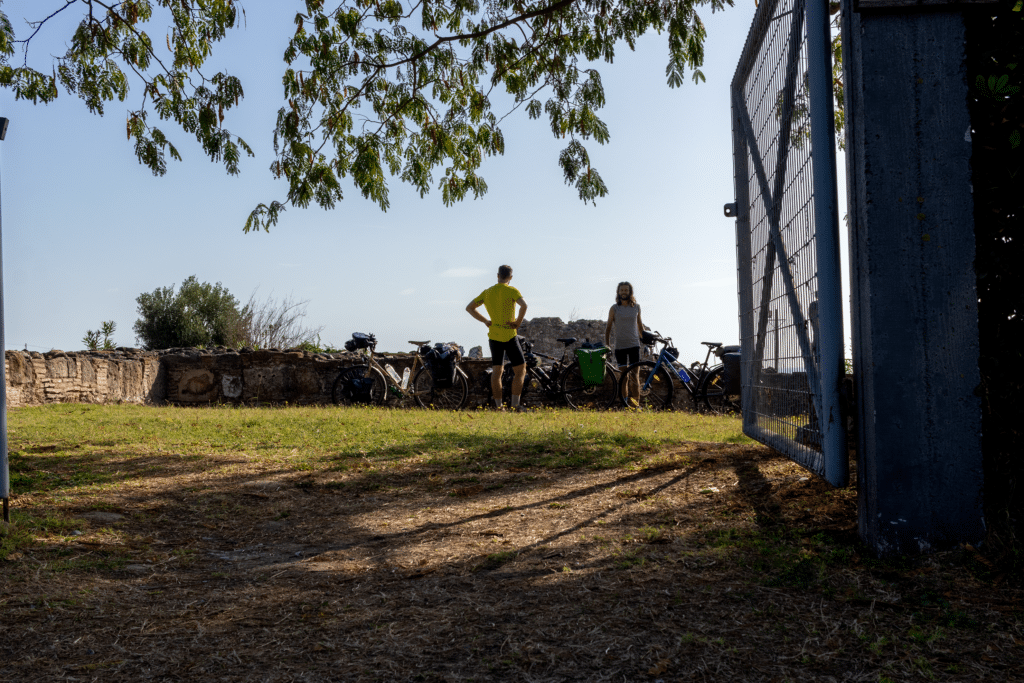
The archaeological site stands close to the western coast of the Thermaikos Gulf, south of modern Makrygialos. The coastal landscape helps explain the strategic importance of the settlement and its long connection with maritime activity.
Pydna Beach is also located nearby, making it possible to combine archaeological exploration with a visit to the coast.
For visitors exploring northern Pieria, Ancient Pydna offers an opportunity to move through several layers of history in one place — from ancient Macedonia and the Battle of Pydna to Roman, Early Christian and Byzantine Kitros.
📍 Approximately 2 km south of Makrygialos, Pieria, Greece
🏛️ Ancient Pydna
🇬🇷 Ancient Macedonian History
⚔️ Battle of Pydna, 168 BC
🏰 Byzantine & Frankish Fortifications
⛪ Early Christian Basilicas
🌊 Thermaikos Gulf
🏺 Archaeological Site
📍 Northern Pieria
FAQ
What is the Archaeological Site of Ancient Pydna?
The Archaeological Site of Ancient Pydna is the remains of an important ancient and Byzantine settlement in northern Pieria, near modern Makrygialos. The site preserves archaeological remains from several periods, including the ancient Macedonian, Roman, Early Christian and Byzantine eras.
Where is Ancient Pydna located?
Ancient Pydna is located approximately 2 km south of modern Makrygialos in northern Pieria, near the western coast of the Thermaikos Gulf.
How far is Ancient Pydna from Makrygialos?
The archaeological site is approximately 2 km south of Makrygialos.
Why is Ancient Pydna important?
Pydna was an important city of ancient Macedonia and later became an important Byzantine city known as Kitros. It is also famous for the Battle of Pydna in 168 BC, when the Romans defeated the Macedonian king Perseus.
What happened at the Battle of Pydna?
In 168 BC, the Roman army under Lucius Aemilius Paullus defeated the Macedonian army of King Perseus at Pydna. The battle marked the decisive defeat of the Macedonian kingdom and the beginning of Roman dominance over Macedonia.
Did the Romans defeat Alexander the Great at Pydna?
No. Alexander the Great lived more than a century before the Battle of Pydna. The Macedonian king defeated at Pydna in 168 BC was Perseus, the last king of Macedon.
Was Olympias killed at Pydna?
Yes. Olympias, the mother of Alexander the Great, was killed at Pydna in 316 BC after being defeated by Cassander during the struggles that followed the death of Alexander the Great.
Why is Pydna important in the history of Macedonia?
Pydna was an important city of the Macedonian kingdom and later became the site of the decisive Roman victory over King Perseus in 168 BC. Its history continued through the Roman and Byzantine periods.
What was Pydna called during the Byzantine period?
After the 6th century AD, Byzantine Pydna was known as Kitros. It became the most important medieval city in Pieria.
Was Pydna a Byzantine city?
Yes. After the ancient and Roman periods, Pydna developed into an important Byzantine city known as Kitros.
What can you see at Ancient Pydna?
Visitors can see remains of the ancient and Byzantine settlement, including the fortified area, castle remains, the western gate, parts of Early Christian basilicas and other archaeological structures and architectural fragments.
Does Ancient Pydna have a castle?
Yes. The archaeological site contains the remains of the fortified Byzantine settlement of Pydna, including castle and defensive structures. The fortifications were later strengthened during the Frankish period.
Are there Early Christian basilicas at Pydna?
Yes. Archaeological excavations within the fortified area have revealed parts of two Early Christian basilicas dating from the 4th and 6th centuries.
What is Byzantine Kitros?
Kitros was the name used for Pydna after the 6th century AD. It developed into the most important medieval city of Pieria and continued the settlement's history into the Byzantine period.
Was Pydna important because of its location near the sea?
Yes. Pydna's coastal position near the Thermaikos Gulf contributed to its strategic and commercial importance. During the Byzantine period, the city functioned as a port and an intermediate station between northern and southern Greece.
What was Pydna known for besides its port?
Pydna was also associated with pottery production and the salt pans of the surrounding area. These activities contributed to the prosperity of the settlement, particularly during its Byzantine period.
How old is Ancient Pydna?
The area has been inhabited for many centuries, with the settlement developing through the ancient Macedonian, Roman, Early Christian and Byzantine periods. Archaeological evidence also points to prehistoric occupation in the wider area.
Is Ancient Pydna only an ancient Greek archaeological site?
No. One of the interesting features of Pydna is that the site represents several historical periods. Alongside the ancient city are Roman, Early Christian and Byzantine remains, including the fortified medieval settlement of Kitros.
Can you see Roman remains at Pydna?
Yes. Pydna continued to exist during the Roman period, and archaeological research in the wider area has documented Roman-period remains and finds.
What is the Frankish connection to Pydna?
The fortifications of Byzantine Pydna were repaired and strengthened during the Frankish period. The surviving castle therefore reflects several phases of the settlement's defensive history.
Is Ancient Pydna near the beach?
Yes. The archaeological site is close to the Thermaikos Gulf and south of Makrygialos. Pydna Beach is also located nearby.
Can you combine Ancient Pydna with Pydna Beach?
Yes. The archaeological site and Pydna Beach are close enough to combine history and a coastal visit in the same day.
Is Ancient Pydna suitable for children?
It can be an interesting visit for families, particularly for children interested in ancient history, castles and archaeology. Because the site includes uneven ground and archaeological remains, children should be supervised.
How long does it take to visit Ancient Pydna?
The time required depends on how much of the archaeological site you want to explore. A short visit can focus on the main visible remains, while visitors interested in the history of Pydna and its Byzantine fortifications may wish to spend longer.
Is Ancient Pydna worth visiting?
Ancient Pydna offers something different from archaeological sites focused on a single historical period. Its remains reveal the transition from ancient Macedonia through the Roman and Early Christian periods to Byzantine Kitros, while its location connects the archaeological landscape with the Thermaikos Gulf.
Is Ancient Pydna suitable for visitors interested in Alexander the Great?
Yes, particularly because Pydna was an important Macedonian city and because the site is connected with the wider history of the Macedonian kingdom. However, the famous Battle of Pydna took place in 168 BC, long after Alexander the Great's death.
What is the connection between Pydna and King Perseus?
King Perseus was the last king of Macedon. He was defeated by the Romans at the Battle of Pydna in 168 BC, an event that marked the decisive end of Macedonian political independence.
What is the connection between Pydna and Olympias?
Olympias, the mother of Alexander the Great, was killed at Pydna in 316 BC during the conflicts between the successors of Alexander. This makes Pydna relevant to the history of the early Hellenistic period as well as the later Roman conquest of Macedonia.
Can you visit Ancient Pydna independently?
The archaeological site can be explored as an archaeological destination, although current access arrangements and opening hours should be confirmed before visiting.
Is Ancient Pydna free to visit?
Current admission arrangements should be confirmed before visiting, as archaeological-site access policies and opening arrangements can change.
What are the opening hours of Ancient Pydna?
Opening hours can change according to the season and current archaeological-site arrangements. Visitors should confirm the current schedule before travelling.
What other archaeological sites are near Ancient Pydna?
The wider Makrygialos and northern Pieria area contains several important archaeological sites, including the Episcopal Complex of Louloudies Kitros and the Episcopal Middle Byzantine Church of Pydna.
Is there a museum near Ancient Pydna?
Yes. The Visitable Museum Store in Makrygialos houses archaeological finds from northern Pieria, including commercial amphorae from Pydna and Methoni and vessels dating from the Iron Age to the Hellenistic period.
Where can I learn more about the finds from Pydna?
The Visitable Museum Store in Makrygialos presents archaeological material from excavations in northern Pieria and provides information about the conservation and display of archaeological finds.
Why should I visit Ancient Pydna in Pieria?
Ancient Pydna combines Macedonian history, the Battle of Pydna, Roman and Byzantine archaeology, medieval fortifications and the coastal landscape of northern Pieria. It is a particularly interesting stop for visitors who want to explore a less-known archaeological side of the region.
Location
-
9JW8+XX Pydna, Greece




Add a review