
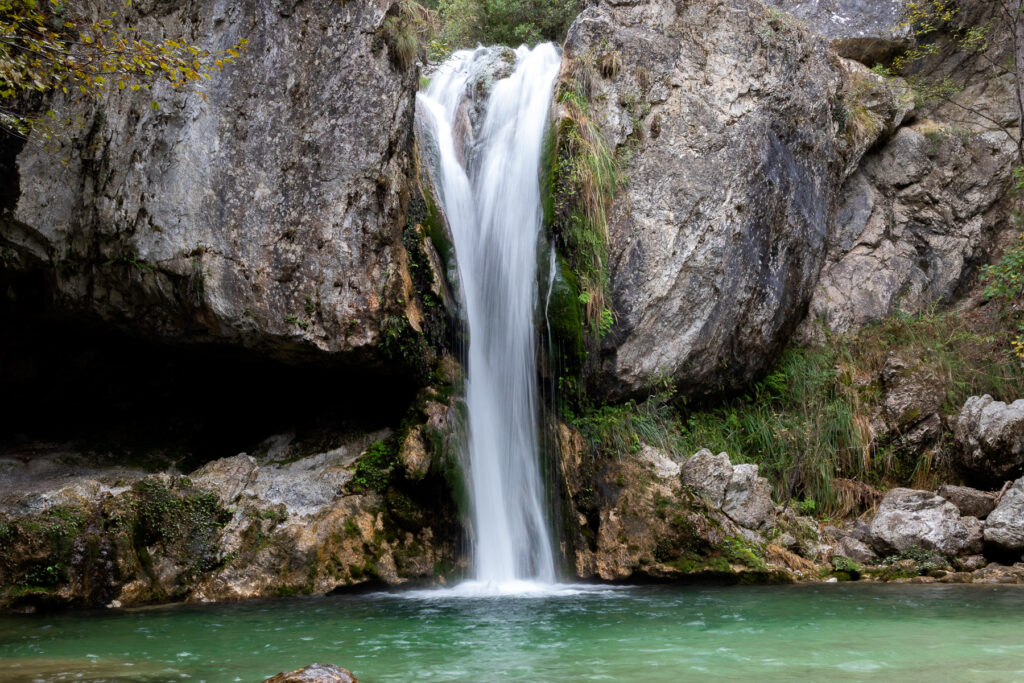
Forest Bathing in Olympus, Greece | Shinrin-Yoku, Forest Therapy & Slow Nature
What happens when you stop trying to conquer the mountain and simply spend time inside the forest?
Litochoro, Pieria — beneath Mount Olympus
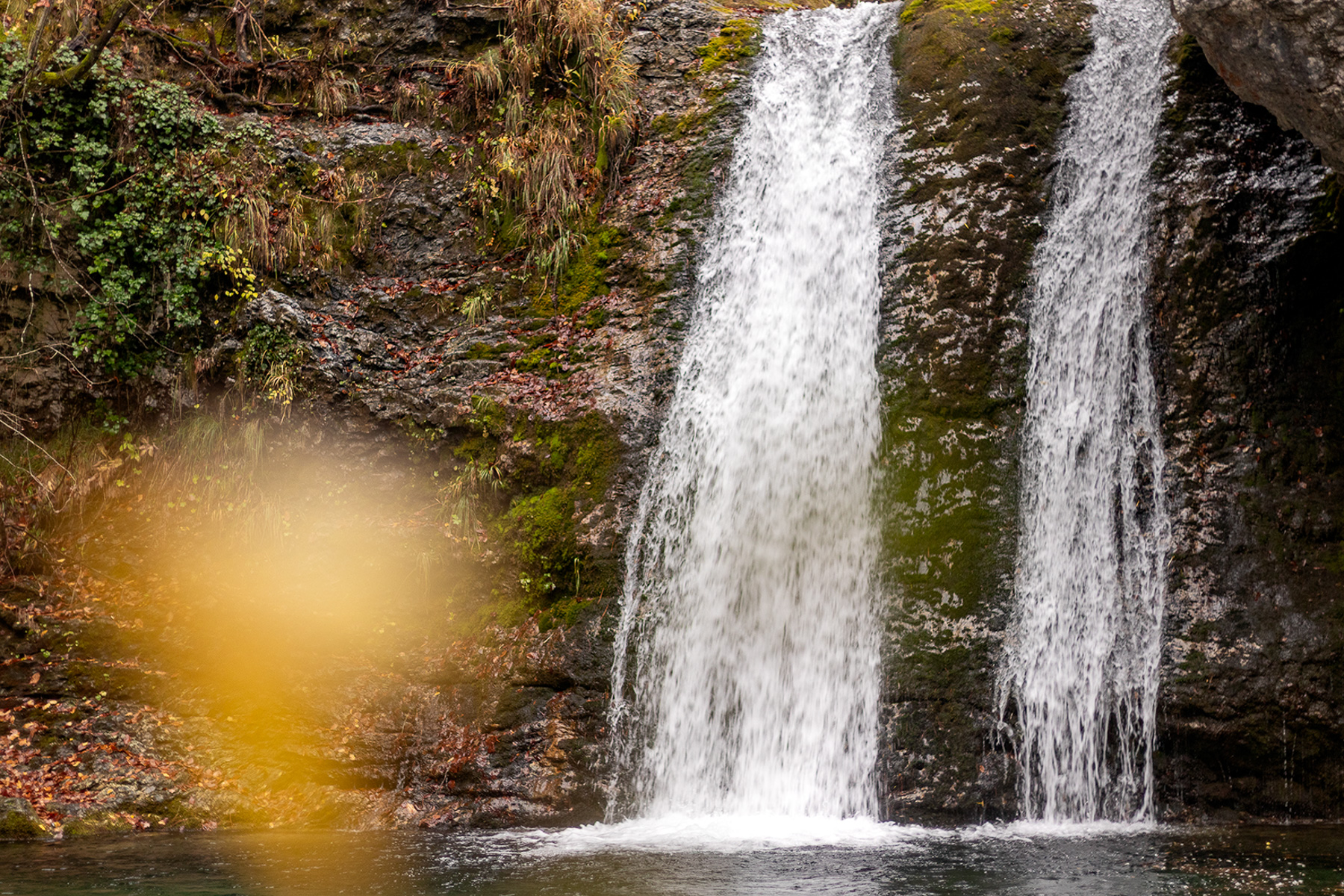
There are many ways to experience Mount Olympus.
You can hike towards a summit, follow a river, photograph a waterfall, explore a village or simply find a quiet place beneath the trees.
For me, some of the most meaningful moments have happened when there was nowhere particular to reach.
Just a forest.
A slow walk.
Water moving over stones.
And enough time to actually notice where you are.
Forest Bathing in Olympus at a Glance
- What it is: A slow, sensory way of spending time in the forest, inspired by the Japanese practice of Shinrin-Yoku.
- Where: Forests and natural landscapes around Mount Olympus and Pieria.
- What you do: Walk slowly, pause, listen, breathe, observe and engage with the forest through your senses.
- What it is not: A mountain race, a summit hike or a fitness challenge.
- Best for: Visitors looking for a quieter connection with nature and a slower outdoor experience.
- Good to know: Forest bathing can complement wellbeing practices, but it should not be presented as a substitute for medical or psychological care.
What Is Forest Bathing?
Forest bathing, or Shinrin-Yoku, is a Japanese practice centred on spending unhurried time in a forest and paying attention to the surrounding environment.
The idea is surprisingly simple.
You do not need to climb a mountain.
You do not need to count kilometres.
You do not even need to walk continuously.
Instead, the forest becomes something you experience through your senses: the sound of water, the smell of wet soil, the texture of bark, changing light between the trees, birdsong, wind and the feeling of the air around you.
The practice emerged in Japan in the 1980s and has since attracted scientific interest, particularly around stress, relaxation and physiological responses to spending time in natural environments.
That does not mean that every walk in the woods is automatically a therapy session.
The useful distinction is between spending intentional time in nature and making medical claims about what nature can treat.
How I Discovered Forest Bathing Under Olympus
I came to the forest before I came to the word.
I have been living in Litochoro, at the foothills of Mount Olympus, since 2013.
In the beginning, it was simple:
- walks along the Enipeas Gorge,
- coffee near an old monastery,
- winter fog between the trees,
- summer light moving through the canyon,
- and long pauses when there was no reason to hurry.
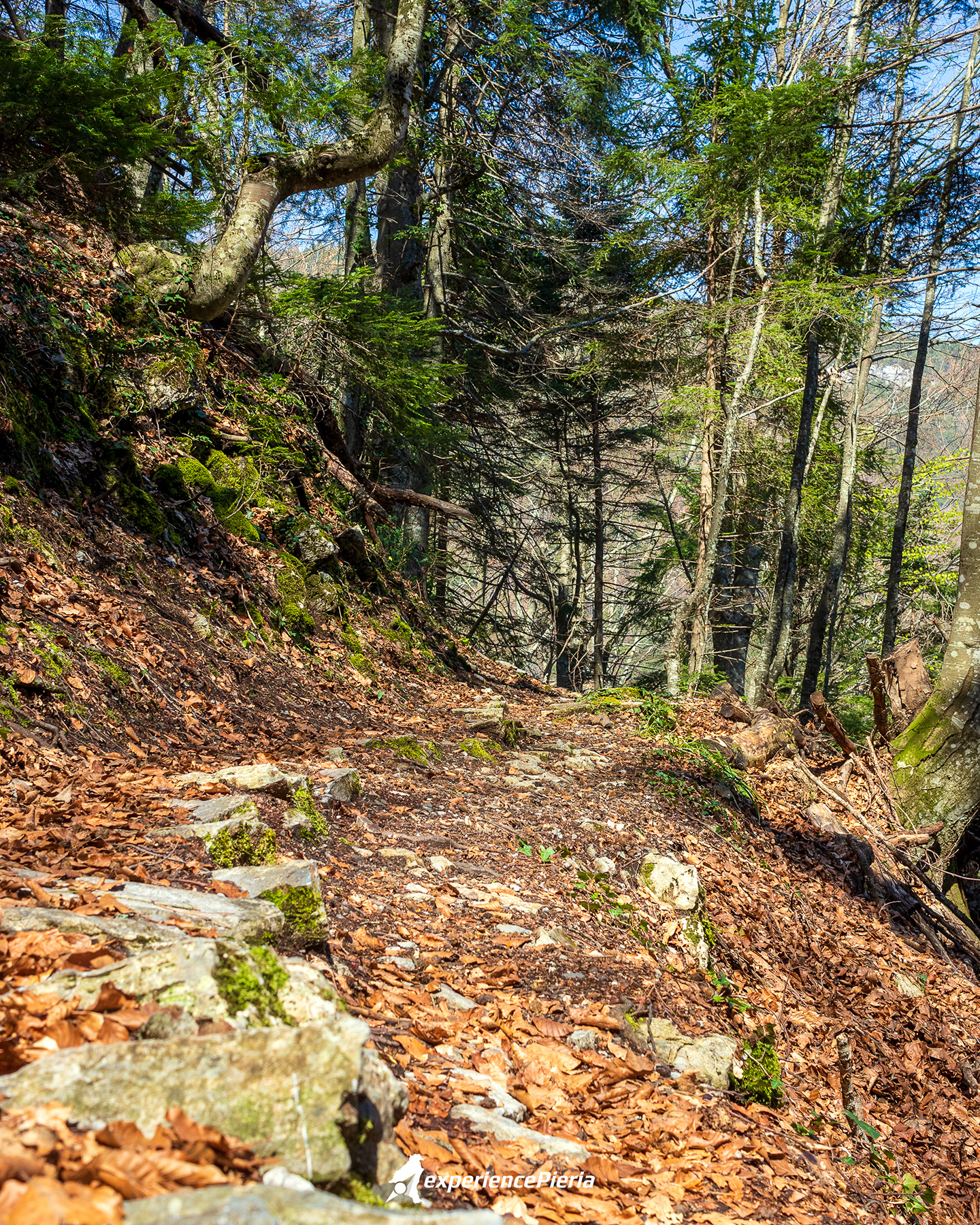
When friends or visitors came to Pieria, we did not call these walks “sessions”.
There was no programme.
No branding.
No stopwatch.
We simply went outside.
We walked slowly, listened to the river and stopped whenever something caught our attention.
Only later did I discover that this way of being in the forest had a name.
Forest bathing.
Why Olympus Is a Natural Setting for It
Mount Olympus is often associated with peaks, climbing and mythology.
But the mountain is much more than its summit.
Its lower slopes and surrounding landscapes include forests, streams, gorges, waterfalls and paths where the experience changes dramatically with the season.
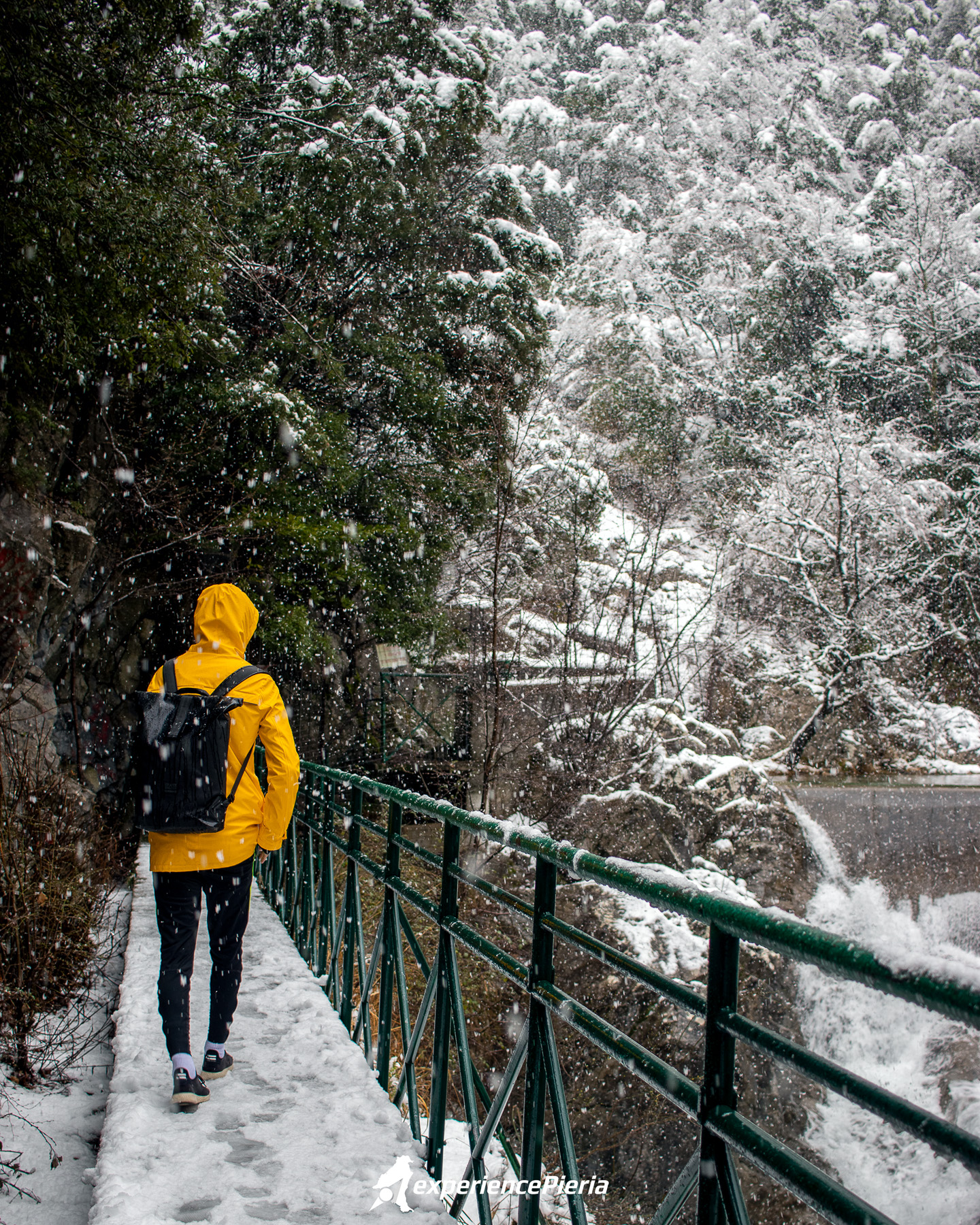
Around Litochoro, the Enipeas landscape is particularly suited to slow exploration. Water follows the gorge, trees create changing layers of light and shade, and the soundscape changes as you move away from the town.
You can explore the mountain actively — or simply give yourself permission to slow down.
Forest Bathing vs. Hiking: What Is the Difference?
Forest bathing and hiking can happen on the same trail, but the intention is different.
| Hiking | Forest Bathing |
|---|---|
| Focus on route and destination | Focus on the experience of the forest |
| Usually continuous movement | Frequent pauses are part of the experience |
| Distance and elevation can matter | Time, attention and senses matter more |
| Often physically demanding | Can be gentle and accessible depending on the location |
One is not better than the other.
They simply ask you to experience the landscape differently.
What Happens During a Forest Bathing Walk?
There is no single script for forest bathing.
A guided experience may include different invitations depending on the landscape, the group and the person leading it.
A simple walk under Olympus might include:
- Slow walking without a fixed performance goal.
- Quiet moments without conversation or phones.
- Listening to water, wind, birds and the forest around you.
- Smelling leaves, soil, bark and the air after rain.
- Observing textures, colours, movement and light.
- Pausing beside a tree, stream or clearing.
- Breathing and grounding through simple, non-competitive exercises.
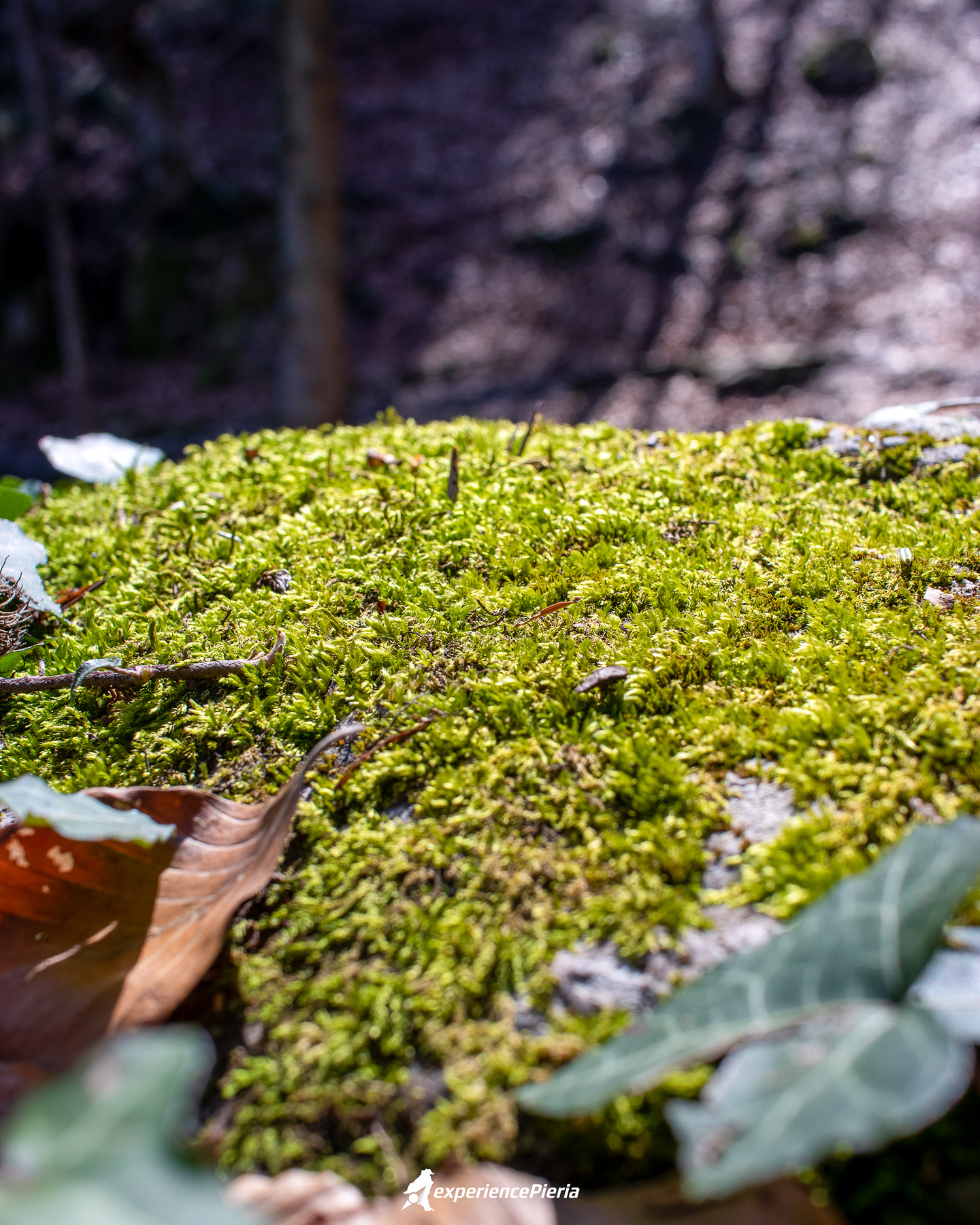
The Five Senses Are the Point
One of the simplest ways to understand Shinrin-Yoku is to stop treating the forest as scenery.
Instead of looking only for the next beautiful photograph, notice what the forest is doing around you.
- See: light, leaves, moss, rocks, water and changing colours.
- Hear: the river, wind, birds and the quieter sounds between them.
- Smell: wet earth, leaves, bark and the particular atmosphere of the forest.
- Touch: textures of natural surfaces when appropriate and safe.
- Taste: only through safe, intentional experiences — never by eating unknown plants, berries or mushrooms.
The objective is not to collect sensations.
It is to become more aware of the place you are already standing in.
Forest Bathing in Enipeas Gorge
For visitors staying in or around Litochoro, the Enipeas Gorge offers one of the most natural settings for a slow forest experience.
The landscape combines water, forest, rock and changing elevation. Even a short section of the route can offer opportunities to stop, listen and observe rather than simply move from one point to another.
If you are interested in hiking as well as forest bathing, you can combine the experience with our guide to
Mount Olympus day hikes
.
Does Forest Bathing Have Health Benefits?
Research into forest environments and human wellbeing has reported associations with outcomes such as reduced stress and changes in physiological measures including heart rate and blood pressure.
This is one reason forest bathing has attracted interest in Japan and internationally.
But it is important to keep the distinction clear: forest bathing is a nature-based wellbeing practice, not a replacement for medical or psychological treatment.
If you are dealing with a specific health condition, mental health concern or recovery process, professional medical advice should remain the starting point.
When Is the Best Time for Forest Bathing in Olympus?
There is no single perfect season.
- Spring: fresh vegetation, flowing water and changing forest colours.
- Summer: cooler forest environments can offer an escape from the heat of the coast.
- Autumn: colour, mist and softer light make the forest particularly atmospheric.
- Winter: fewer people, cold air, bare branches and occasional snow create a completely different experience.
For a quieter experience, early morning and weekdays can also make a difference, especially around popular trails.
What Should You Bring?
- Comfortable walking shoes suitable for the actual trail conditions.
- Water.
- Weather-appropriate clothing.
- A light rain layer when conditions may change.
- Phone or camera — but consider putting it away for part of the walk.
- A small backpack rather than unnecessary equipment.
Most importantly, bring enough time.
Forest bathing becomes difficult when you are watching the clock every five minutes.
A Note About Safety
A quiet forest experience still requires normal outdoor awareness.
Stay on appropriate paths, check weather conditions, wear suitable footwear and avoid entering rivers or waterfalls when conditions are unsafe.
Do not pick plants, mushrooms or berries unless you have the appropriate knowledge and permission.
And remember that Mount Olympus is a mountain environment. Conditions can change quickly, particularly away from the lower, easier trails.
The Forest Is Not a Backdrop
This is perhaps the part that matters most to me.
It is easy to visit a forest and immediately think about the photograph.
The waterfall.
The viewpoint.
The Instagram post.
The next place on the map.
But sometimes the better experience is to stay with one place for a little longer.
Watch the water.
Feel the temperature change.
Listen to the wind.
Notice how different the same path feels when you stop talking.
The forest does not need to perform for us.
We simply need to give ourselves enough time to notice it.
From Personal Walks to a Wider Idea
Years before I knew the term forest bathing, I was already taking friends and visitors into the woods around Olympus and Pieria.
Sometimes those walks were part of exploring a story.
Sometimes they were connected to photography or filming.
Sometimes there was no particular reason at all.
The common element was always the same:
slow down and experience the place rather than simply pass through it.
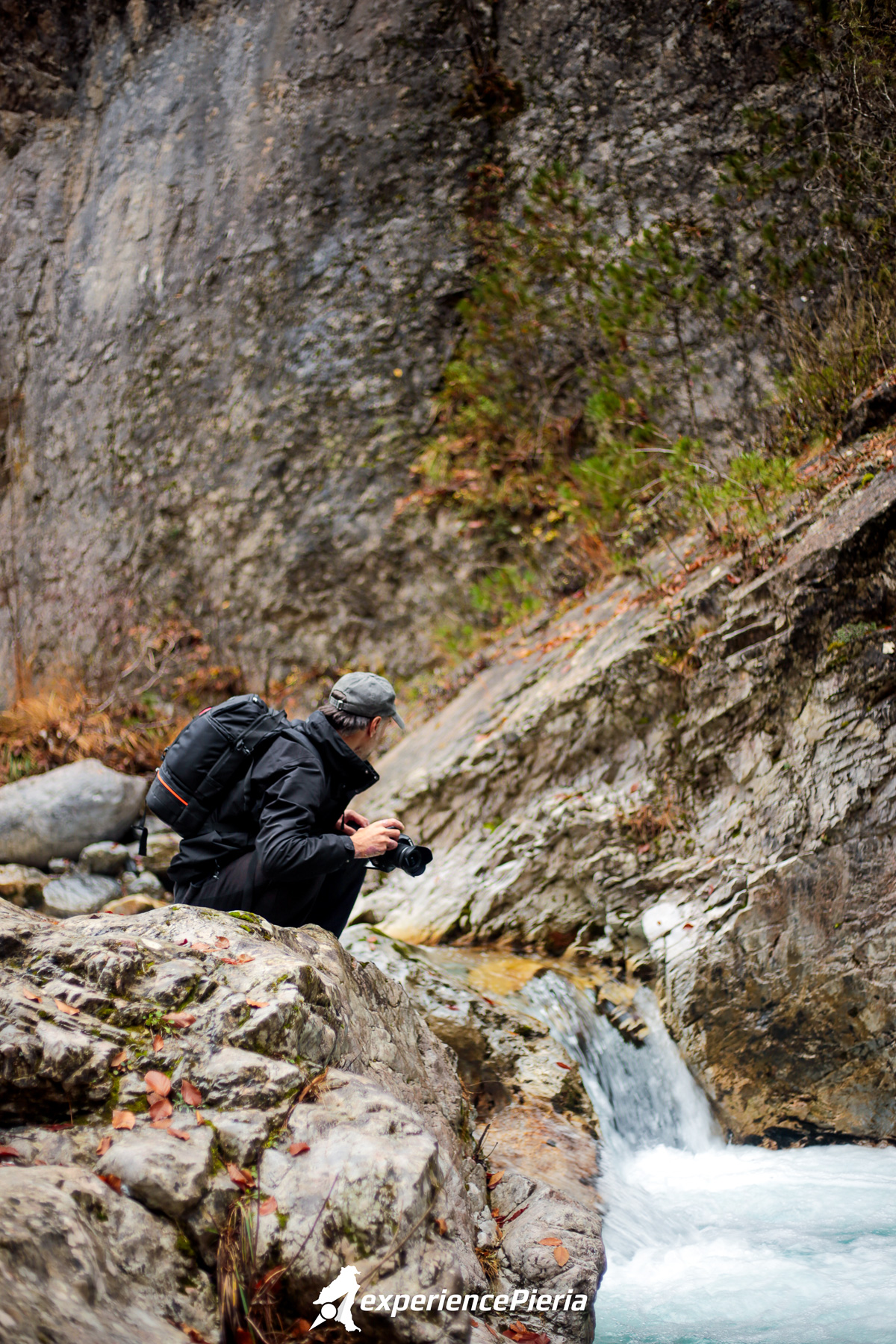
That is also part of what Experience Pieria is trying to document: not just where to go, but how a place can be experienced.
Watch: Forest Bathing — Rooted in Science
A documentary about forest bathing helped me put words around something I had already been experiencing in the forests of Pieria.
The film explores Shinrin-Yoku, the relationship between people and forests, and the scientific interest surrounding time spent in natural environments.
Forest Bathing: Rooted in Science — documentary inspiration for this story.
Who Might Enjoy Forest Bathing in Pieria?
You do not need to consider yourself a “wellness traveller” to enjoy it.
Forest bathing may appeal to:
- people who spend most of their time in cities,
- travellers looking for a slower experience of Greece,
- photographers who want to experience the landscape beyond the camera,
- couples or friends looking for a quiet outdoor activity,
- visitors combining Mount Olympus with the coast and villages of Pieria,
- people simply curious about Shinrin-Yoku and nature-based wellbeing.
And you do not have to be particularly experienced outdoors.
The important thing is choosing a suitable trail and allowing enough time.
Forest Bathing Is Not About Escaping Life
The phrase “escape to nature” is used everywhere.
But I increasingly think that is the wrong idea.
We are not escaping nature when we enter a forest.
We are returning to it.
The more time we spend in living landscapes, the more obvious it becomes that forests are not simply beautiful scenery surrounding our destinations.
They are ecosystems that need space, clean water, responsible visitors and long-term protection.
A forest bathing experience should therefore begin with respect for the forest itself.
Frequently Asked Questions
What is Shinrin-Yoku?
Shinrin-Yoku is the Japanese practice commonly translated as “forest bathing” — spending intentional, unhurried time in a forest while engaging with the environment through the senses.
Can I try forest bathing without a guide?
Yes. You can practise a simple, mindful forest walk on your own in an appropriate and safe location. A trained guide can add structure, sensory invitations and knowledge of the landscape.
Is forest bathing the same as hiking?
No. They can take place on the same trails, but hiking usually focuses more on movement, route and destination, while forest bathing focuses on slowing down and experiencing the forest through the senses.
Where can I experience forest bathing near Mount Olympus?
The forests and river landscapes around Litochoro and the lower slopes of Mount Olympus offer a range of environments suitable for slow nature experiences. Always choose a route appropriate to your fitness, experience and current weather conditions.
Does forest bathing replace therapy or medical treatment?
No. Forest bathing is best understood as a nature-based wellbeing practice. It should not replace professional medical, psychological or therapeutic care.
What is the best season?
Every season offers a different experience. Spring brings fresh growth and water, summer offers cooler forest environments, autumn brings colour and mist, while winter can offer a particularly quiet atmosphere.
Continue Exploring Pieria
The forest is only one part of the story.
From Litochoro and the Enipeas Gorge, you can continue towards Mount Olympus, discover waterfalls and mountain villages, explore the archaeological landscape of Dion, or head down towards the Aegean coast.
Explore Pieria at your own pace:
Explore Pieria
