
Sichna in Litochoro, Pieria | The Epiphany Tradition of Mount Olympus
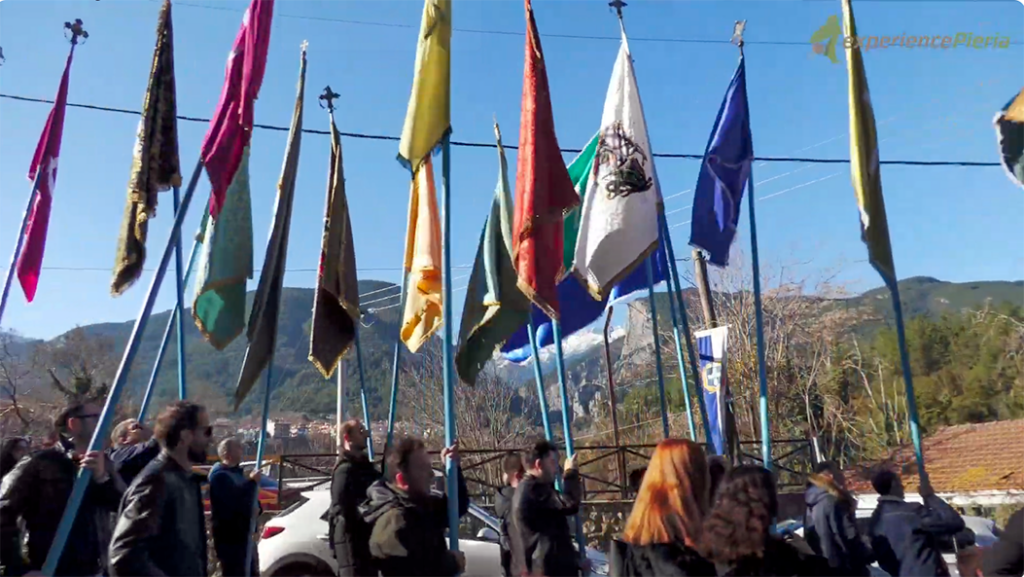
Every January, something unusual rises above the streets of Litochoro.
Tall masts carrying crosses and colourful banners appear as part of the town’s Epiphany celebrations — a distinctive local tradition known as the Sichna, or Sichnoforia.
Under Mount Olympus, faith, community and local memory come together in a tradition that has been carried through generations and was inscribed in Greece’s National Inventory of Intangible Cultural Heritage in 2022.
Sichna in Litochoro, Pieria | The Epiphany Tradition of Mount Olympus
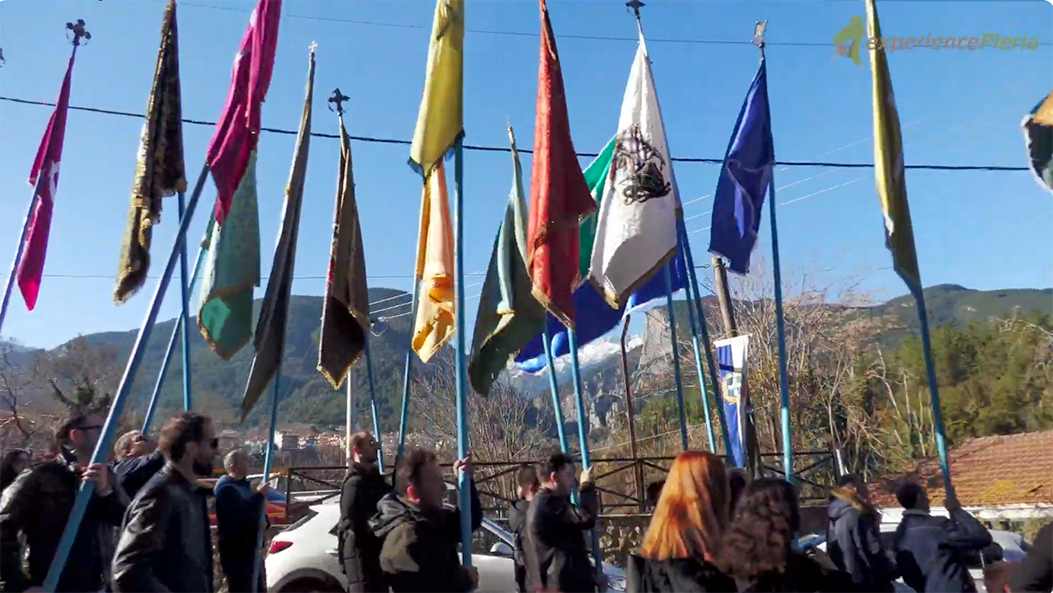
Crosses, colourful banners and a living tradition carried through the streets of Litochoro every Epiphany.
At a Glance
- Tradition: Sichna / Sichnoforia
- Location: Litochoro, Pieria, Greece
- Occasion: Epiphany / Theophany (Fota)
- When: Epiphany and the following day, the feast of Saint John the Forerunner
- What you see: Tall masts, crosses, colourful banners and procession
- Cultural status: Inscribed in Greece’s National Inventory of Intangible Cultural Heritage in 2022
Watch the Sichna of Litochoro
Before reading about the tradition, take a moment to see the Sichna in motion — carried through Litochoro during the Epiphany celebrations beneath Mount Olympus.
The Sichna procession during Epiphany in Litochoro, Pieria, Greece.
What Are the Sichna?
The Sichna are tall poles or masts carried during the Epiphany celebrations in Litochoro.
At the top is a cross, most commonly silver and sometimes gold, while colourful banners hang from the mast and move with the winter wind.
Seen against the January sky and the slopes of Mount Olympus, they create one of the most distinctive images of Litochoro’s winter traditions.
But the Sichna are not simply ceremonial objects.
They are part of a community tradition in which religious observance, family memory and local identity come together.
Sichnoforia: A Tradition Carried Through the Town
The word Sichnoforia describes the carrying of the Sichna.
The tradition is connected with the celebration of Epiphany — Theophany, or Fota — one of the major feasts of the Orthodox Christian calendar.
In Litochoro, the Sichna become part of the movement of the celebration through the town, accompanying the ritual and the blessing of the waters.
The result is both visual and deeply communal: tall vertical forms, crosses and banners moving through the streets while residents participate in a tradition that belongs to the town.
Two Days of Epiphany Tradition
The Sichnoforia is associated with two consecutive days.
The first is Epiphany, when the main celebration of Theophany takes place.
The following day is the feast of Saint John the Forerunner — Ioannis o Prodromos — continuing the local cycle of the tradition.
This two-day structure makes the Sichna more than a single procession.
It is part of a wider period of community participation surrounding the Epiphany celebrations in Litochoro.
Faith, Family & Local Memory
According to the tradition as documented for Litochoro, individual Sichna can be associated with local chapels, families and guild traditions.
Some are connected with families whose history was shaped by the sea and maritime life.
This gives the objects another layer of meaning.
The mast may be visible to everyone in the street, but behind it there can be a family story, a religious dedication or a connection to a particular part of the community.
That is one of the reasons the Sichna are better understood as part of living heritage rather than simply as objects displayed during a festival.
From Older Generations to the Present
Traditions survive not because they are placed in a museum, but because people continue to practise them.
The Sichna have changed in appearance and details over time, yet the custom remains part of the Epiphany life of Litochoro.
Older descriptions refer to richer ornamentation and additional decorative elements. Today, the strong visual identity remains in the tall mast, the cross and the colourful banner.
The form may evolve.
The tradition continues.
Why the 2022 Heritage Recognition Matters
In 2022, the Sichna of Litochoro were inscribed in Greece’s National Inventory of Intangible Cultural Heritage.
This recognition places the tradition within Greece’s wider effort to document and safeguard cultural practices that are transmitted through communities rather than preserved only as physical monuments.
For Litochoro, it also formally acknowledges a local Epiphany tradition with its own distinctive form and history.
You can read the official heritage entry here:
The Sichna in Litochoro, Pieria — National Inventory of Intangible Cultural Heritage
Epiphany Under Mount Olympus
Litochoro has a particular relationship with Mount Olympus.
The mountain dominates the landscape, while the town below has developed its own traditions, stories and rituals over generations.
During Epiphany, the Sichna create a striking connection between the two.
The crosses rise above the streets.
The banners move in the winter air.
And behind the ritual is a community continuing something that belongs specifically to this place.
How to Experience the Sichna Respectfully
- Arrive early if you want to understand the procession before it begins.
- Keep a respectful distance from the people carrying the Sichna.
- Dress for winter. January in Litochoro can be cold, wet and windy.
- Photograph without interrupting. The Sichna are part of a religious and community tradition, not a staged performance.
- Observe the whole celebration. The procession makes more sense when seen as part of Epiphany rather than as an isolated spectacle.
When Can You See the Sichna?
The Sichna are associated with the Epiphany celebrations in Litochoro, held every year on 6 January, with the local tradition continuing on the following day, the feast of Saint John the Forerunner.
If you are visiting Pieria in winter, the Sichnoforia offers an opportunity to experience a side of Litochoro that is very different from its summer identity as a gateway to Mount Olympus.
A Living Heritage of Litochoro
The most interesting thing about the Sichna is not simply their appearance.
It is the fact that people continue to carry them.
Year after year.
Through winter streets.
Through changing generations.
Through a town whose relationship with Mount Olympus continues to shape its identity.
The Sichna are crosses, banners and tall masts.
But they are also memory made visible.
And perhaps that is what makes this Epiphany tradition worth discovering.
Continue Exploring Litochoro & Pieria
Litochoro is one of the places where the cultural and natural stories of Pieria meet.
From here, you can explore Mount Olympus, walk the Enipeas Gorge, discover the archaeological heritage of Dion, visit nearby villages or continue towards the Aegean coast.
Explore Pieria at your own pace:
Explore Pieria

