
Agia Kori Waterfall, Olympus | A Winter Walk, Ancient Music & a Moment of Life
Some places ask you to slow down.
Agia Kori is one of them.
Near Vrontou, on the slopes of Mount Olympus, a short winter walk leads through forest and water to a small waterfall — a place where, on one January morning, a simple walk became something much more personal.
Agia Kori Waterfall, Olympus | A Winter Walk, Ancient Music & a Moment of Life
There are many ways to experience Mount Olympus.
You can climb towards its highest peaks, follow one of its famous hiking routes, explore its villages or simply walk into the forest for a few hours.
In January 2026, we chose the simplest option.
A short winter walk to Agia Kori Waterfall near Vrontou, Pieria.
At a Glance
- Location: Agia Kori, near Vrontou, Pieria
- Setting: Forest landscape on Mount Olympus
- Experience: Short winter nature walk and waterfall visit
- Best known for: Forest, running water and natural surroundings
- Nearby: Vrontou and the wider Olympus landscape
- Story: A winter walk accompanied by ancient Greek music
A Winter Walk to Agia Kori
On January 9, 2026, there was no ambitious plan.
No summit. No long-distance hike. No checklist.
Just a winter walk close to home, beneath Mount Olympus.
I went with Christos Kyparissas, a local chef from Litochoro who is deeply connected to food, craft and the places around him.
Despite living so close to Olympus, Christos had never visited Agia Kori.
That felt familiar.
Sometimes we travel far to discover places while overlooking the ones that are closest to us.
The drive through Vrontou was slow and quiet. Winter gardens, stone walls and empty streets gave the village a different character from the one it has during the warmer months.
Then the road led us towards the forest.
The Forest in Winter
Winter changes the way Olympus feels.
The colours become quieter. The ground is damp. Water becomes more present.
At the trail, the air was cold and the sound of the stream was already louder than conversation.
There was no need to hurry.
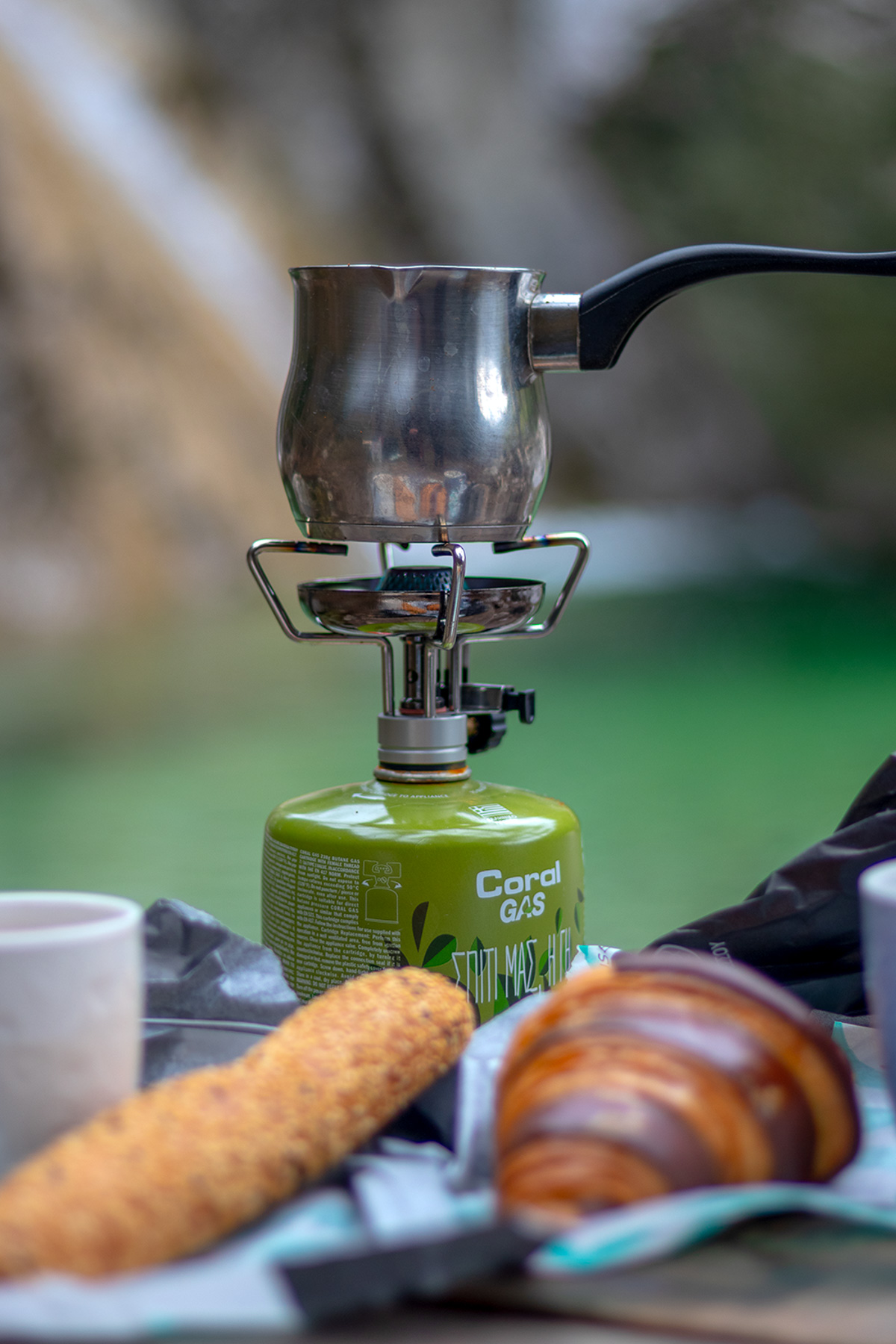
I carried a small gas burner to make Greek coffee and Olympus tea along the way.
Nothing elaborate.
Just a small outdoor ritual that made us stay a little longer.
When a Walk Becomes a Photography Lesson
Christos was also curious about photography, so the walk gradually became an improvised conversation about light.
Winter forests reward patience.
The light changes quickly between the trees, and even familiar places can look completely different from one visit to another.
We talked about older lenses, including some Russian lenses he had inherited from his grandfather.
They have a different rhythm.
They make you slow down.
And perhaps that was exactly what this particular day needed.
Agia Kori Waterfall
The trail eventually brought us to the waterfall.
Water moving through the forest, rock, winter vegetation and the sound of the stream created the kind of landscape that does not need much explanation.
Agia Kori is not about a spectacular infrastructure or a developed attraction.
Its appeal lies precisely in the natural setting.
It is a place to walk, listen, photograph and spend some time outdoors.
And on a winter day, the experience becomes particularly quiet.
A Handmade Lyra in the Olympus Forest
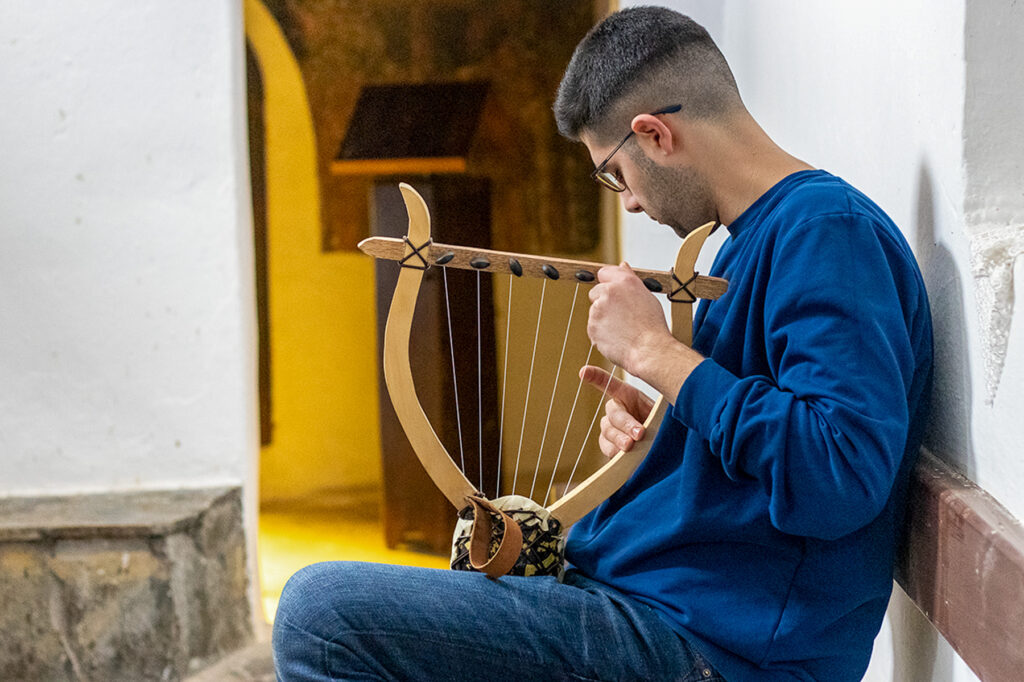
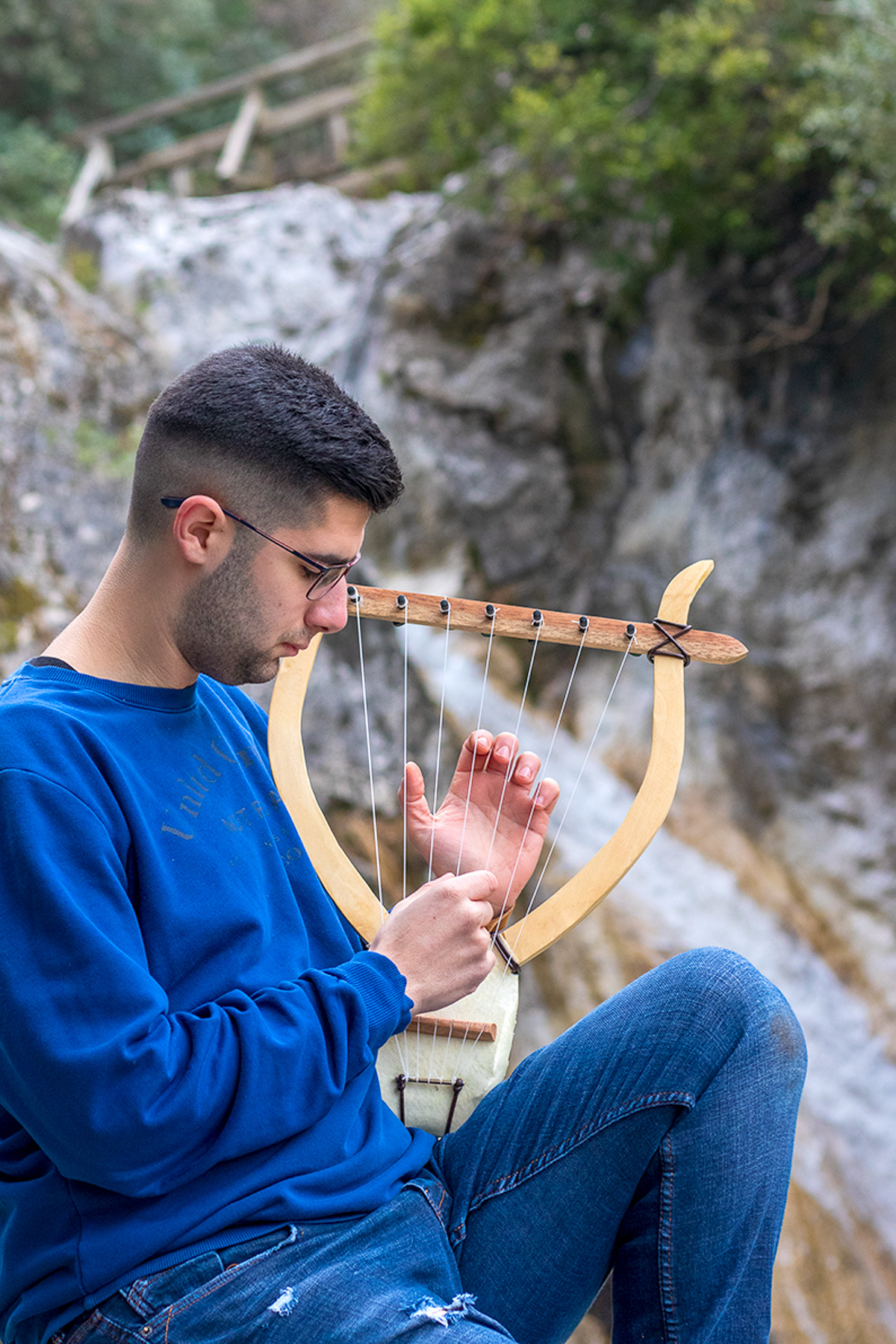
Then Christos took out his lyra.
He had made it himself, using traditional materials and his own craftsmanship.
There was no performance planned.
He simply wanted to let the instrument become part of the landscape.
At Agia Kori, ancient-sounding music met winter water.
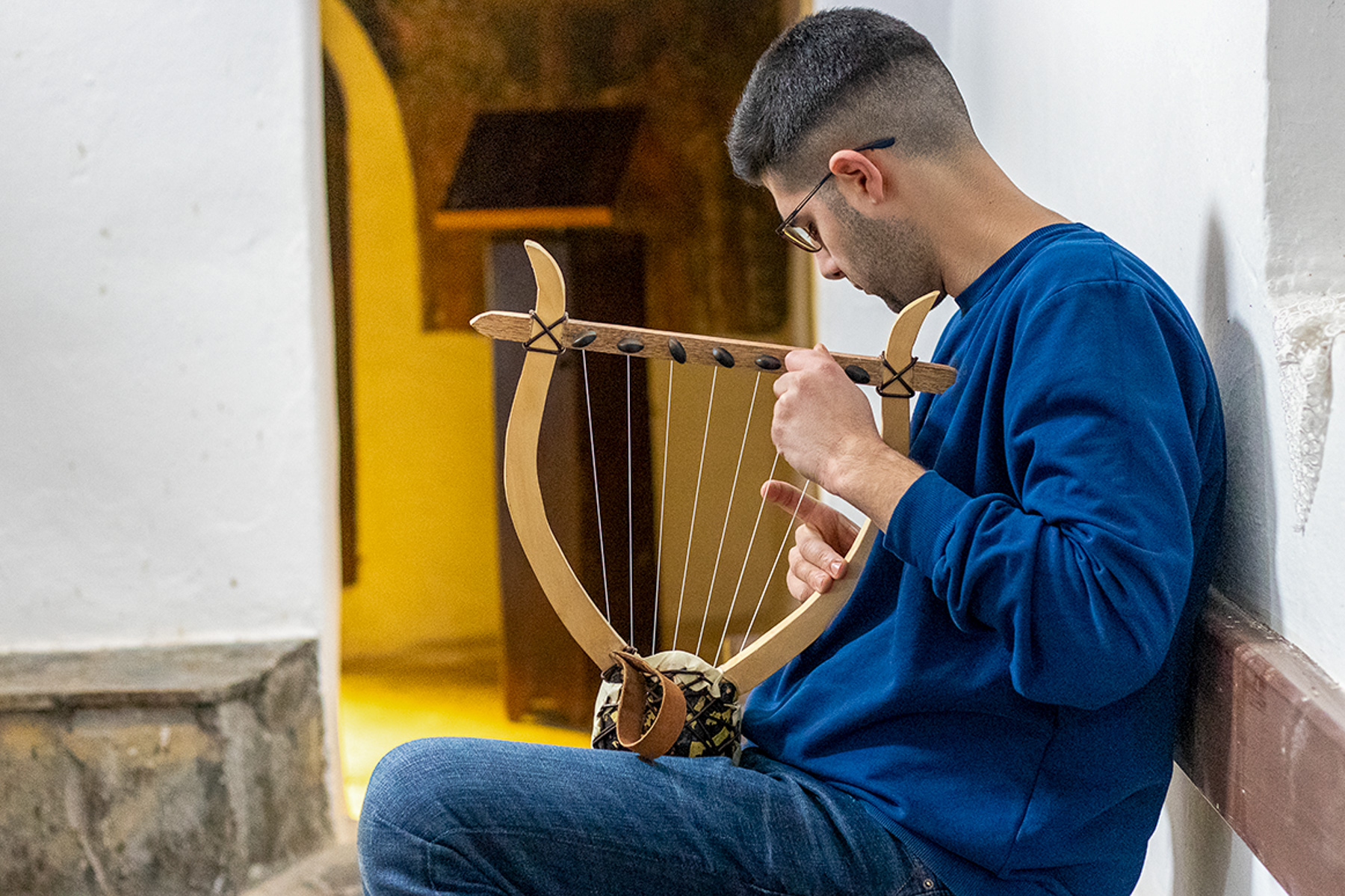
Later, at Agia Triada in Vrontou, he played a melody with a much older story behind it.
The Seikilos Epitaph: “While You Live, Shine”
The piece was the Seikilos Epitaph, an ancient Greek musical composition preserved together with its musical notation and text on a funerary inscription.
Its message is strikingly direct: life is brief, so live while you can.
While you live, shine.
Have no grief at all.
Life exists only for a short while.
For a few moments, the ancient melody felt strangely close to the present.
Christos Kyparissas playing the Seikilos Epitaph on his handmade lyra.
When the Present Changes the Meaning of the Moment
That same day, we learned about the death of a 59-year-old shepherd from Vrontou.
Days earlier, authorities had ordered the slaughter of his flock — more than a thousand sheep and goats — as part of disease-control measures.
The loss had placed an enormous burden on his life and livelihood.
He died by suicide.
There is no easy way to connect such an event to a travel story.
And perhaps we should not try to.
But the coincidence of the moment stayed with us.
An ancient song about the brevity of life had just been played on a handmade instrument beneath Olympus, while a family and a community nearby were dealing with a devastating loss.
Nature Does Not Always Give Us Answers
Water continued to fall.
The forest remained quiet.
The melody eventually disappeared.
Nature did not explain what had happened.
It simply continued.
That is perhaps one of the reasons we seek places like Olympus.
Not necessarily to find answers, but to create enough space to notice what is happening around us — and within us.
Why Slow Travel Matters
Slow travel is often described as a way of travelling more consciously.
But sometimes it is much simpler than that.
It means walking without rushing.
Stopping for coffee.
Listening to water.
Talking to someone from the place.
Discovering something that you had somehow never seen before.
And allowing a destination to become more than a collection of attractions.
Agia Kori gave us all of that in a few hours.
Visiting Agia Kori in Winter
If you are exploring the Olympus region in winter, Agia Kori can be part of a quieter day in the mountains around Vrontou.
Winter conditions can make forest paths wet, slippery or muddy, so appropriate footwear and clothing are important.
Check local weather and trail conditions before setting out, especially after heavy rain or snowfall.
If you are unfamiliar with the area or conditions, consider travelling with someone who knows the route or choosing a guided outdoor experience.
A Small Place. A Bigger Story.
Agia Kori is a waterfall.
It is also a forest walk, a piece of the Olympus landscape and a place that can become something different depending on who you visit with and what you bring with you.
For us, that January morning became a meeting point between nature, photography, craftsmanship, ancient music and contemporary life.
It reminded us that travel does not always need to take us somewhere extraordinary.
Sometimes it only needs to make us pay attention to where we already are.
And perhaps that is what the Seikilos Epitaph was saying all along.
While you live, shine.
Continue Exploring Pieria
Agia Kori is one of many ways to experience Mount Olympus.
From here, you can explore more waterfalls and forest trails, discover mountain villages, visit ancient Dion, or find outdoor experiences across Pieria.
Explore Pieria at your own pace:
Explore Pieria

