
Carnival in Dion-Olympus, Pieria | Apokries, Traditions & Local Celebrations

Carnival in Dion-Olympus, Pieria | Apokries, Traditions & Local Celebrations
Carnival in the Municipality of Dion-Olympus is not one single celebration. It unfolds across towns and villages, bringing together Apokries traditions, parades, music, dancing, food, bonfires and local customs beneath Mount Olympus.

Carnival in Dion-Olympus at a Glance
- Region: Pieria, Greece
- Municipality: Dion-Olympus
- Season: Apokries / Greek Carnival
- What to experience: Parades, traditional dances, music, food, bonfires and local customs
- Places featured: Litochoro, Skotina, Dion, Vrontou, Leptokarya, Neos Panteleimonas and Platamonas
- Final day: Clean Monday (Kathara Deftera) and Koulouma celebrations
What Is Carnival Like in Dion-Olympus?
Greek Carnival, known as Apokries, is a period of celebrations that takes place before Great Lent. Across Pieria, the season can include organised parades, costumes, music, dancing, communal meals and older local customs.
In the Municipality of Dion-Olympus, Carnival takes on a distinctly local character. Celebrations are spread across communities rather than concentrated in one place, giving visitors the opportunity to discover different traditions as they move between the mountain and the coast.
Some celebrations are contemporary Carnival events, while others preserve distinctive local customs connected with fire, community gatherings and village memory.
Litochoro: Carnival Beneath Mount Olympus
At the foot of Mount Olympus, Litochoro combines Carnival celebrations with traditions that are closely connected to the town’s identity.
During the Carnival period, visitors can encounter parades, costumes, music and gatherings in the town, while the final days of Apokries also connect with the traditional burning of cedar in neighbourhoods.

The cedar fires are one of the most distinctive elements of Carnival in Litochoro. Rather than simply being a spectacle, they bring people together in neighbourhoods and form part of the local cultural landscape.
Discover more:
Burning Cedar Fires in Litochoro, Pieria
Skotina: The Tsagkala Carnival Tradition
In the mountain village of Skotina, Carnival has its own distinctive character through the local Tsagkala tradition.
The celebration combines cedar, fire, music, dancing, food and community participation. It is one of the local customs that gives Carnival in the villages of Pieria a character of its own.

The Tsagkala is especially interesting because it belongs to the living cultural identity of Skotina. Its meaning and form have developed through local history, community memory and the Carnival calendar.
Read the full story:
Fire, Cedar & Memory — The Tsagkala Carnival Ritual in Skotina
Leptokarya: Carnival by the Sea
The coastal town of Leptokarya brings a different atmosphere to the Carnival season.
The 2024 Carnival programme included the official opening of the Leptokarya Carnival with a parade, music and traditional dances, showing how Carnival celebrations extend from the mountain villages to the Aegean coast.
The combination of Carnival activity, the coastline and the backdrop of Mount Olympus makes the area particularly interesting for visitors exploring Pieria outside the summer season.
Dion: Community, Food & Bonfires
The ancient landscape of Dion also becomes part of the local Carnival calendar.
The 2024 programme included a gathering of the citizens of Dion with traditional dances and food, as well as an evening bonfire.
It is a reminder that Carnival in Pieria is not limited to large parades. In many communities, the celebration is built around people meeting, eating, dancing and spending time together.
Vrontou & the Mountain Villages
The mountain communities of Dion-Olympus also organise their own Carnival gatherings.
In Vrontou, the 2024 programme included a Carnival parade and traditional dances. Such village celebrations offer a more community-oriented side of Apokries, where local groups and residents are central to the atmosphere.
Neos Panteleimonas & Platamonas
The southern part of the municipality adds another layer to the Carnival experience.
In Neos Panteleimonas, Carnival and Koulouma celebrations have included traditional music, dancing and food, while nearby Platamonas has hosted Carnival parades and community celebrations.
Together with the coast, the old village of Neos Panteleimonas and the landscape around Platamonas Castle, these places offer an easy way to combine Carnival with a wider exploration of southern Pieria.
The Final Day: Koulouma & Clean Monday
The Carnival period ends with Clean Monday (Kathara Deftera), the first day of Great Lent in the Orthodox Christian calendar.
In Pieria, Koulouma gatherings can include outdoor meals, traditional foods, music, dancing and activities for children. Flying kites is also one of the familiar customs associated with Clean Monday.
The 2024 programme featured Koulouma celebrations in communities including Vrontou, Dion, Karitsa, Kontariotissa, Leptokarya, Litochoro, Neos Panteleimonas, Platamonas and Skotina.
Because local programmes change each year, visitors should check the current municipal and community announcements before planning a Carnival trip.
Carnival, Food & Local Life
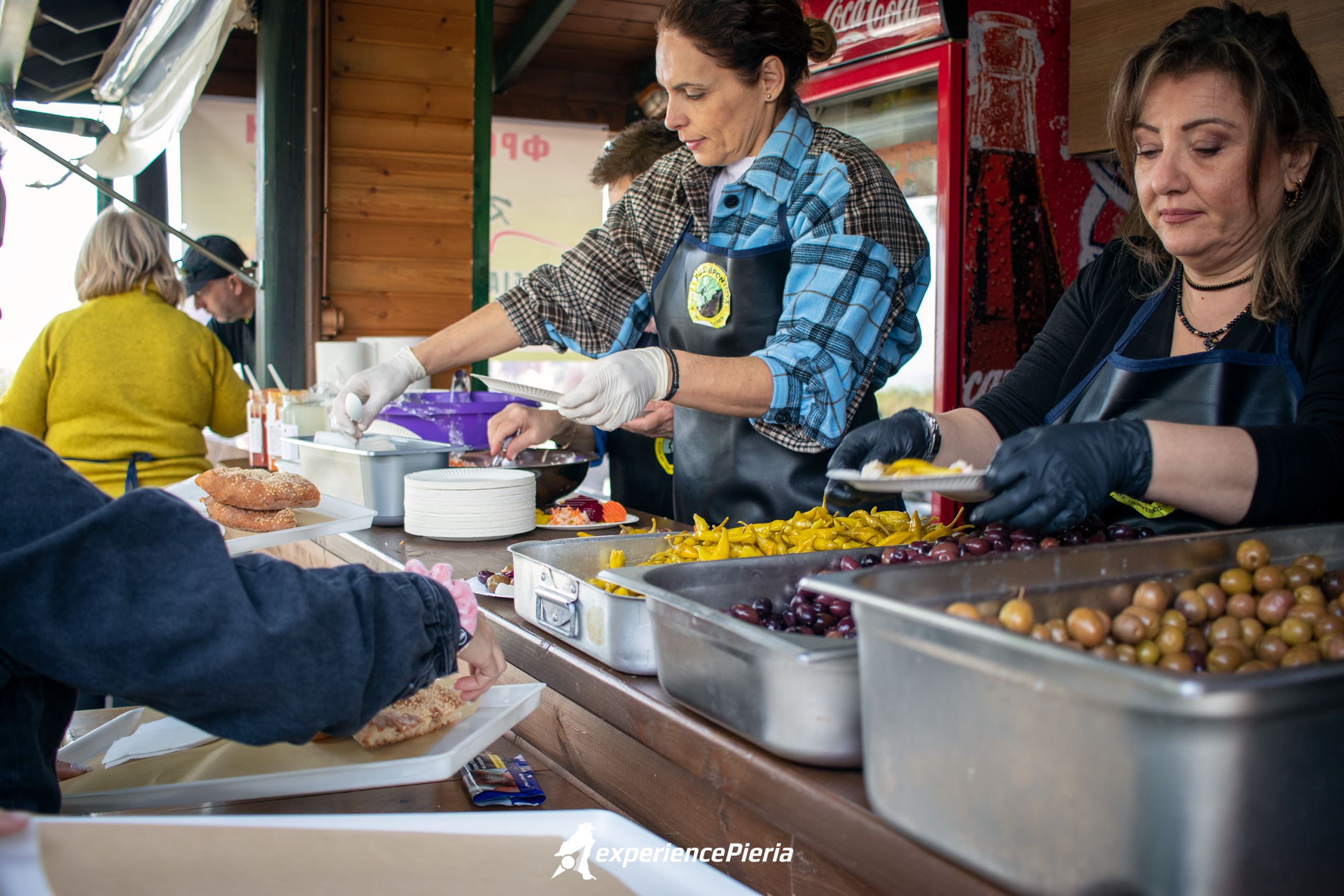
Food is an important part of Apokries in Greece. In Pieria, Carnival gatherings can bring together grilled meat, local dishes, wine, communal meals and traditional celebrations.
This is particularly visible during outdoor gatherings and village events, where eating and socialising are part of the celebration rather than separate activities.
For a visitor, this offers something different from simply watching a parade: Carnival becomes an opportunity to experience how local communities gather and celebrate together.
A Carnival Route Through Dion-Olympus
One of the advantages of experiencing Carnival in the Municipality of Dion-Olympus is the variety of landscapes involved.
You can begin in the mountain environment around Skotina or Vrontou, continue towards Litochoro and Mount Olympus, visit the archaeological landscape of Dion, and then head towards Leptokarya, Platamonas and the Aegean coast.
The celebrations provide a reason to travel through the region, while the journey itself reveals the diversity of Pieria.
When Does Carnival Take Place?
The dates of Greek Carnival change every year because they are connected to the date of Orthodox Easter.
The Carnival season leads towards Clean Monday, after which Great Lent begins. Individual municipalities, villages and cultural associations announce their own programmes, so dates and times can vary from one year to another.
If you are planning a visit specifically for Carnival, check the current year’s local programme before travelling.
Practical Tips for Visitors
- Check dates first: Carnival dates change every year.
- Look beyond the main parade: smaller village celebrations can offer a more local experience.
- Dress for the season: February and March can be cold, particularly in the mountain villages.
- Combine mountain and coast: Dion-Olympus allows you to move between Mount Olympus, villages, archaeological sites and the Aegean.
- Respect local traditions: some events have a strong community and religious context.
- Allow time: if you want to visit several communities, a car makes exploring the wider municipality easier.
Frequently Asked Questions
Where can I experience Carnival in Dion-Olympus?
Carnival celebrations take place in several communities, including Litochoro, Skotina, Dion, Vrontou, Leptokarya, Neos Panteleimonas and Platamonas. The exact programme changes each year.
What is special about Carnival in Litochoro?
Litochoro combines contemporary Carnival celebrations with distinctive local traditions, including the burning of cedar in neighbourhoods during the Carnival period.
What is Tsagkala in Skotina?
Tsagkala is a local Carnival tradition in Skotina involving cedar, fire, music, dancing, food and community gathering.
What is Koulouma?
Koulouma refers to the outdoor celebrations associated with Clean Monday, traditionally involving food, music, social gatherings and kite flying.
Can I combine Carnival with Mount Olympus?
Yes. Carnival takes place in late winter or early spring, making it possible to combine cultural experiences with walks, villages, archaeological sites and the landscapes around Mount Olympus, depending on weather conditions.
Carnival in Pieria Is a Local Story
The most interesting part of Carnival in Dion-Olympus is not simply the parade.
It is the way different communities give the season their own character — through fire in Litochoro, Tsagkala in Skotina, gatherings in Dion, village celebrations in Vrontou and festivities stretching towards the coast.
These traditions create a different way of discovering Pieria: not as a destination waiting for summer, but as a place with its own rhythm, people and celebrations throughout the year.
Continue Exploring Pieria
Carnival is only one part of the cultural life of Pieria.
From the traditions of Litochoro and Skotina to Mount Olympus, ancient Dion, mountain villages and the Aegean coast, there are many more stories to discover.
Explore Pieria at your own pace:
Explore Pieria
