
Greek Easter in Pieria | Traditions, Epitaphios & Local Celebrations
Greek Easter in Pieria | Traditions, Epitaphios & Local Celebrations
Greek Easter is one of the most important moments of the year in Greece. It is both a deeply religious celebration and a time when families, villages and communities come together around food, traditions, music and shared memories.
In Pieria, Easter offers visitors a chance to experience this atmosphere beyond the usual tourist routes. From the candlelit Epitaphios procession on Good Friday to the midnight Anastasi on Holy Saturday and the Easter table that follows, the days of Holy Week bring a different rhythm to towns and villages across the region.
If you are planning to visit Pieria during Easter, this guide explains what you can expect and how to experience the traditions respectfully and at your own pace.
Greek Easter in Pieria at a Glance
- Season: Spring, with Easter following the Orthodox Christian calendar
- Experience: Church services, Epitaphios processions, Anastasi, food and local gatherings
- Best places to experience it: Litochoro, mountain villages and local communities across Pieria
- Good Friday: Epitaphios processions take place after the evening service
- Holy Saturday: The Resurrection ceremony takes place around midnight
- Easter Sunday: Family gatherings, traditional food and celebration
Why Experience Greek Easter in Pieria?
Greek Easter is perhaps best understood away from the biggest cities.
In smaller towns and villages, the traditions often remain closely connected to the local community. People know one another, churches become gathering points and religious ceremonies unfold alongside everyday village life.
Pieria is particularly interesting because of its landscape. The region stretches from the Aegean coast to the foothills and forests of Mount Olympus, with towns and mountain villages offering different settings for experiencing Holy Week.
For a visitor, Easter is not simply an event to watch. It is an opportunity to observe how religion, family, food and community come together in Greek life.
Holy Week in the Greek Orthodox Tradition
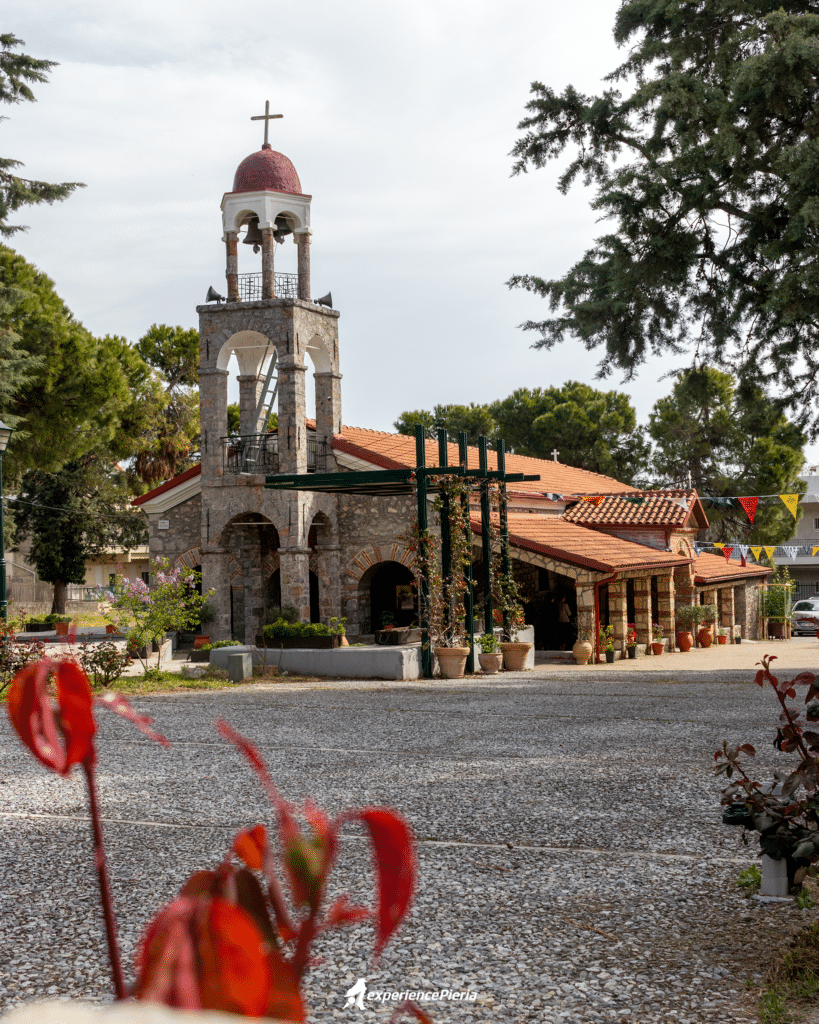
Greek Easter is rooted in the Greek Orthodox Christian tradition, and Holy Week leads the faithful through the final days of the Passion of Christ towards the celebration of the Resurrection.
The services of Holy Week are an important part of the experience. The atmosphere becomes especially distinctive during the final days, when churches fill with people and the ceremonies move beyond the church itself into the streets and public spaces of towns and villages.
For visitors unfamiliar with Orthodox Easter, these ceremonies can provide an insight into an important part of Greek religious and cultural life.
Good Friday: The Epitaphios in Pieria
Good Friday is one of the most solemn days of Holy Week.
In the evening, churches hold the service of the Epitaphios, followed by a procession through the streets. The atmosphere is quiet and reflective, with the sound of church bells, hymns and the light of candles carried by the people taking part.
What Is the Epitaphios?
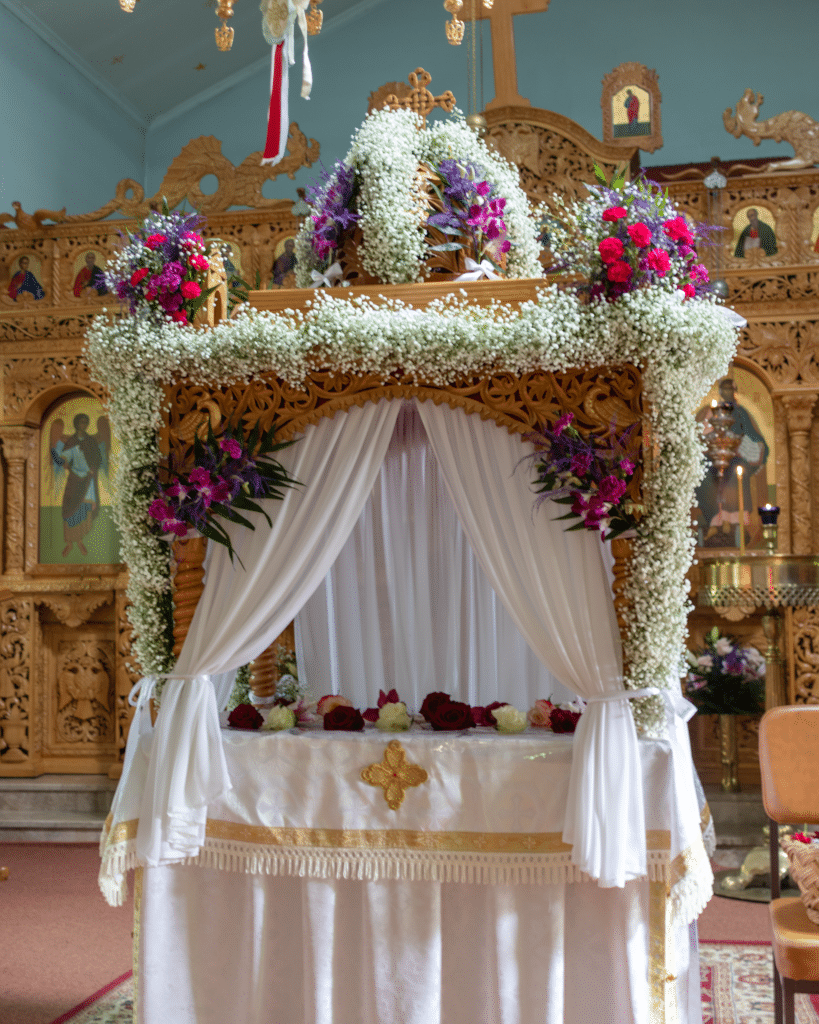
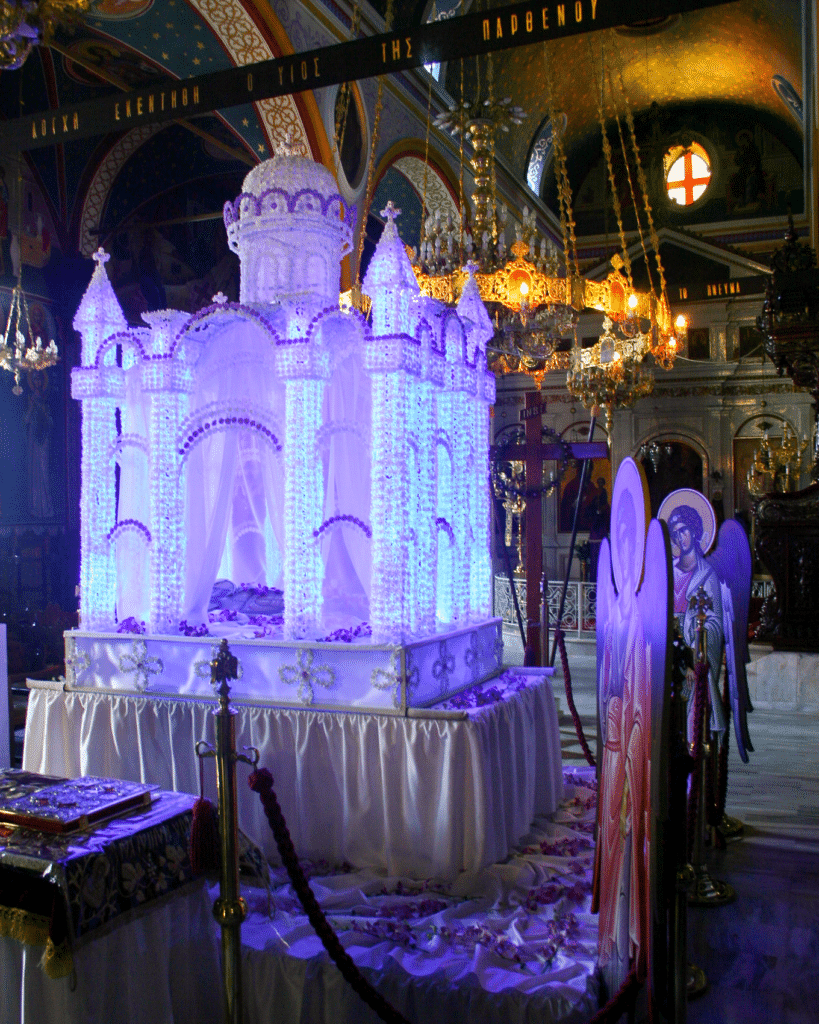
The Epitaphios is a richly decorated bier representing the body of Christ. It is traditionally covered with flowers and carried in procession after the evening Good Friday service.
In the hours before the procession, the Epitaphios is decorated with flowers, creating one of the most visually distinctive scenes of Holy Week.
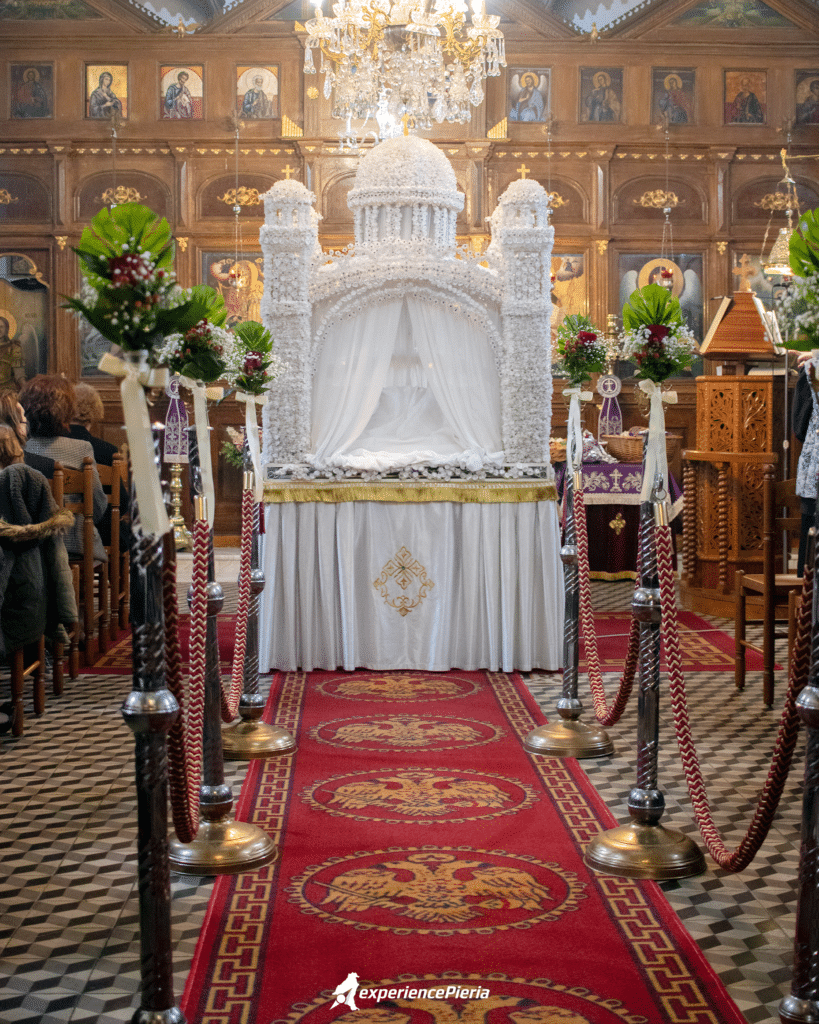
When the procession begins, the Epitaphios is carried through the town while the faithful follow with candles.

The Epitaphios in Litochoro
Litochoro offers a particularly memorable setting for experiencing the Good Friday tradition.
The town has several churches, and the Epitaphios processions come together in the centre. In the experience documented for this story, groups from churches including Agios Georgios, Agios Dimitrios and Agios Nikolaos moved towards the Pazari, where people and processions met.
The result is not a performance created for visitors. It is a religious ceremony taking place within the community, with local people participating as they do every year.

Watch the Epitaphios procession in Pieria:
Watch the video
Holy Saturday: Waiting for the Anastasi
Holy Saturday brings a very different atmosphere.
During the day, churches hold services as people prepare for the central moment of the Easter celebration: the Anastasi, or Resurrection, at midnight.
In the evening, people begin gathering outside their local church. Many arrive carrying a white candle, dressed for the occasion and ready to wait together for midnight.
The Holy Light & Christos Anesti
The Resurrection ceremony takes place around midnight.
When the priest announces “Christos Anesti” — “Christ is risen” — the congregation responds “Alithos Anesti” — “He has truly risen.”
The moment transforms the atmosphere. Church bells ring, candles are lit and fireworks can fill the sky in many places across Greece.
People then take the light home, continuing the celebration with their families.
The candle carried from church is an important part of the evening. In some Greek households, the flame is used to make the sign of the cross with smoke above the entrance of the home.
Easter Sunday: Food, Family & Celebration
After the solemnity of Good Friday and the anticipation of Holy Saturday, Easter Sunday is a day of celebration.
Families and friends gather around the table, often outdoors when the weather allows. Food becomes a central part of the day, with traditional Easter dishes prepared and shared among family and friends.
Among the best-known Greek Easter traditions are tsoureki, red-dyed Easter eggs and the roasting of lamb.
But the food is only part of the experience. Easter Sunday is about spending time together — eating, talking, drinking, listening to music and enjoying the return of spring.
Greek Easter Food to Look For
If you are visiting Pieria during Easter, look beyond restaurants aimed at visitors and pay attention to what local families and traditional tavernas are preparing.
- Tsoureki: Traditional sweet Easter bread
- Red Easter eggs: Dyed eggs traditionally associated with Greek Easter
- Lamb: A central part of the Easter Sunday feast in many Greek families
- Local meat and village dishes: Traditional food varies between families and communities
- Wine and local spirits: Often shared around the Easter table
In Pieria, food is closely connected to the landscape and local production. An Easter meal can therefore become another way of discovering the region.
Easter in the Villages of Pieria
One of the most interesting ways to experience Easter in Pieria is to spend time in a village rather than staying only in a larger tourist centre.
The mountain villages around Mount Olympus offer a slower setting, where churches, village squares, traditional houses and family gatherings form part of the Easter landscape.
This is also a good opportunity to combine Easter traditions with the natural and cultural attractions of the region.
You can explore places, experiences and local attractions across Pieria and build your visit around the areas that interest you most.
Greek Easter & Spring in Pieria
Easter usually arrives in spring, making it possible to combine the religious celebrations with outdoor exploration.
The forests around Mount Olympus are beginning to wake up, the days become longer and the villages and countryside take on a fresh seasonal character.
You can spend part of your trip experiencing Holy Week traditions and another part discovering the landscapes, archaeological sites, villages and coastline of Pieria.
For an introduction to the mountain, start with our Mount Olympus guide.
How to Experience Greek Easter Respectfully
Greek Easter ceremonies are religious services, not tourist performances. If you attend one, a few simple things make a difference.
- Dress respectfully when entering a church.
- Keep a quiet presence during services and processions.
- Follow the local crowd rather than blocking the procession.
- Ask before photographing people at close range.
- Remember that the ceremony belongs first to the local community.
The best approach is simple: observe, participate when appropriate and allow the atmosphere of the place to speak for itself.
When Is Greek Easter?
Greek Orthodox Easter does not fall on the same date every year. The date follows the Orthodox Easter calendar, so it changes from year to year.
If you are planning a trip specifically around Easter, check the dates for the year of your visit and then look for the local Holy Week programme of the town or village where you will stay.
Frequently Asked Questions About Greek Easter in Pieria
What is Greek Easter called in Greek?
Greek Easter is called Pascha (Πάσχα). The central celebration is the Resurrection of Christ, known as Anastasi.
What happens on Good Friday in Greece?
On Good Friday, the Epitaphios is decorated with flowers and carried in an evening procession through towns and villages after the church service.
What is the Epitaphios?
The Epitaphios is a decorated bier representing the body of Christ. It is carried in procession on Good Friday evening.
What happens at midnight on Greek Easter?
At midnight on Holy Saturday, the Resurrection ceremony takes place. The priest announces “Christos Anesti”, people respond “Alithos Anesti”, candles are lit and celebrations begin.
Can visitors attend Greek Easter services?
Visitors can generally attend public church services, but they should behave respectfully and remember that these are religious ceremonies rather than performances.
Where can I experience Greek Easter in Pieria?
Litochoro and the villages of Pieria offer opportunities to experience local Easter traditions. Smaller communities can provide a particularly intimate view of Holy Week and Easter celebrations.
Continue Exploring Pieria
Greek Easter is one of the moments when Pieria becomes more than a destination on a map.
It is a region of churches, villages, mountains, food, family traditions and communities — and Easter brings many of these elements together.
From the streets of Litochoro to the mountain villages beneath Mount Olympus, there is always another local story to discover.
Explore Pieria at your own pace:
Explore Pieria
