
Culture & History · Ancient Dion · Pieria, Greece
Dion Archaeological Park: Winter Opening Hours, Tickets & Visitor Guide
ANCIENT MACEDONIA · ARCHAEOLOGY · MOUNT OLYMPUS
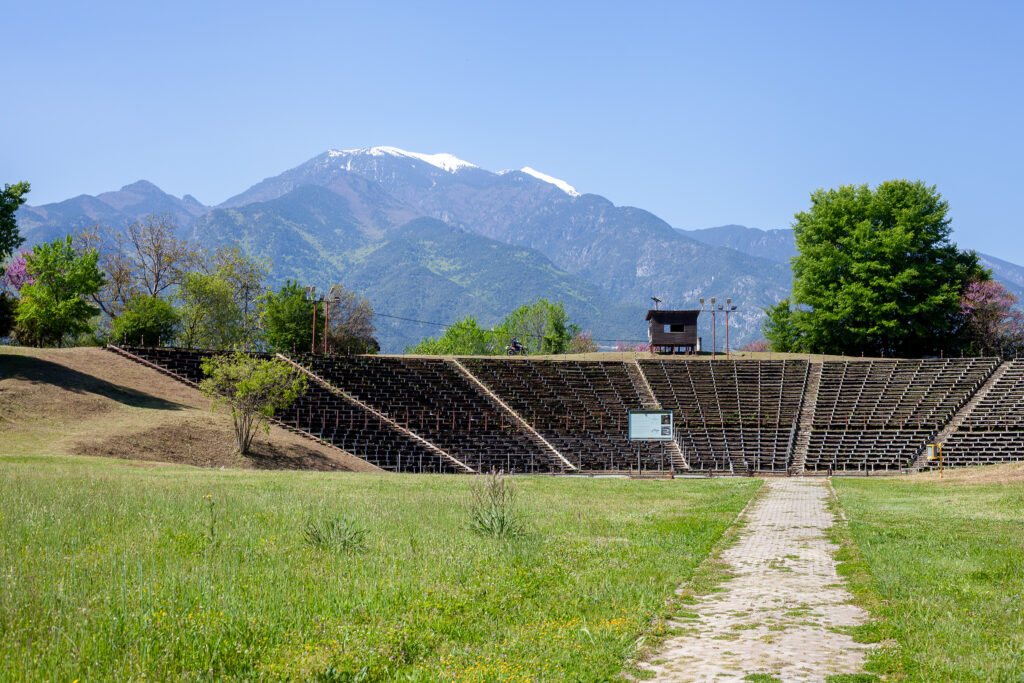
At the foot of Mount Olympus, Ancient Dion reveals the remains of a city that once played an important role in the religious and political life of ancient Macedonia. From sacred sanctuaries and ancient theatres to Roman streets and museum collections, here is how to plan your visit to the archaeological park and museum during the winter season.
Some archaeological sites are remembered for a single monument. Dion tells a much bigger story.
Spread across a green landscape beneath Mount Olympus, the archaeological park preserves the remains of an entire ancient city. Streets, sanctuaries, public buildings, houses, baths and theatres reveal how people lived, worshipped and gathered here over many centuries.
In antiquity, Dion was one of the most important religious centres of the Macedonians, closely associated with the worship of Zeus Olympios. Its position at the foot of Mount Olympus gave the city a special place in the history and identity of ancient Macedonia.
Today, visiting Dion means exploring more than a collection of ruins. It is an opportunity to experience the relationship between archaeology, water, vegetation and the mountain landscape that surrounds the site.
If you are planning a visit between November and March, there are a few practical details worth knowing before you go. The archaeological park and museum follow different opening schedules, and both close relatively early during winter.
Dion Archaeological Park: Essential Visitor Information
- Location: Dion, Pieria, Central Macedonia, Greece.
- Setting: At the foot of Mount Olympus, approximately 20 minutes by car from Katerini.
- Winter season: 1 November – 31 March.
- Park opening hours: 08:30–15:30, Monday and Wednesday to Sunday.
- Park closed: Tuesday.
- Museum opening hours: 08:30–15:30, Monday and Thursday to Sunday.
- Museum closed: Tuesday and Wednesday.
- Last admission: 15:10 at both venues.
- Park admission: €10 full ticket / €5 reduced ticket.
- Museum admission: €10 full ticket / €5 reduced ticket.
- Free admission: First and third Sunday of each month during the winter period.
- Official information: Dion Archaeological Park and Archaeological Museum of Dion.
Discovering Ancient Dion
Ancient Dion was one of the most important religious centres of the ancient Macedonian kingdom. Its history is closely connected with the worship of Zeus Olympios and the ceremonies held in his honour.
The city developed at the foot of Mount Olympus, near routes connecting Macedonia with the wider region. Its sanctuaries, public buildings and organised urban infrastructure reflect a settlement that was both a religious destination and an important centre of Macedonian life.
Today, the archaeological park allows visitors to explore a substantial part of this ancient landscape. Rather than following a single monumental route, the visit unfolds gradually through different archaeological areas.
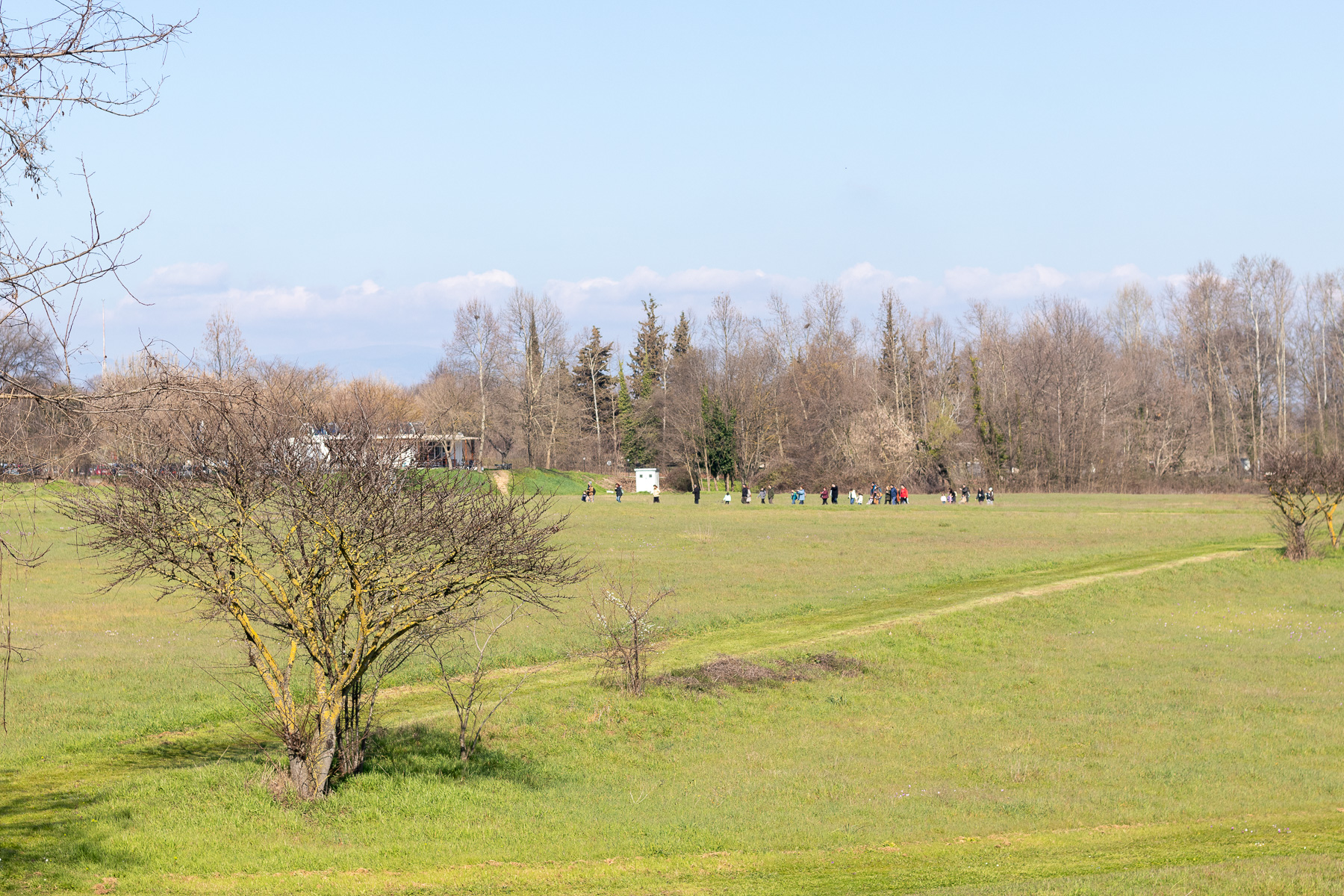
As you walk through the site, the remains appear within a landscape of trees, running water and open spaces. This combination gives Dion a character that is quite different from many archaeological sites dominated by a single large monument.
The Sanctuary of Zeus Olympios
The religious identity of Dion was strongly associated with Zeus Olympios. The sanctuary dedicated to Zeus was among the most significant sacred areas of the ancient city and an important place for the Macedonian kings.
The wider archaeological site preserves evidence of several sanctuaries and religious practices. Together, these remains help explain why Dion held such an important position in the religious life of ancient Macedonia.
The connection with Mount Olympus was not simply geographical. The mountain was the home of the gods in Greek mythology, and the presence of a major sanctuary dedicated to Zeus at its foot gave Dion particular religious significance.
The Hellenistic Theatre of Dion
The Hellenistic Theatre is one of the best-known monuments associated with Ancient Dion. Built during the Hellenistic period, it is traditionally linked to the reign of Philip V of Macedon, who ruled from 221 to 179 BC.
Constructed on a natural slope, the theatre could accommodate approximately 4,000 spectators. Its position and design reflect the importance of theatrical performances and public gatherings in the ancient Macedonian world.
It is worth making an important distinction: the Hellenistic Theatre and the Roman Theatre of Dion are two separate monuments, belonging to different historical periods.
The Hellenistic Theatre lies south of the ancient city, outside its main urban limits. In more recent times, it has also hosted cultural performances, including events associated with the Olympus Festival.
If you specifically want to visit the theatre outside a performance period, check the current access arrangements before travelling. Access to individual monuments in the wider archaeological landscape should not automatically be assumed to follow the same arrangements as the main park route.
The Roman Theatre and the Ancient City
The Roman period left its own architectural and cultural imprint on Dion. The Roman Theatre is distinct from the Hellenistic Theatre and forms part of the wider story of the city through the centuries.
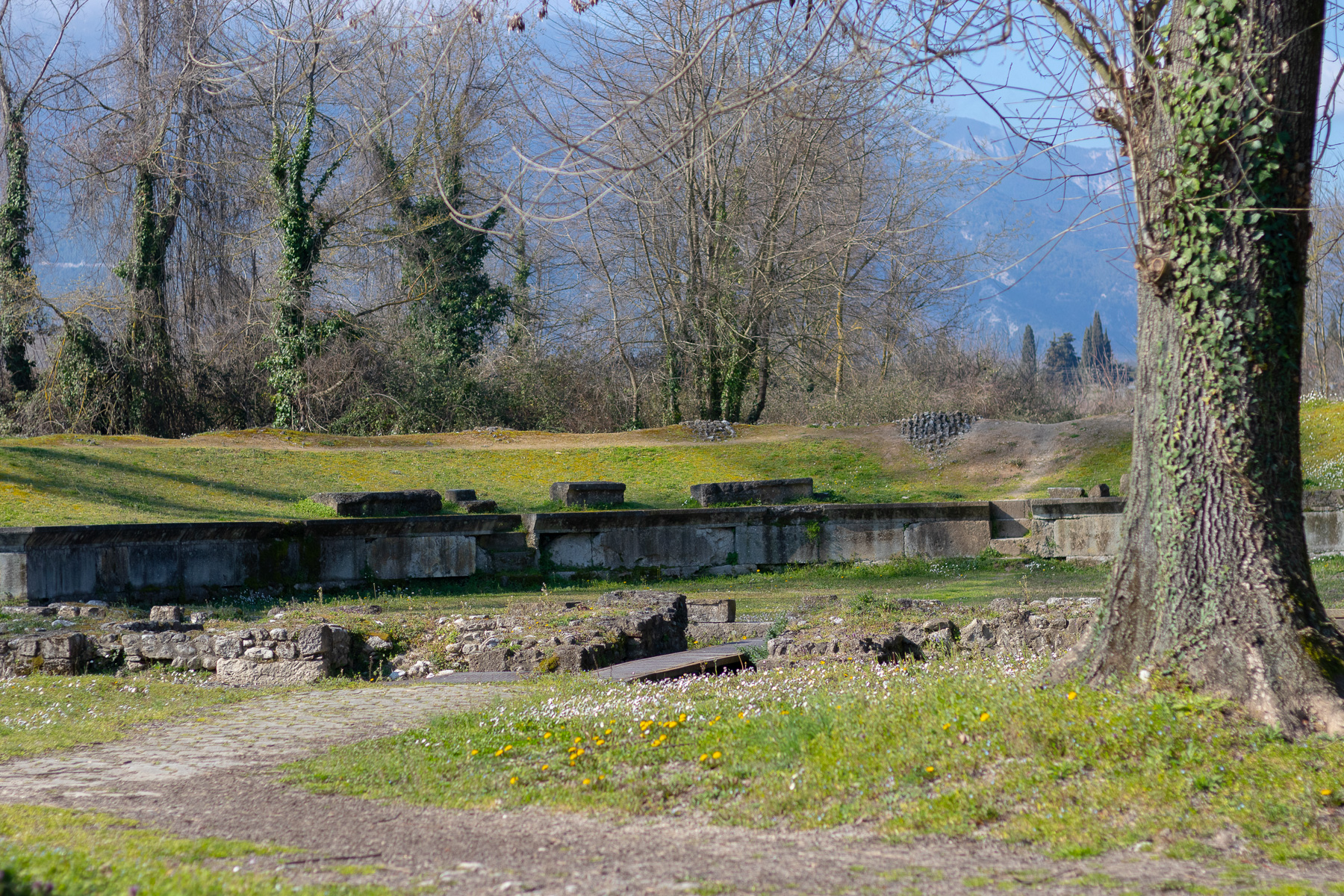
Beyond the theatres, the archaeological park reveals remains of public buildings, houses, baths, streets and other structures that help reconstruct everyday life in the ancient city.
One of the most interesting aspects of Dion is the relationship between its archaeological remains and the natural environment. Water channels, vegetation and open spaces are not simply a backdrop; they are part of the experience of walking through the site.
Take your time. Some of the most rewarding details are found away from the better-known monuments, along the quieter paths connecting the different areas.
Visiting the Archaeological Museum of Dion
The Archaeological Museum of Dion offers a valuable second perspective on the ancient city. While the park introduces visitors to its buildings, sanctuaries and urban landscape, the museum brings together objects discovered during excavations that help explain how the city functioned.
Its collections include finds from the ancient city centre, public buildings, sanctuaries and necropolis. Archaeological material from other sites of interest in Pieria is also presented, giving visitors a broader understanding of the region’s history.
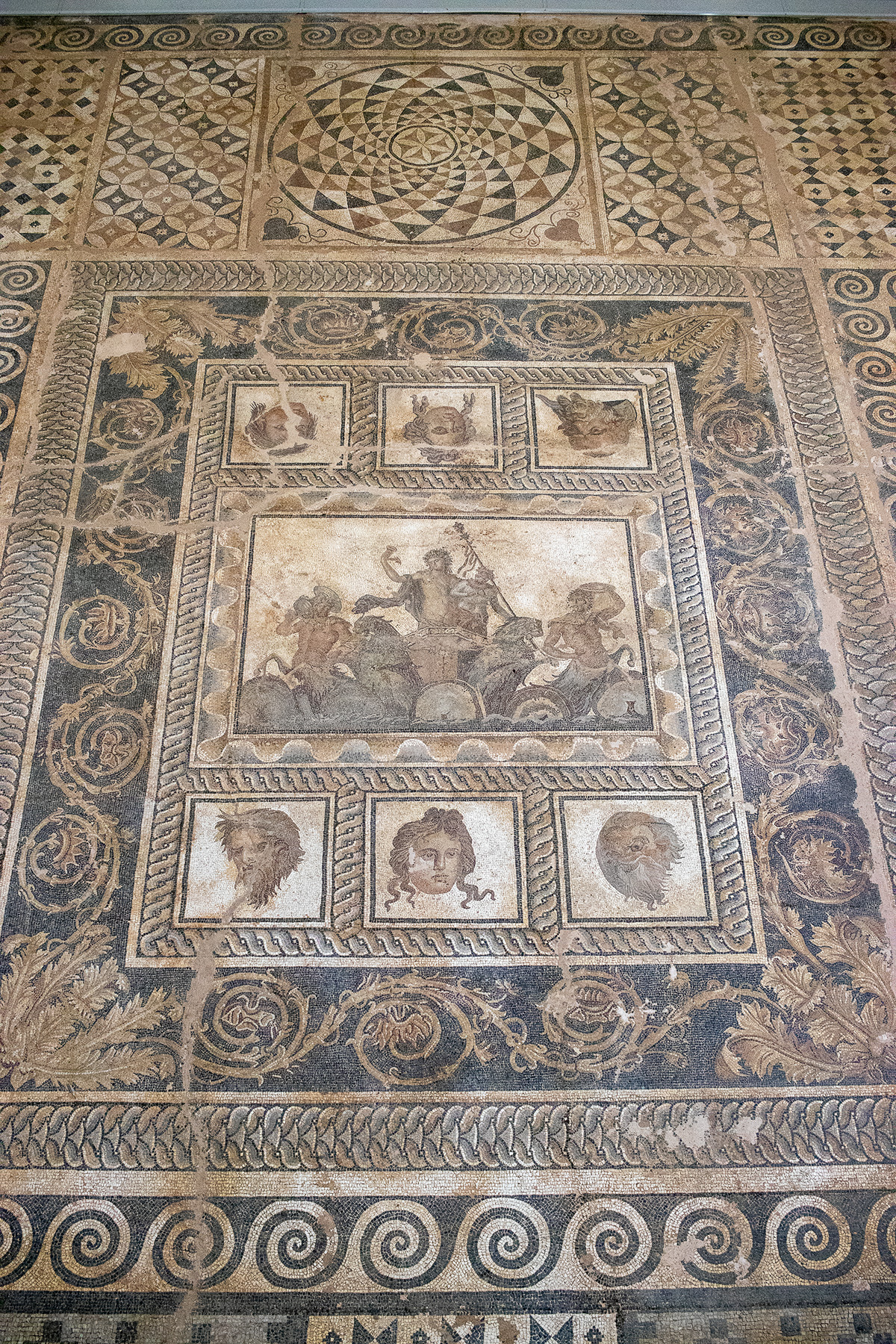
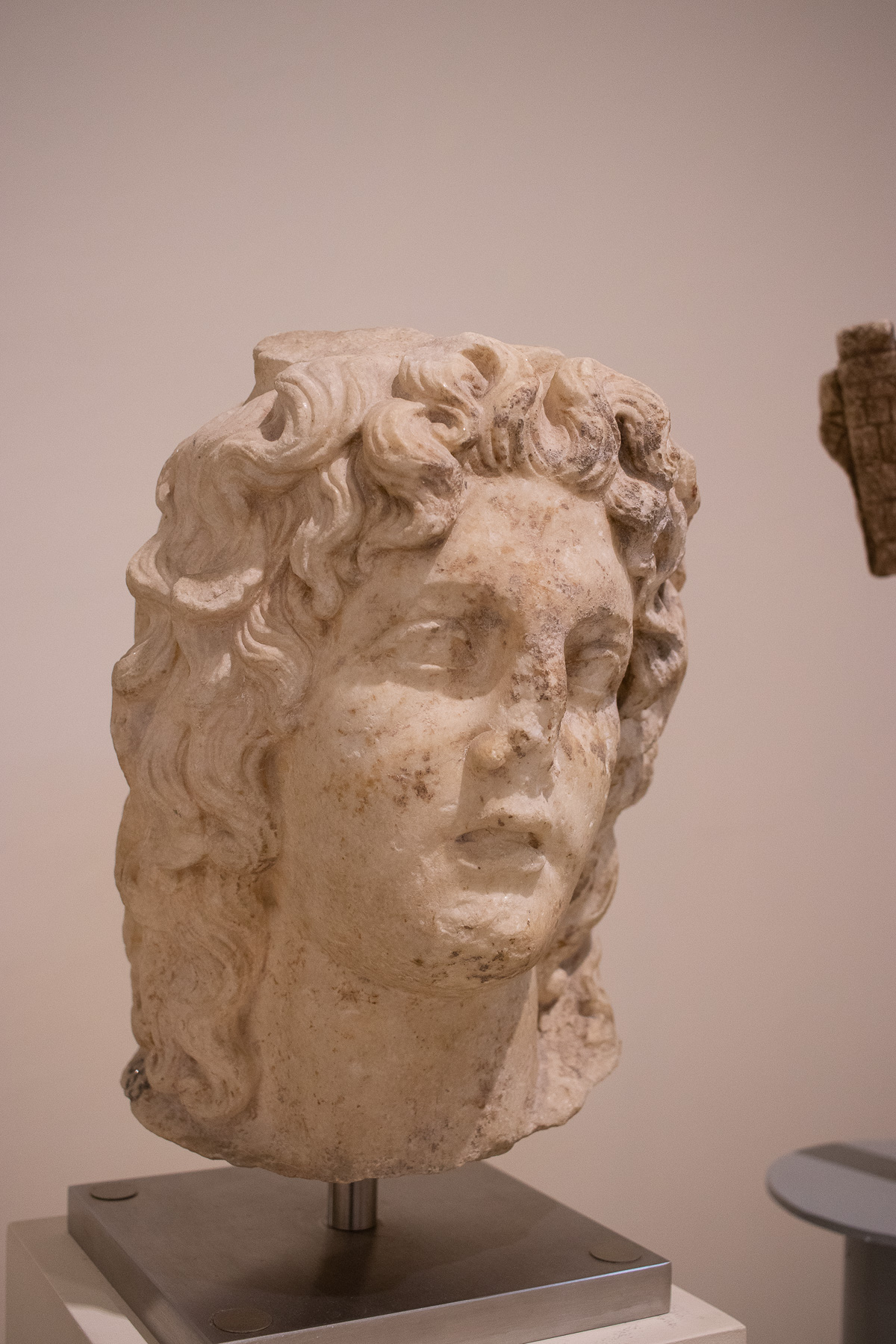
The museum is particularly worthwhile if you want to connect the remains outdoors with the objects, inscriptions and everyday details preserved from the ancient city.
For current opening hours, admission prices and visitor information, consult the official Hellenic Heritage page for the Archaeological Museum of Dion.
Dion Archaeological Park: Winter Opening Hours
The winter timetable for the Archaeological Park of Dion applies from 1 November until 31 March. During this period, the park is open six days a week, with Tuesday being the regular weekly closing day.
Archaeological Park – Winter Schedule
- Monday: 08:30–15:30
- Tuesday: Closed
- Wednesday: 08:30–15:30
- Thursday: 08:30–15:30
- Friday: 08:30–15:30
- Saturday: 08:30–15:30
- Sunday: 08:30–15:30
- Last admission: 15:10
Although the published closing time is 15:30, the last admission is 20 minutes earlier, at 15:10. Arriving close to the final entry time will leave very little opportunity to explore the site.
For a relaxed visit, it is better to arrive in the morning or early afternoon and allow enough time to walk through the different archaeological areas.
Archaeological Museum of Dion: Winter Opening Hours
The Archaeological Museum follows a slightly different winter schedule. It is open from Monday and Thursday to Sunday, while Tuesday and Wednesday are its regular weekly closing days.
Archaeological Museum – Winter Schedule
- Monday: 08:30–15:30
- Tuesday: Closed
- Wednesday: Closed
- Thursday: 08:30–15:30
- Friday: 08:30–15:30
- Saturday: 08:30–15:30
- Sunday: 08:30–15:30
- Last admission: 15:10
Planning tip: If you want to visit both the archaeological park and the museum on the same day, Monday or Thursday to Sunday are the most practical choices during the winter season.
The park is open on Wednesday, but the museum is closed. Both venues are closed on Tuesday.
Opening arrangements may also change on public holidays or due to exceptional circumstances. Always check the official information before setting off.
Free Admission Days at Dion
During the winter season, visitors can enter state archaeological sites and museums free of charge on the first and third Sunday of each month, from 1 November until 31 March.
This policy applies to both the Archaeological Park and the Archaeological Museum of Dion, subject to their respective opening schedules.
Other designated free-admission dates throughout the year include:
- 6 March: Melina Mercouri Memorial Day.
- 18 April: International Day for Monuments and Sites.
- 18 May: International Museum Day.
- Last weekend of September: European Heritage Days.
- 28 October: Greek National Holiday.
For the full national policy and any applicable conditions, consult the Greek Ministry of Culture – Free Admission Days.
Dion Tickets and Admission Prices
The published admission prices for both the Archaeological Park and the Archaeological Museum of Dion are:
Admission Prices
- Full ticket: €10
- Reduced ticket: €5
Reduced admission is available to eligible visitors under the applicable Ministry of Culture regulations. Check the official ticket information for eligibility and current conditions.
The archaeological park and museum are separate visitor venues. Plan your visit and check the relevant ticket information for each rather than assuming that admission to one automatically includes entry to the other.
On designated free-admission days, entry is free for all visitors under the national policy.
For the latest prices and ticket arrangements, consult the official park information and the official museum information.
Important Information Before Your Visit
Visitor Tips
- Check the opening hours of both venues before travelling.
- Remember that the last admission is 15:10.
- Allow enough time to explore the outdoor archaeological park.
- Check whether specific monuments or facilities have temporary access restrictions.
- Wear comfortable walking shoes, as the park involves walking across an extensive outdoor archaeological landscape.
- Bring water, especially during warmer months.
- For winter visits, allow for rain, damp ground and colder conditions near Mount Olympus.
- Check public holiday closures before planning your visit.
Public Holiday Closures
According to the official visitor information, the Archaeological Park and Archaeological Museum of Dion remain closed on the following dates:
- 1 January – New Year’s Day.
- 25 March – Greek National Holiday.
- 1 May – Labour Day.
- Greek Orthodox Easter Sunday.
- 25 December – Christmas Day.
- 26 December – Second Day of Christmas.
These holiday closures are in addition to the regular weekly closing days. If your visit coincides with a public holiday, confirm the arrangements through the official channels before travelling.
How to Get to the Archaeological Park of Dion
Dion is a village at the foot of Mount Olympus in Pieria, northern Greece. The archaeological park and museum are located close to the settlement and are relatively easy to reach from the main towns and coastal areas of the region.
By car
Dion is approximately 20 minutes by car from Katerini. It is also easily reached from the coastal settlements of Pieria and from Litochoro.
Parking is available in the archaeological site area.
By public transport
Visitors travelling from Katerini can use the local urban bus service. According to the official Hellenic Heritage visitor information, Katerini urban bus Line 3 serves the area, with a stop named Archaeological Museum.
For current routes, departure times and connections, check the official KTEL Pieria website and the relevant local transport information before travelling.
The archaeological area is also within walking distance of the village of Dion.
How Much Time Do You Need to Visit Dion?
The time required depends on how much you want to explore and how interested you are in archaeology, history and photography.
- Archaeological Park: Allow around 1.5–2 hours for a relaxed walk through the main archaeological areas.
- Archaeological Museum: Allow approximately 45–60 minutes to explore the collections.
- Both venues: Plan for at least 2.5–3 hours, allowing additional time if you prefer a slower visit.
These are suggested visiting times rather than official estimates. If you enjoy discovering smaller archaeological details or taking photographs, you may want to spend longer.
One practical point: because both venues close at 15:30, with last admission at 15:10, it is worth planning the order of your visit in advance.
Ancient Dion in Winter: A Different Kind of Experience
Winter changes the atmosphere of the archaeological park. The light becomes softer, the surrounding landscape quieter and Mount Olympus often appears with snow covering its higher slopes.
The experience is different from a summer visit. There are fewer visitors, the colours of the landscape change and the connection between the archaeological remains and their natural surroundings becomes particularly noticeable.
On a visit in March, I walked through the park and encountered not only the remains of the ancient city but also the everyday life that continues around them.
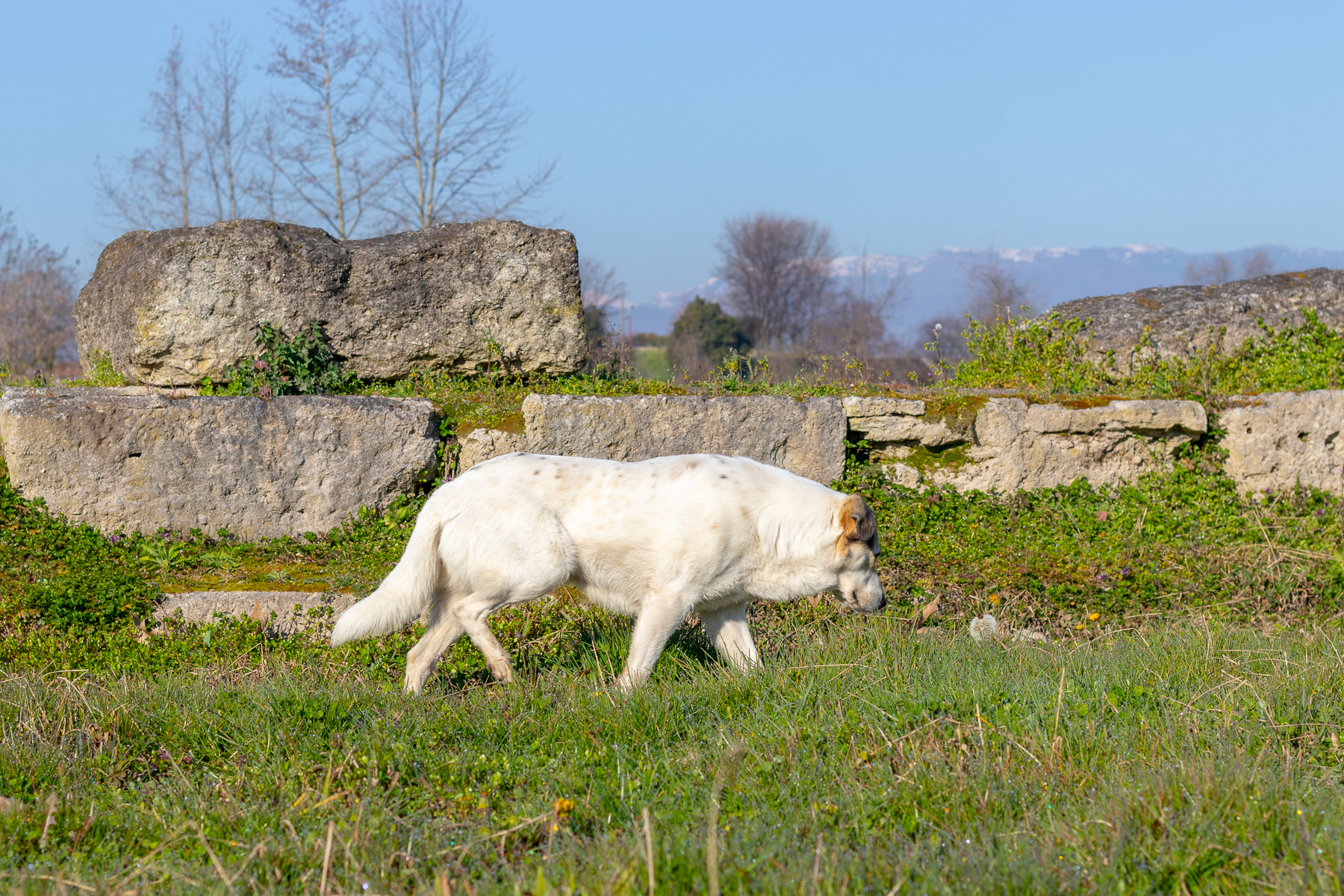
At one point, a white dog resting near the Sanctuary of Zeus Olympios became part of the scene, with the snow-covered peaks of Olympus in the background.
It was a small, unexpected moment, but one that stayed with me. It reminded me that an archaeological site is not simply a collection of monuments. It is a place where history, landscape and present-day life continue to meet.
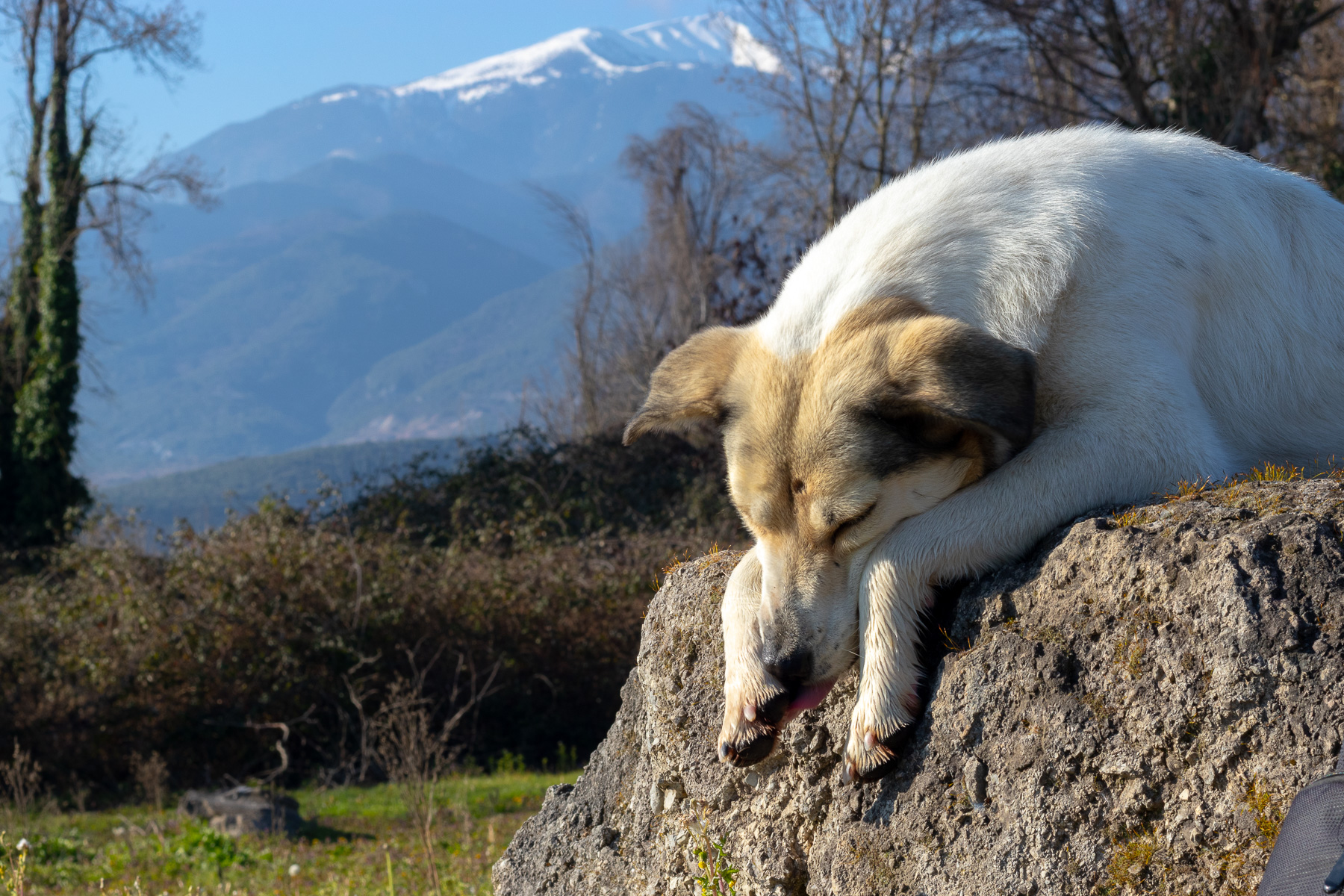
You can read more about that visit in my first-hand story:
Dion Archaeological Park, Greece | Ancient Dion at the Foot of Mount Olympus.
Is the Archaeological Park of Dion Worth Visiting?
Absolutely, especially if you are interested in ancient history, archaeology or the cultural landscape of northern Greece.
Dion is also an excellent complement to exploring Mount Olympus. The mountain is not only a natural landmark in this region; it is deeply connected to the historical, religious and cultural identity of the area.
For visitors staying along the Pieria coast or in Litochoro, Dion offers a different perspective on the region: one that connects the landscape with ancient Macedonian history.
It is a worthwhile stop for anyone who wants to understand more about the place beyond its beaches, mountain trails and familiar tourist attractions.
If you are planning a wider trip through the region, you may also enjoy our guide:
Discover 6 Reasons Why Pieria Is a Great Destination to Visit in Greece.
Useful Links for Planning Your Visit to Dion
Frequently Asked Questions About Ancient Dion
Is the Archaeological Park of Dion open in winter?
Yes. From 1 November to 31 March, the park is open Monday and Wednesday to Sunday, from 08:30 to 15:30. It is closed on Tuesday. Last admission is at 15:10.
What are the winter opening hours of the Archaeological Museum of Dion?
The museum is open Monday and Thursday to Sunday, from 08:30 to 15:30. It is closed on Tuesday and Wednesday. Last admission is at 15:10.
When is admission to Dion free?
Admission is free on the first and third Sunday of each month between 1 November and 31 March. Other designated free-admission dates are also applicable under the Greek Ministry of Culture policy.
How much does a ticket to the Archaeological Park of Dion cost?
The published full admission price is €10, while the reduced ticket costs €5 for eligible visitors. The Archaeological Museum has the same published admission prices.
Can I visit the archaeological park and museum on the same day?
Yes. Monday and Thursday to Sunday are the most practical days during the winter season, as both venues are scheduled to be open. Remember that the museum is closed on Wednesday, while the park remains open.
Is the Hellenistic Theatre the same as the Roman Theatre?
No. They are two separate monuments from different historical periods. The Hellenistic Theatre dates to the Hellenistic period, while the Roman Theatre belongs to the Roman period.
How far is Dion from Katerini?
Dion is approximately 20 minutes by car from Katerini. Local urban bus services also connect Katerini with the area. Check the current timetable before travelling.
How long should I spend at Ancient Dion?
Allow approximately 1.5–2 hours for the archaeological park and 45–60 minutes for the museum. Visiting both comfortably requires around 2.5–3 hours.
Is Ancient Dion worth visiting in winter?
Yes. Winter offers a quieter atmosphere, softer light and, on clear days, beautiful views of Mount Olympus with snow on its higher slopes. Check the weather and opening hours before your visit.
Discover More of Pieria
Dion is one part of a region where ancient history, mountain landscapes, traditional villages and the coastline are closely connected.
From the archaeological heritage of Ancient Macedonia to the forests of Mount Olympus, the beaches of the Thermaic Gulf and the everyday life of local communities, Pieria has many different stories to discover.
Sometimes the best way to understand a place is simply to slow down, look around and take a different route.
Discover Pieria Differently
Explore forest trails, coastal villages, local food and quieter corners of the region through authentic stories and practical guides from Experience Pieria.
