
Fire, Cedar & Memory
The Tsagkala Carnival ritual in Skotina, Pieria — where flames speak older languages than words.
22 February 2026 — Skotina, Pieria · by Giorgos Gizelis
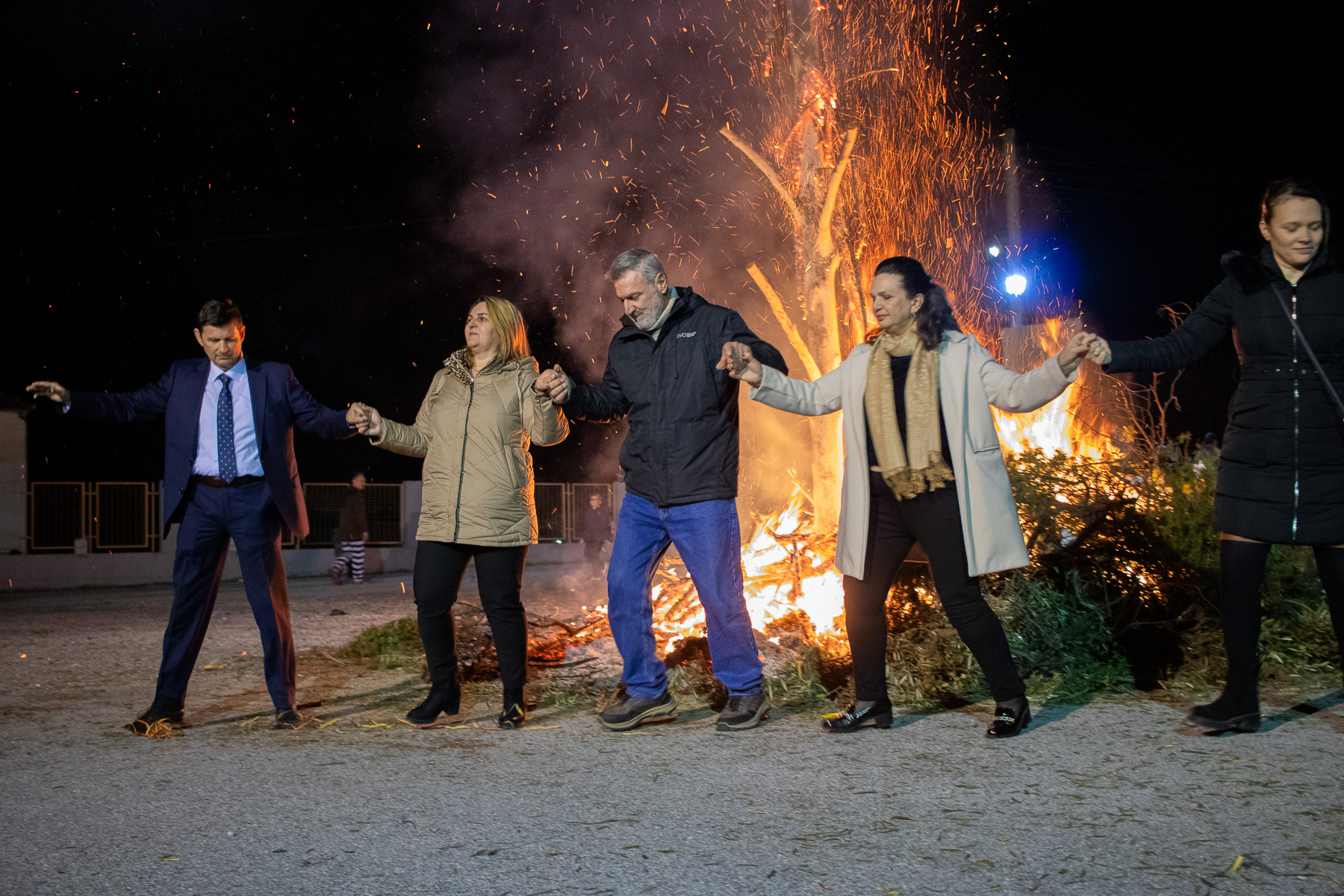
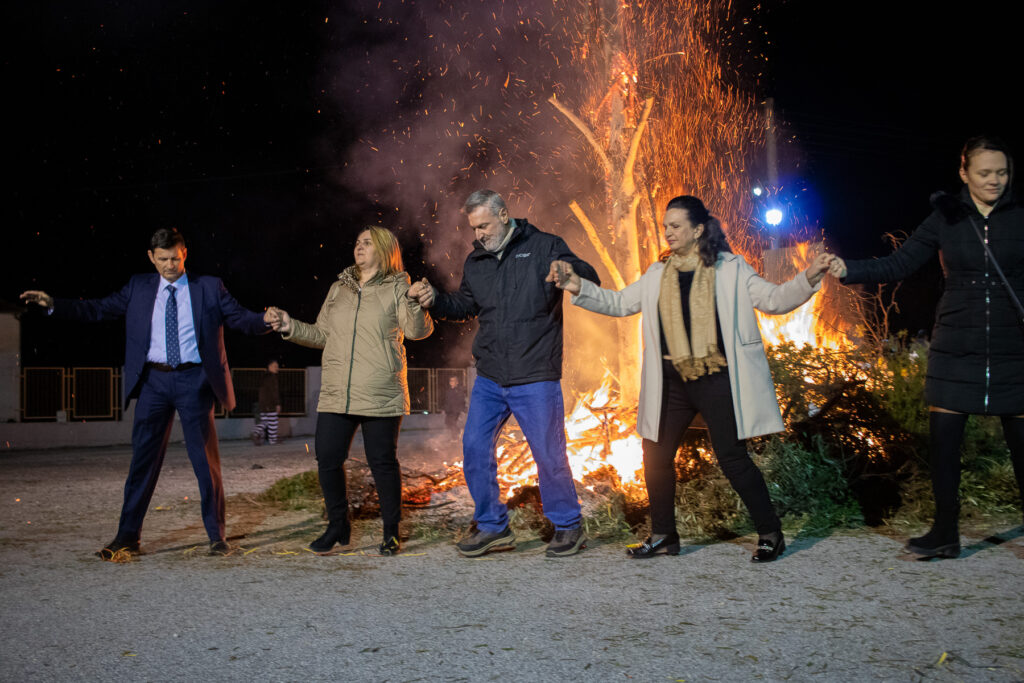
In the village of Skotina, under the watchful presence of Mount Olympus, fire still gathers people the old way — in a circle.
This year, I had the privilege to document the Carnival ritual known locally as Tsagkala (also written Tzagkala), organized by the Pneumatiki Kinisi Skotinas. Entry was open and free at the village primary school, where the courtyard became a living stage of memory.
At the center stood the cedar trunks — placed upright in a clearly phallic formation.
Not random.
Not decorative.
A symbol rooted deep in pre-Christian fertility rites, echoing Dionysian energy: life, regeneration, excess, purification through fire.
In nearby Litochoro, cedar fires are built differently — stacked one upon another, neighborhood against neighborhood, with playful rivalry lasting until dawn. Here in Skotina, the structure is vertical, singular, ceremonial.
And when it burns, it does not simply burn.
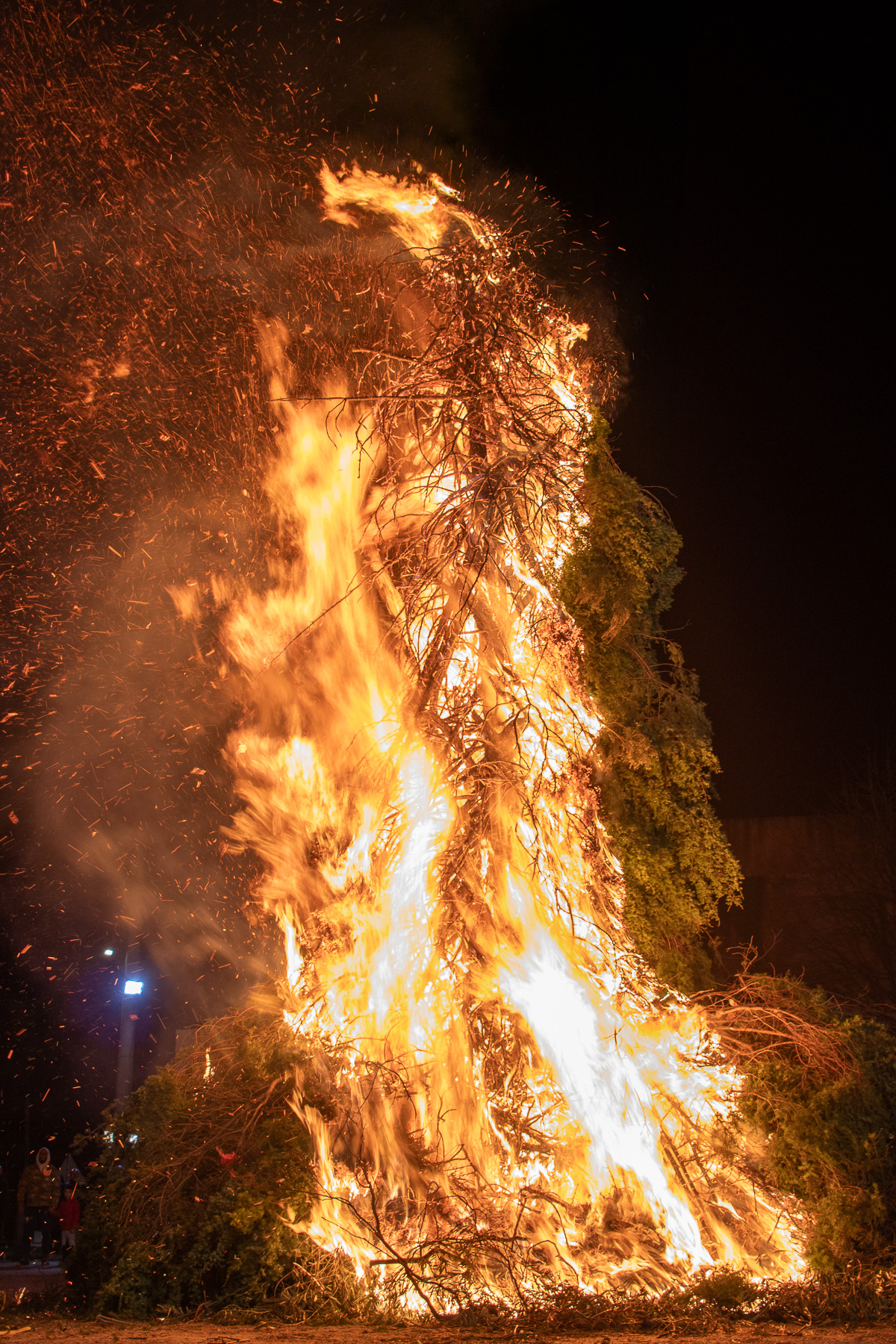
It crackles with a distinct sharp sound.
It releases a resinous, almost sacred aroma.
It creates calm and awe at the same time — a strange combination, like standing before something older than your own doubts.
A Ritual Older Than Its Christian Frame
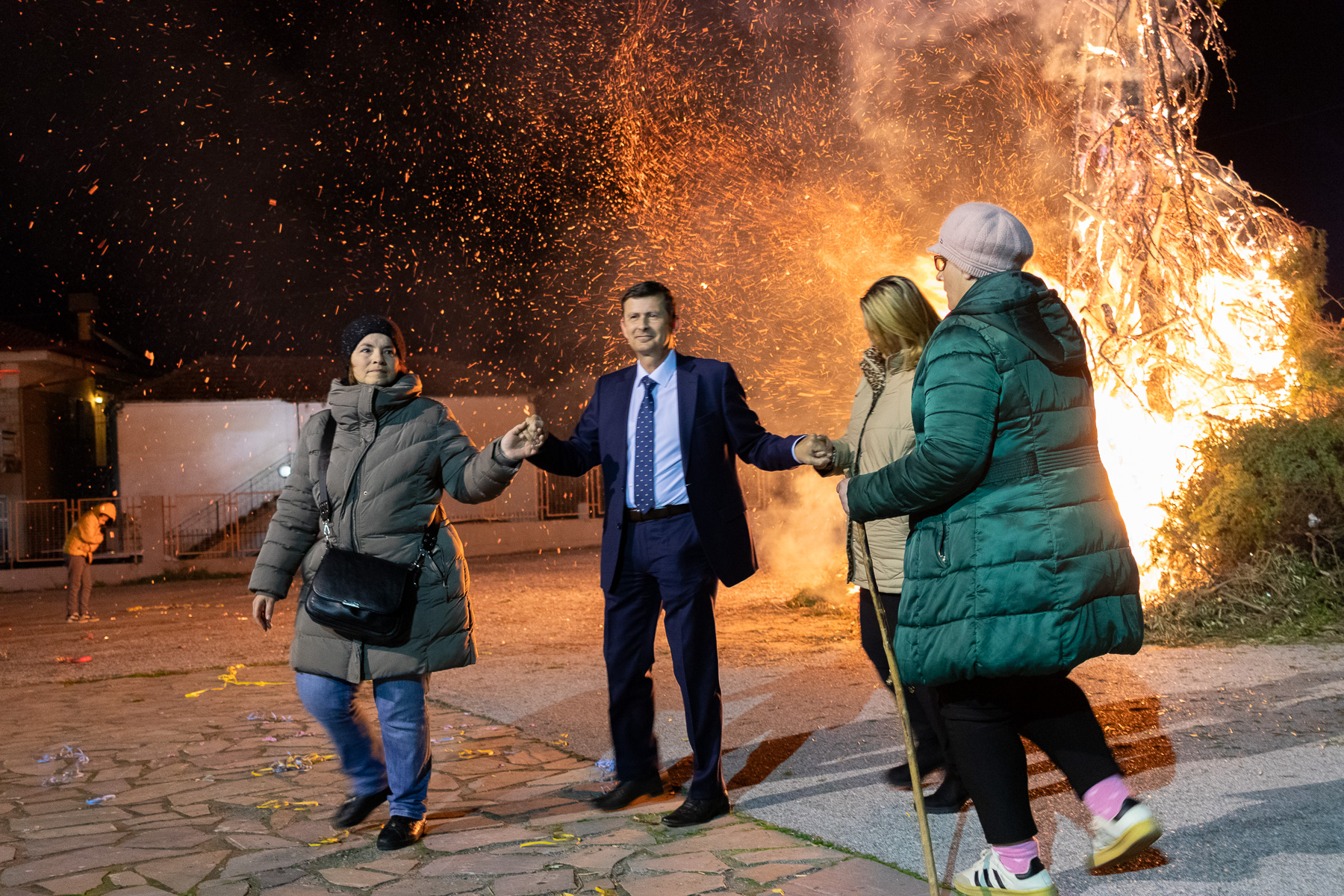
The lighting of Tsagkala takes place after the Orthodox Vespers of Forgiveness Sunday — the final evening before Lent. Christianity embraced the flame, reframing it symbolically as the burning of evil, the cleansing of the community.
But its roots go further back — to Dionysian celebrations where fire meant fertility, catharsis, collective release.
As Theoharis Stylos, President of the association and Secretary of the Pieria Writers’ Union, explains, the ritual was revived in 1980 and continues every year. During Ottoman times, villagers even requested special permission from authorities to hold the ceremony — because some fires cannot be extinguished by decree.
Historically, each neighborhood once had its own Tsagkala, competing for the largest blaze. Today the fire is shared. The spirit remains competitive only in joy.
Live Music — Not a Playlist, but Breath
Most modern village events rely on DJs and mixed playlists. Convenient. Predictable.
Here, we had live traditional music.
Clarinet leading.
Wine flowing.
Voices rising without rehearsal.
Watch the 5-minute documentary recording of the Tsagkala fire ritual in Skotina, Pieria.
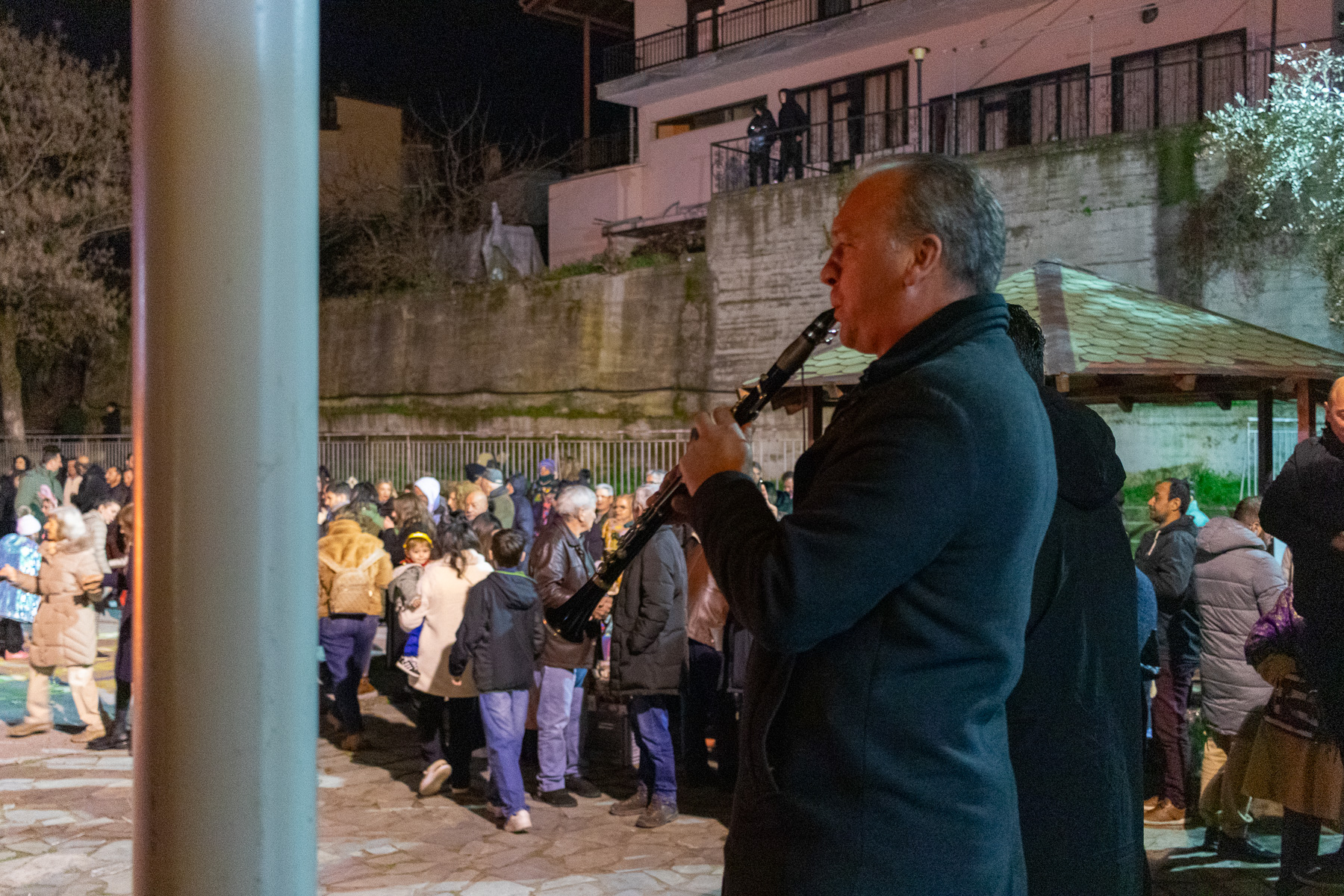
It is a different experience when music is produced by lungs and fingers instead of speakers.
It breathes.
It makes mistakes.
It becomes human.
And people answered.
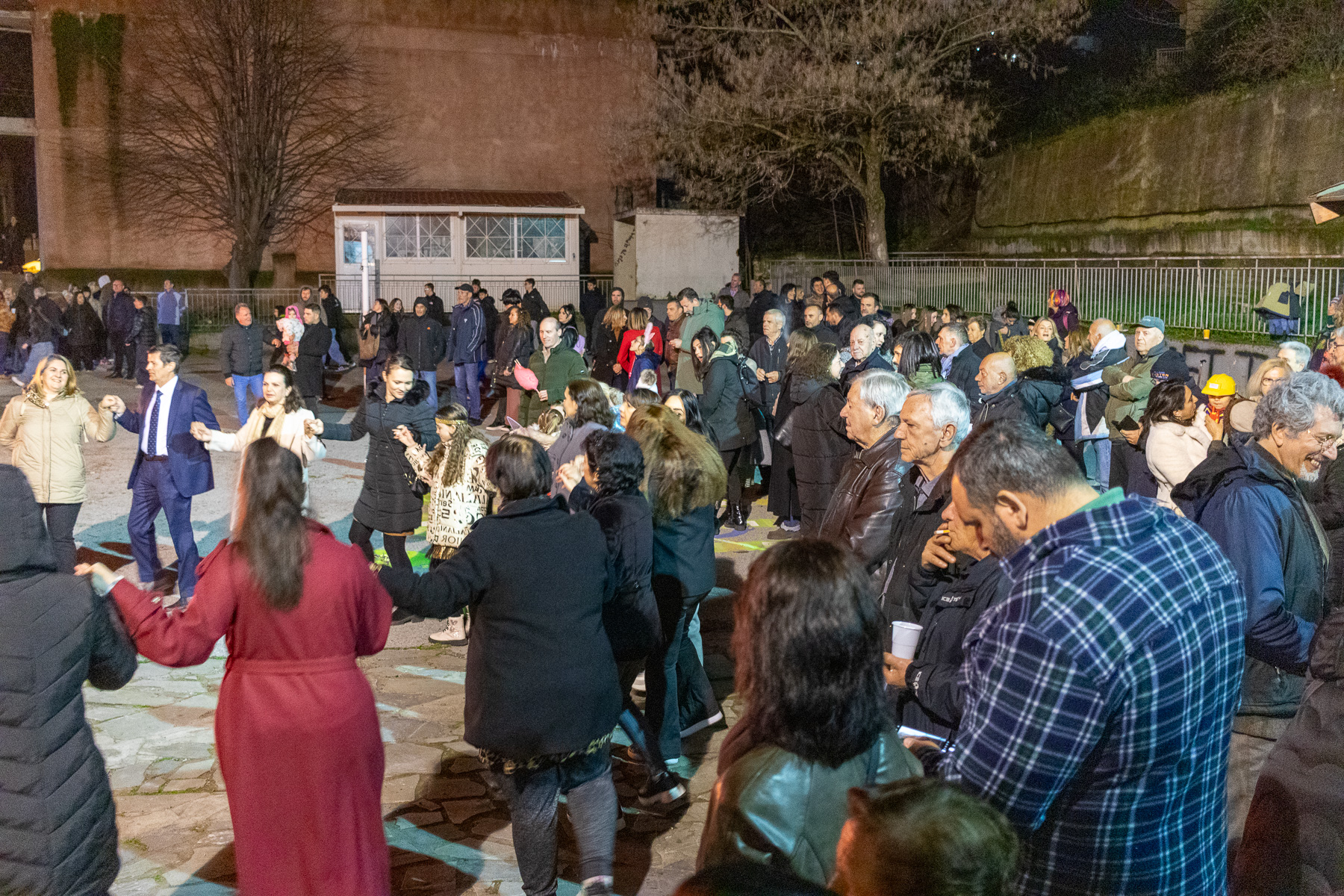
Circular dances unfolded across the school courtyard.
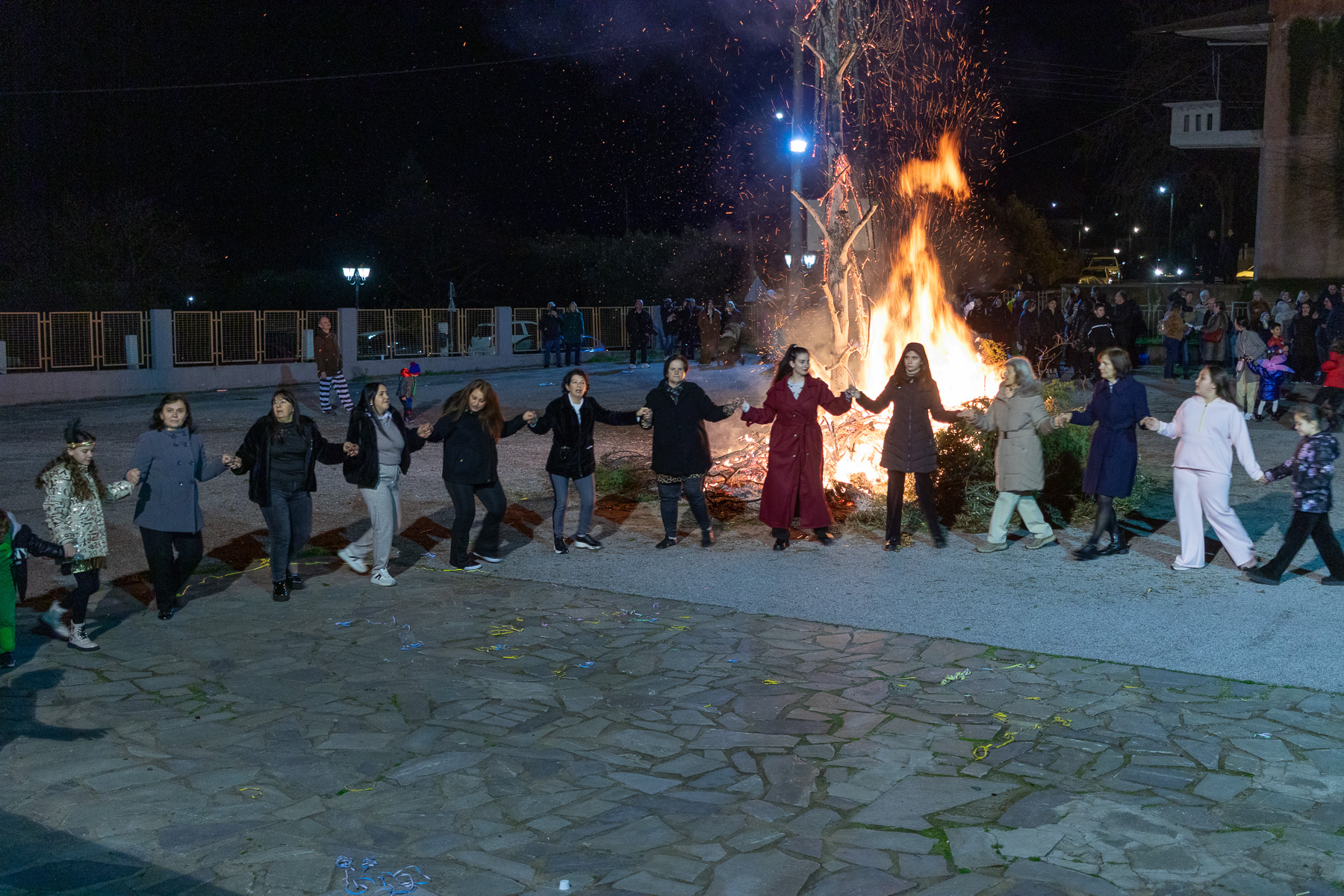
The fire gradually consumed all cedar trunks.
Taste of Olympus
The hosts offered traditional Olympus pies — cheese, spinach, handmade variations that taste of mountain kitchens. Sweet halva. Local wine.
No ticket.
No commercial staging.
Just offering.
Why It Matters
Tsagkala is not folklore for tourists.
It is a living ritual of purification, fertility symbolism, communal bonding and seasonal transition. It carries Dionysian roots, Ottoman-era endurance, Orthodox reinterpretation and modern revival — all in one flame.
Under Mount Olympus, Carnival is not just costume.
It is catharsis.
And when cedar burns, you understand something simple:
Communities survive when they gather around something stronger than individual ego.
In Skotina, that “something” is fire.

Giorgos Gizelis
Travel Writer & Founder of Experience Pieria
Exploring Pieria & Greece one story at a time — sharing authentic places, people and tastes.
Follow & Stay Updated: Instagram • Facebook
SEO note: This post targets niche keywords such as Tsagkala Skotina and Skotina Carnival fire ritual, while also including broader phrases like Pieria traditions, Mount Olympus cultural events and Carnival in Greece to capture both cultural heritage searches and experiential travel discovery traffic.

