
6 Reasons to Visit Pieria, Greece | Mount Olympus, Beaches & Local Life

6 Reasons to Visit Pieria, Greece | Mount Olympus, Beaches & Local Life
A region where Mount Olympus meets the Aegean, ancient history meets everyday life, and every season offers a different way to explore.
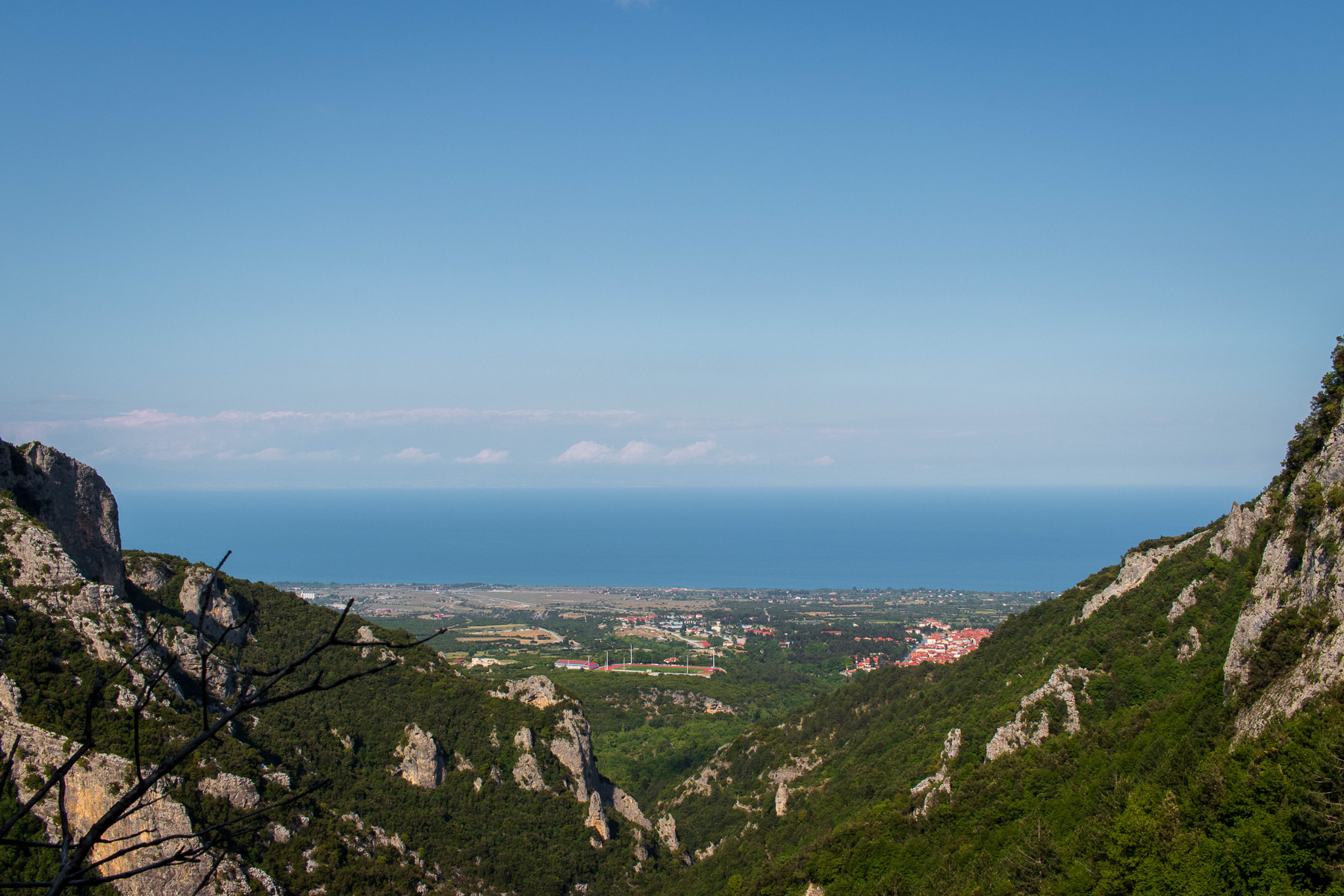
Pieria, in northern Greece, is a region of contrasts that can be difficult to describe with just one image.
Here, the slopes of Mount Olympus descend towards the Aegean Sea. Ancient archaeological sites sit close to modern towns. Mountain villages, forests and waterfalls coexist with long stretches of coastline. And behind the places visitors see on a map are local producers, traditions, food and everyday stories.
That combination is what makes Pieria interesting as a destination.
Rather than asking whether Pieria is the “best” destination in Greece, it is more useful to ask a different question:
what can you experience here that brings so many sides of Greece together in one region?
At a Glance
- Region: Pieria, Central Macedonia, northern Greece
- Landscape: Mount Olympus, forests, rivers, villages and Aegean coastline
- Culture: Ancient sites, monasteries, traditions, festivals and local life
- Outdoor experiences: Hiking, waterfalls, cycling, birdwatching and other activities
- Food: Local products, traditional dishes, wine and seasonal flavours
- Travel style: Suitable for combining mountain, coast, culture and local experiences
1. Mount Olympus & the Aegean Sea in the Same Trip
This is probably the most obvious reason to look at Pieria on a map.
Mount Olympus rises dramatically above the region while the Aegean coastline stretches below it. The result is a destination where a mountain hike and a swim in the sea can be part of the same trip.
You can spend the morning walking through the forests around Litochoro and Prionia, following sections of the Enipeas landscape, and later return towards the coast.
Or reverse the experience: begin the day beside the sea and finish it looking towards the mountains as the light changes.
For travellers who do not want to choose between mountain and beach, Pieria makes that combination particularly easy.
Explore:
Places and experiences across Pieria
2. A Mountain for More Than Summit Climbers
Mount Olympus is famous for its peaks, but you do not have to climb to the summit to experience the mountain.
The lower slopes around Litochoro and Prionia offer forests, streams, ravines, waterfalls and hiking routes suitable for different levels of experience.
The Enipeas Gorge and Olympus day-hiking routes are a good example. You can follow the landscape through forest and along the river without turning the visit into a multi-day expedition.
Beyond hiking, the wider region offers cycling, canyoning, waterfalls, birdwatching and other outdoor experiences.
For many visitors, Olympus is not a single activity. It is a landscape to return to in different ways.
3. Ancient History Is Part of the Landscape
Pieria has a deep archaeological and cultural history, and some of its most important sites are closely connected with the landscape of Olympus.
At the foot of the mountain lies ancient Dion, a major archaeological site associated with the religious world of ancient Macedonia and Mount Olympus.
The region also includes Ancient Pydna, the medieval Platamon Castle and Byzantine monuments and churches scattered across the landscape.
This makes it possible to build a day around more than one layer of history: ancient archaeology in the morning, a mountain village in the afternoon and the sea in the evening.
Start with the
Archaeological Park of Dion
and continue exploring from there.
4. Pieria Has a Strong Local Food Culture
Food is another way to understand the region.
Pieria’s geography creates a varied agricultural landscape, while its villages and towns preserve traditional food practices alongside contemporary restaurants and producers.
Depending on the season and where you travel, you may encounter local honey, chestnuts, kiwifruit, wine, mountain herbs, dairy products and other regional ingredients.
Some experiences are closely tied to the agricultural calendar itself.
Chestnut harvests in Skotina, for example, offer a glimpse into mountain life and traditional cultivation, while wine events and visits to local wineries reveal another side of Pieria’s countryside.
Food here is not only something to order from a menu. Sometimes it is connected to a place, a season, a producer or a family story.
5. Every Season Tells a Different Story
Pieria is often associated with summer and the coastline, but limiting the region to a summer destination means missing much of what happens during the rest of the year.
Spring brings flowers, flowing water, green forests and outdoor walks.
Summer naturally turns attention towards the beaches, coastal towns, outdoor activities and long evenings.
Autumn brings harvests, changing forest colours, chestnuts, wine and quieter days by the sea.
Winter changes the rhythm completely, with snow on Olympus and the mountains, village food, seasonal traditions and a much quieter atmosphere.
The region does not need to look the same throughout the year to remain interesting. In fact, the changing seasons are part of the experience.
If you are considering a trip outside the traditional summer season, our guide to
winter in Pieria
is a good place to start.
6. You Can Experience Everyday Greece, Not Just the Highlights
Perhaps the most rewarding reason to explore Pieria is harder to put on a checklist.
Beyond the major attractions are the places where everyday life continues: village squares, local festivals, small producers, family-run businesses, mountain roads, markets, tavernas and people who have their own stories about the place.
A visit to Pieria can be as much about meeting the people behind a place as it is about seeing the place itself.
That might mean stopping at a mountain village after a hike, discovering a local product during harvest season, attending a traditional celebration or simply sitting somewhere with a view and letting the day unfold.
These are the experiences that rarely appear in a standard list of attractions — but often become the memories visitors take home.
How to Combine Pieria’s Different Experiences
One of the advantages of travelling through Pieria is that you do not necessarily need to dedicate an entire holiday to one type of experience.
- Mountain + archaeology: hike around Olympus and visit ancient Dion.
- Beach + village: spend time on the coast and continue into the mountain communities.
- Nature + food: combine a walk with a local taverna, producer or seasonal food experience.
- Culture + landscape: visit a historic site or local festival and explore the surrounding area.
- Summer + autumn: return at a different time of year and experience a completely different side of the region.
How to Get Around Pieria
Pieria is compact enough to combine several different areas during the same trip, but your transport choice matters depending on where you want to go.
The main towns and coastal settlements are connected by road and public transport, while a car gives you greater flexibility for mountain villages, trailheads and more remote locations.
For practical information about trains, buses, rental cars and moving around the region, see our
Getting Around Pieria guide.
Is Pieria Right for Your Trip?
Pieria can work particularly well if you want to combine several different sides of Greece rather than build a trip around one single attraction.
For outdoor travellers, there are mountains, trails, waterfalls and the coast.
For culture lovers, there are archaeological sites, historic monuments, festivals and local traditions.
For food travellers, there are producers, seasonal ingredients, wine and regional dishes.
For families, the combination of beaches, nature, towns and accessible cultural experiences creates plenty of different options.
And for travellers who simply want to slow down, there are villages, landscapes and quieter corners waiting to be discovered.
Frequently Asked Questions
Where is Pieria in Greece?
Pieria is a region of Central Macedonia in northern Greece, between Mount Olympus and the Aegean Sea. Its main urban centre is Katerini.
What is Pieria known for?
Pieria is particularly known for Mount Olympus, its beaches, ancient Dion, traditional villages, outdoor activities, local food and cultural traditions.
Can you visit Mount Olympus and the beach on the same day?
Yes. The mountain and the Aegean coastline are relatively close to each other, making it possible to combine a mountain experience with time by the sea during the same trip.
Is Pieria only a summer destination?
No. While summer is popular for the coastline and beaches, spring, autumn and winter offer different experiences including hiking, harvests, village life, seasonal food, cultural events and mountain landscapes.
What should I visit in Pieria?
Depending on your interests, you can explore Mount Olympus, ancient Dion, Platamon Castle, the beaches of the Pierian coast, mountain villages, waterfalls, local producers and cultural events.
Continue Exploring Pieria
Six reasons are only the beginning.
The real character of Pieria appears when you start connecting the places: a mountain trail with a village, an archaeological site with a local meal, a beach with an evening walk, or a seasonal festival with the people who keep its traditions alive.
Discover the places, people, food, traditions and experiences of the region:
Explore Pieria

Mark
07/09/2022 at 20:05Thanks for your blog, nice to read. Do not stop.
Experience Pieria Team
07/09/2022 at 20:59Thanks Mark! Stay tuned! More blogs for Pieria are coming soon!